

Skip to content
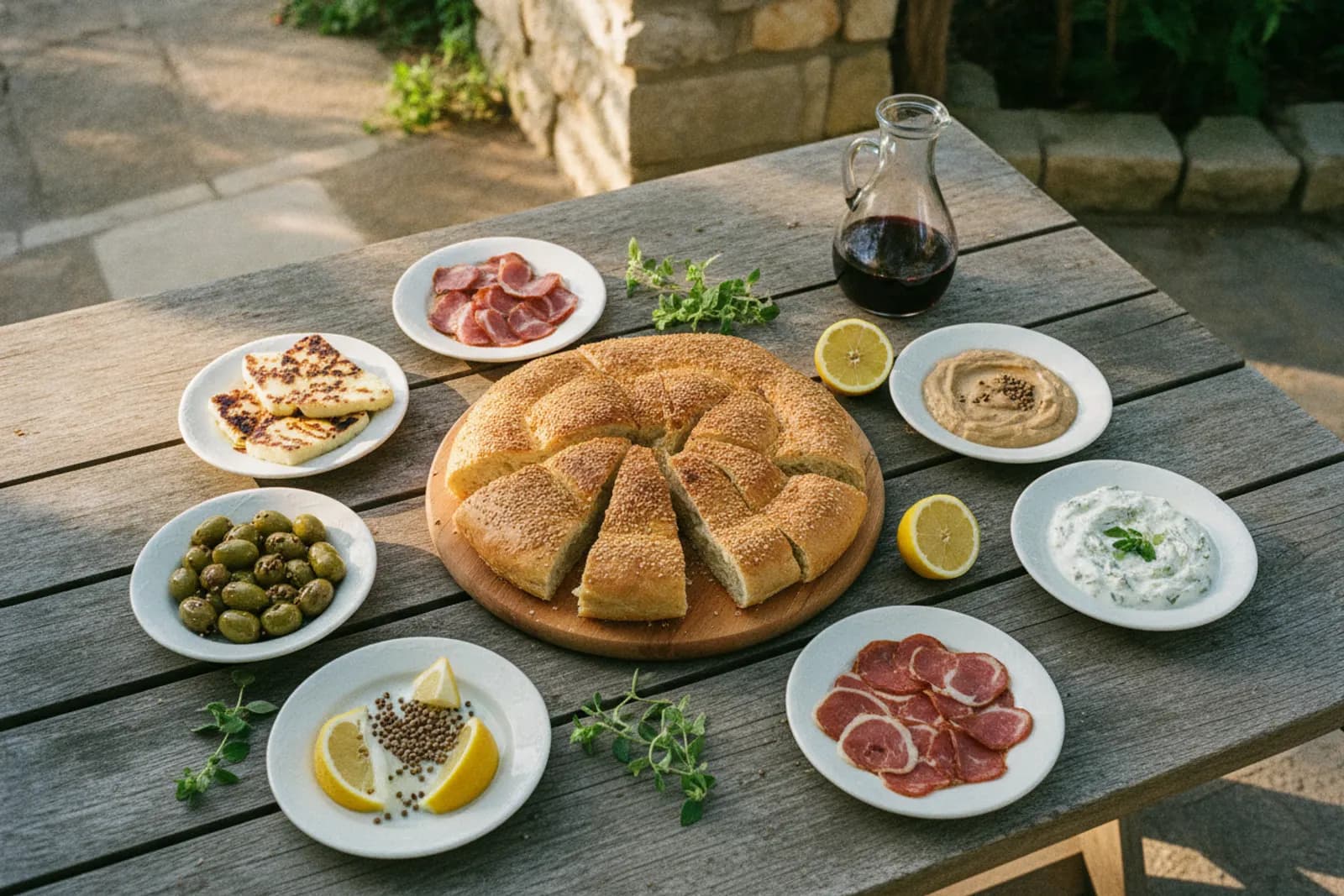
Cypriot meze on an outdoor table with grilled halloumi, olives, dips, village bread and lemon in late afternoon light

Cyprus food, dish by dish

Cypriot food is made for sharing: a long meze, lamb slow-cooked in a wood oven, grilled halloumi and a small, cold glass of zivania at the end. Here is what to order and what to buy.

AI-generated illustration

Published · 7 min read · Facts checked 9 October 2026 against the sources below

Cyprus food has borrowed from Greece, Turkey, Lebanon, Syria, Italy and even Britain over the centuries, and the result is Mediterranean: olive oil, lemon, yoghurt, charcoal grills and slow ovens. The best way in is a meze, a long meal of small dishes that keeps arriving until you surrender. We name no restaurants here, only dishes and drinks, so you can order with confidence wherever you end up, or eat well when you are cooking for yourselves at a villa near Coral Bay, Cyprus.

How a Cypriot meze works

Meze (plural mezedes) is less a dish than an evening. It is a social event built from many small plates, usually around 15 to 20 and as many as 30 in some places. You order "meze for four" and the kitchen decides the rest.

It arrives in waves. First come olives, bread and a village salad with dips: tahini, tzatziki-style yoghurt, taramosalata and skordalia, a garlic dip. Then the warm plates: grilled halloumi, lountza (smoked pork loin), and in season wild greens or asparagus cooked with egg. Then the main event, meat or fish.

A meat meze builds through grilled pork and chicken, loukanika sausages and slow-cooked dishes such as stifado and kleftiko. A fish meze brings grilled and fried local fish, calamari, cuttlefish and octopus. Either ends with fruit, often watermelon, or glyko, fruit preserved in syrup.

A few things help:

  • Pace yourself. The first rounds are the easiest to over-eat. The grilled meat comes late.
  • Say what you don't eat when you order. A good kitchen will adjust the plates rather than leave you picking around them.
  • Book ahead for weekend evenings in summer.

Traditional Cypriot dishes to order

If you would rather choose plate by plate, these are the traditional Cypriot dishes to look for.

DishWhat it is
KleftikoLamb roasted slowly in an outdoor wood-fired oven.
SheftaliesMinced pork wrapped in caul fat and grilled over charcoal.
SouvlakiaGrilled pork served in pitta with salad.
AfeliaPork braised in red wine with crushed coriander seed, eaten with pourkouri (bulgur pilaf) and yoghurt.
TtavasLamb with potatoes, tomato and cumin, a Sunday dish often cooked in a clay pot.
KoupepiaVine leaves stuffed with minced pork, rice and mint; better the next day.
Makaronia tou fournouBaked pasta with mince and béchamel, topped with halloumi.
MoudjendraLentils and rice with caramelised onions, eaten through Lent; vegan.
PourekkiaPastries filled with halloumi and mint, part of a meze table.
LoukoumadesSmall fried dough puffs soaked in syrup, the classic sweet to finish.

Kleftiko has a story behind it: its name comes from the Greek verb for "to steal", a reference to livestock theft. Traditional ofto kleftiko has been on the island's inventory of intangible heritage since 2019, and it is still the dish of family gatherings and weddings.

Specialities of the Paphos region

The Paphos region has dishes you will rarely see outside the district: resi, a pilaf of wheat and slow-cooked meat; trachanas, a dried mix of wheat and sour milk boiled into a thick soup and served with cubes of halloumi; tsamarella, goat meat salted, spiced with oregano and dried in the sun; and pseftika, courgette flowers stuffed with rice. For something to take home, Geroskipou, just east of Paphos, makes loukoumi (Cypriot delight), the first Cypriot food to get EU protection as a geographical indication.

Halloumi, and why the name is protected

Halloumi is the island's best-known export: a semi-hard white cheese kept in brine, often with mint, that holds its shape on a grill. Cypriots eat it grilled or fried, but also cold, with watermelon in summer or with bread and olives for breakfast.

Since 1 October 2021, halloumi (Hellim in Turkish) has been a protected designation of origin. Only cheese made on the island of Cyprus to the agreed specification can be sold under the name in the EU. The specification allows some cow's milk alongside the traditional sheep's and goat's milk, so check the label if you want the traditional style. To cook it, slice it about a centimetre thick and grill or fry it hot and fast until it is golden on both sides, then eat it straight away, before it firms up.

Commandaria, zivania and the brandy sour

Three drinks are worth knowing.

Commandaria is a sweet dessert wine made from Mavro and Xynisteri grapes left to dry in the sun after picking. It takes its name from La Grande Commanderie at Kolossi, a crusader estate, and the name goes back to the 12th century. It is made only in 14 villages on the southern slopes of the Troodos. It has EU protection too, and its traditions are now on UNESCO's intangible heritage list. Expect dried fruit, honey and caramel; drink it in a small glass with dessert or cheese. Our Troodos Mountains guide covers a day in the wine villages, and our guide to Cyprus wine covers the dry wines and the wineries near Paphos.

Zivania is the island's grape spirit, distilled from the skins and pips left after winemaking, a practice that goes back to Venetian rule. It is very strong, so it is served ice-cold from the freezer in small glasses, as an aperitif.

The brandy sour was invented in the 1950s at a Troodos hotel for King Farouk of Egypt. It is Cypriot brandy, lemon, a dash of bitters and soda or lemonade over ice.

For mornings, Cyprus coffee is made in a small pot called an mbriki and served with a glass of water and never with milk. Order it sketo (no sugar), metrio (medium) or glyki (sweet), and leave the grounds at the bottom of the cup.

Eating in at the villa: markets, supermarkets and a barbecue

Many groups eat out on some nights and cook on others, and a meze-style table is easy to put together at home.

Markets. The Paphos old town has a Municipal Fruit Market where producers come in early with home-grown bananas, avocados, rocket and dried wild oregano, alongside fresh fish. Closer to home, Peyia has had a Sunday-morning village market with local producers and crafts (09:00 to 13:00, in the car park near the football club, when last listed). Dates change, so check the Visit Pafos events calendar (opens in a new tab) before you go. Our Paphos old town guide has more on the market.

Supermarkets. For the everyday shop, our Paphos shopping guide covers the large supermarkets near Paphos, their Sunday hours and what to buy on the first day.

The barbecue. The villa has a traditional stone BBQ beside a covered outdoor dining area, so a barbecue night is easy. Souvlakia, sheftalies, halloumi and corn on the cob are the easy wins. In summer, the Department of Forests asks for particular care when lighting charcoal for barbecues. Keep water to hand and never leave the coals unattended. Between 1 June and 30 September it bans tools that make flames or sparks in and within 2 km of forest land.
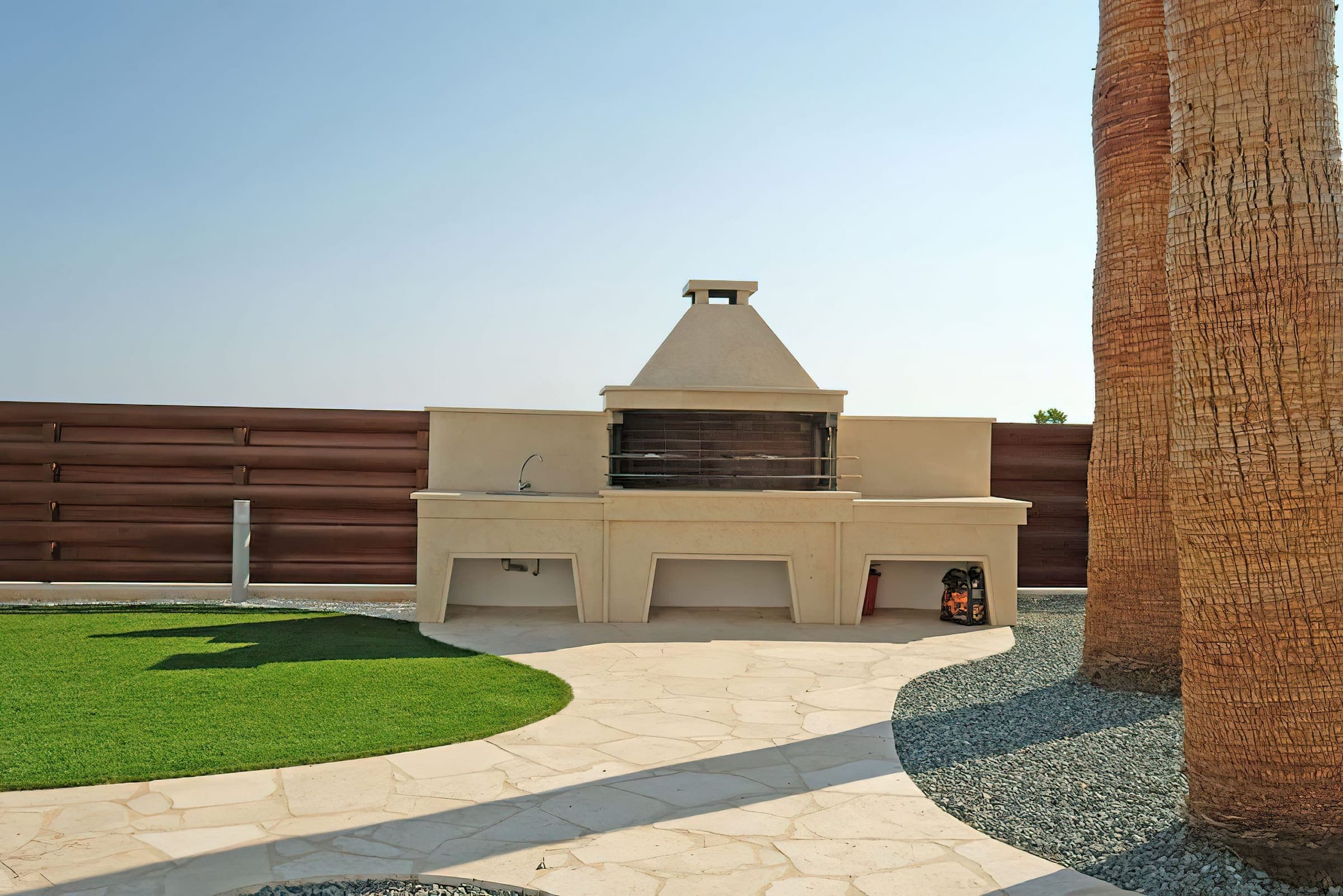
Traditional stone BBQ in the garden
The traditional stone BBQ at the villa in Peyia.

The kitchen is fully equipped, with an American fridge-freezer that copes with a big shop for 6 people. If you would rather arrive to a stocked fridge, ask for our grocery pre-stock when you book, tell us what you would like waiting, and we will price it in your quote.

Vegetarians, Lent and allergies

Cypriot menus look meat-heavy, but the meze table is full of vegetarian food: the dips, salads, halloumi, pourekkia, stuffed vegetables, beans and pulses. Ask for a vegetarian meze and most kitchens will build one.

Vegans do well during Orthodox Lent, the seven weeks before Easter, when many Cypriots give up meat and dairy. Lenten food such as moudjendra, tahini, hummus, olives, vegetables and lagana bread is everywhere then, and octopus and cuttlefish are allowed in Lent too. Outside Lent, watch for yoghurt and halloumi in otherwise plant-based dishes.

For a celebration dinner, a meze is hard to beat because nobody has to choose. Our celebration villa page has more on hosting a group.

Where to stay

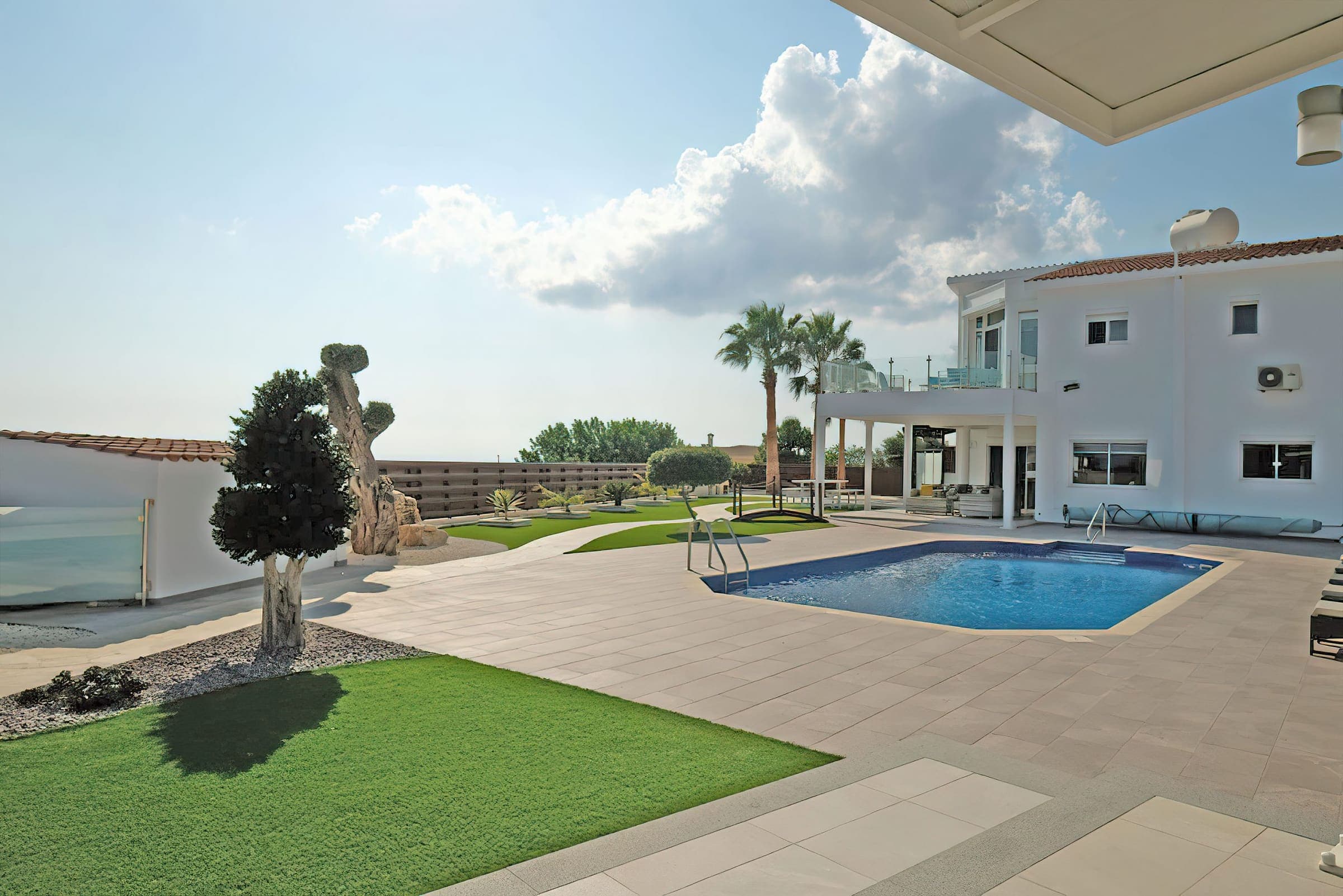
Villa Prasino is a private villa in Peyia for up to 6 guests, with a traditional stone BBQ, a covered outdoor dining area and an outdoor bar with fire pit seating, so long dinners at home are easy. The 6 × 12 m diving pool and hot tub are there for the afternoon before. Coral Bay beach is about 5 km away and the Sea Caves about 2 km. See our villa for celebrations, check availability and rates, and when you know your dates, send us a booking request.
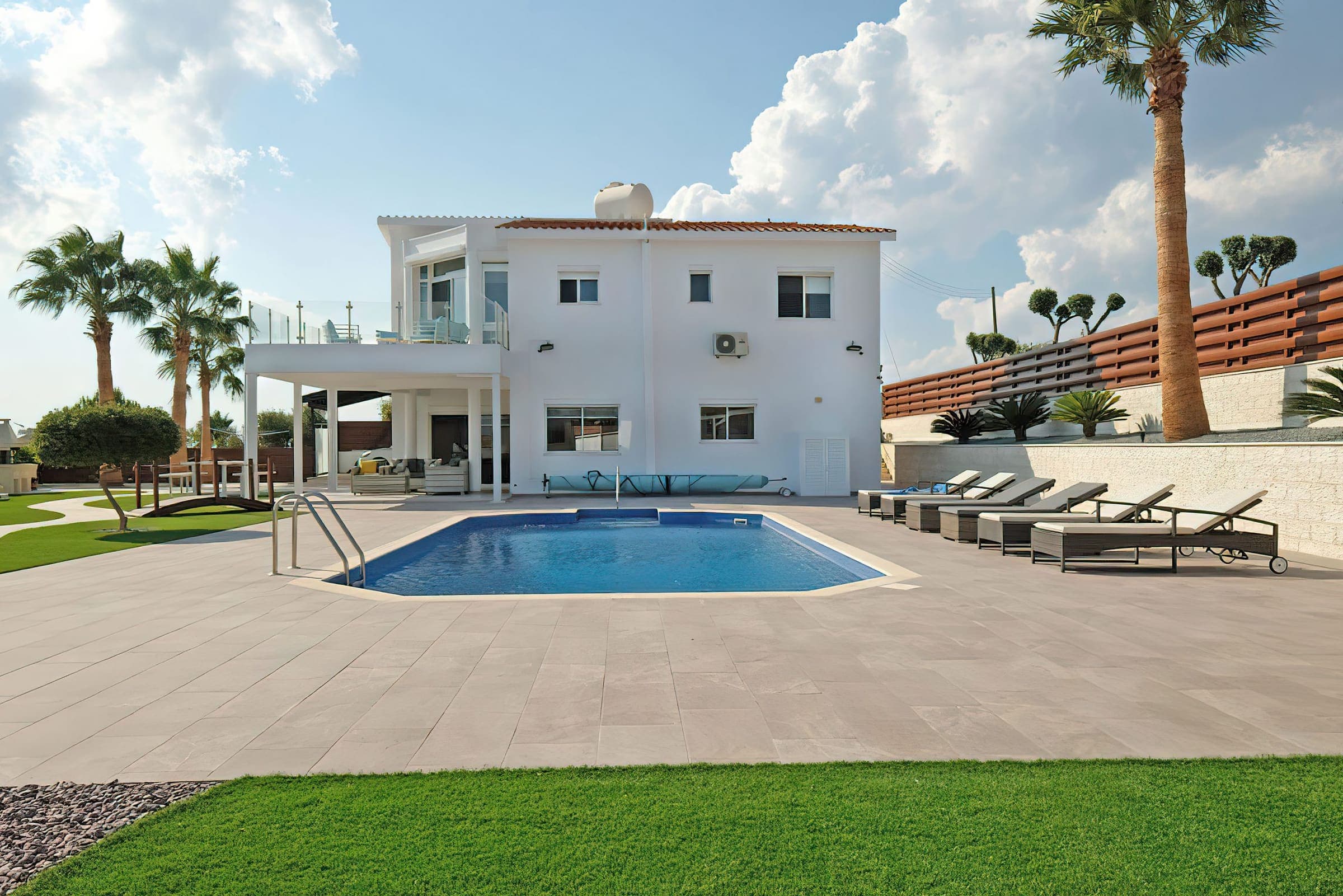
The white two-storey villa behind the pool and sun loungers

Where to stay

Villa Prasino, Peyia

Villa Prasino is a beautifully landscaped, 1,000 m² private holiday hideaway, just a short drive from Coral Bay. Set between the sea caves of Peyia and the unspoilt Akamas Peninsula, it’s the perfect base for your holiday in Paphos, Cyprus.

Sleeps 6 · 3 bedrooms · 3.5 bathrooms · 6 × 12 m diving pool · hot tub

Questions

Good to know

What is the national dish of Cyprus?

There is no single official one. Kleftiko, lamb slow-roasted in a wood-fired oven, is on the island's national inventory of intangible cultural heritage, and halloumi and meze are just as typical.

What is a Cypriot meze?

A shared meal of many small plates, usually around 15 to 20, that arrive in waves: dips, bread and salad first, then halloumi and smaller hot dishes, then grilled and slow-cooked meat or fish, and fruit to finish.

Is halloumi only made in Cyprus?

Halloumi has been an EU protected designation of origin since 2021, so only cheese made on the island of Cyprus to the specification can be sold under that name in the EU.

Is Cyprus good for vegetarians?

Yes. Meze includes plenty of vegetarian plates, from dips and salads to halloumi pastries and pulses. During Orthodox Lent many dishes are also free of meat and dairy.

Can we barbecue at Villa Prasino?

Yes. The villa has a traditional stone BBQ and a covered outdoor dining area, and Coral Bay beach is about 5 km away.

Sources

How we checked this guide

The facts about the area come from these sources, checked on 9 October 2026. Opening times, prices and timetables change, so check with the operator before you set off. Distances from the villa and our hire prices come from us.

  1. 01

    Visit Cyprus (Deputy Ministry of Tourism)

    Mezedes (opens in a new tab)

    Meze as a social meal of many small dishes (around 15 to 20, up to 30 in some places); the order it arrives in, from olives, dips, bread and salad to grilled halloumi, lountza, meats or fish, and fruit or preserved sweets to finish.

    Checked 9 October 2026

  2. 02

    Visit Cyprus (Deputy Ministry of Tourism)

    Halloumi cheese (opens in a new tab)

    Halloumi is a semi-hard white cheese, traditionally of goat's or sheep's milk, often with mint and kept in brine; eaten cold with watermelon or bread and olives, or grilled, barbecued or fried.

    Checked 9 October 2026

  3. 03

    European Commission, Directorate-General for Agriculture

    First Turkish Cypriot Halloumi/Hellim cheese certified as protected designation of origin (28 March 2023) (opens in a new tab)

    Halloumi/Hellim was registered as a PDO in 2021; only cheese made on the island of Cyprus to the specification may be sold in the EU under the name.

    Checked 9 October 2026

  4. 04

    Cyprus Mail

    It's official: halloumi joins EU's PDO register (1 October 2021) (opens in a new tab)

    The PDO took effect on 1 October 2021; the specification allows cow's milk alongside sheep's and goat's milk.

    Checked 9 October 2026

  5. 05

    Press and Information Office, with the Cyprus University of Technology

    Traditional Dishes of Cyprus (opens in a new tab)

    Descriptions of koupepia, afelia, souvlakia, sheftalies, ttavas, moudjendra, pourekkia with halloumi, loukoumades, makaronia tou fournou and kaloirka, and the list of other traditional dishes.

    Checked 9 October 2026

  6. 06

    Cyprus National Commission for UNESCO

    Traditional Ofto Kleftiko of Cyprus (opens in a new tab)

    Kleftiko is lamb roasted in an outdoor wood-fired oven, named after livestock theft, a dish for family gatherings and weddings, on the national inventory of intangible heritage since 2019.

    Checked 9 October 2026

  7. 07

    Pafos Regional Board of Tourism (Visit Pafos)

    Local Food & Traditional Products (opens in a new tab)

    The influences on Cypriot cooking; meze in the Paphos tavernas; regional specialities such as resi, tsamarella, trachanas, pastelaki and pseftika; the region's citrus, carobs, olives, grapes and bananas; Geroskipou loukoumi.

    Checked 9 October 2026

  8. 08

    European Commission, Directorate-General for Agriculture

    Loukoumi Geroskipou PGI (opens in a new tab)

    In 2007 Loukoumi Geroskipou became the first Cypriot product to be recognised as a protected geographical indication (PGI).

    Checked 9 October 2026

  9. 09

    Visit Cyprus (Deputy Ministry of Tourism)

    Commandaria (opens in a new tab)

    Commandaria is a sweet dessert wine from sun-dried Mavro and Xynisteri grapes, named in the 12th century after the Knights' Grande Commanderie at Kolossi.

    Checked 9 October 2026

  10. 10

    Cyprus Mail

    Commandaria's long journey to the heart of Europe (30 June 2026) (opens in a new tab)

    Commandaria is made only in 14 villages on the southern slopes of the Troodos, holds EU PDO status, and its traditions are on UNESCO's intangible heritage list; its dried-fruit, honey and caramel flavours.

    Checked 9 October 2026

  11. 11

    Visit Cyprus (Deputy Ministry of Tourism)

    Zivania (opens in a new tab)

    Zivania is distilled from grape pomace and local wine, dates back to Venetian rule, and is drunk ice-cold as an aperitif.

    Checked 9 October 2026

  12. 12

    Visit Cyprus (Deputy Ministry of Tourism)

    Brandy sour (opens in a new tab)

    The brandy sour was created in the 1950s for King Farouk at a Troodos hotel, from Cypriot brandy, lemon, bitters and soda or lemonade.

    Checked 9 October 2026

  13. 13

    Visit Cyprus (Deputy Ministry of Tourism)

    Cyprus coffee (opens in a new tab)

    How Cyprus coffee is made and ordered (sketo, metrio, glyki), served with water and never with milk.

    Checked 9 October 2026

  14. 14

    Pafos Regional Board of Tourism (Visit Pafos)

    Old Town Pafos (opens in a new tab)

    The old town's Municipal Fruit Market and its local producers selling bananas, avocados, rocket, wild oregano and fresh fish.

    Checked 9 October 2026

  15. 15

    Pafos Regional Board of Tourism (Visit Pafos)

    Peyia Village Market (1 March 2026) (opens in a new tab)

    A Sunday community market with producers and crafts in the car park near Peyia Football Club, 09:00 to 13:00, free entry.

    Checked 9 October 2026

  16. 16

    Sigmalive

    Green Monday traditions and festivities across Cyprus (23 February 2026) (opens in a new tab)

    Lent removes meat and dairy; the fasting foods (lagana, olives, tahini, hummus, taramosalata, vegetables, pulses, octopus, cuttlefish).

    Checked 9 October 2026

  17. 17

    Food Safety Authority of Ireland

    Allergen information for non-prepacked food (opens in a new tab)

    EU Regulation 1169/2011 requires information on 14 allergens, including for food that is not prepacked, such as restaurant dishes.

    Checked 9 October 2026

  18. 18

    Cyprus Mail

    Forestry dept on fire alert for mid-August holidays (13 August 2026) (opens in a new tab)

    The Department of Forests' call for care when lighting charcoal for barbecues, and the ban on tools that make heat, flames or sparks in and within 2 km of forest from 1 June to 30 September.

    Checked 9 October 2026

Get the next guide

A few emails a year: new guides like this one, quiet weeks and offers from the villa.

A few emails a year about dates, offers and the villa. No sharing with anyone else, and you can leave from any email. How we use your details.

Villa exterior with pool, lawn and a mature olive tree

Availability

Plan your stay

Pick your dates, see your price and pay the deposit by card to book direct with us.

Next available arrival

Saturday 17 October 2026

Saturday & Wednesday arrivals · A week or more, 3 nights in winter · From €230 a night

Booking direct, step by step

  1. 1Choose your dates and tell us who’s coming
  2. 2Choose a package and any extras you’d like
  3. 3See your full price and pay securely online
  4. 4Your stay is confirmed as soon as your payment goes through

Rather ask us first? The booking form can send a request instead.