
Published · 7 min read · Facts checked 9 October 2026 against the sources below
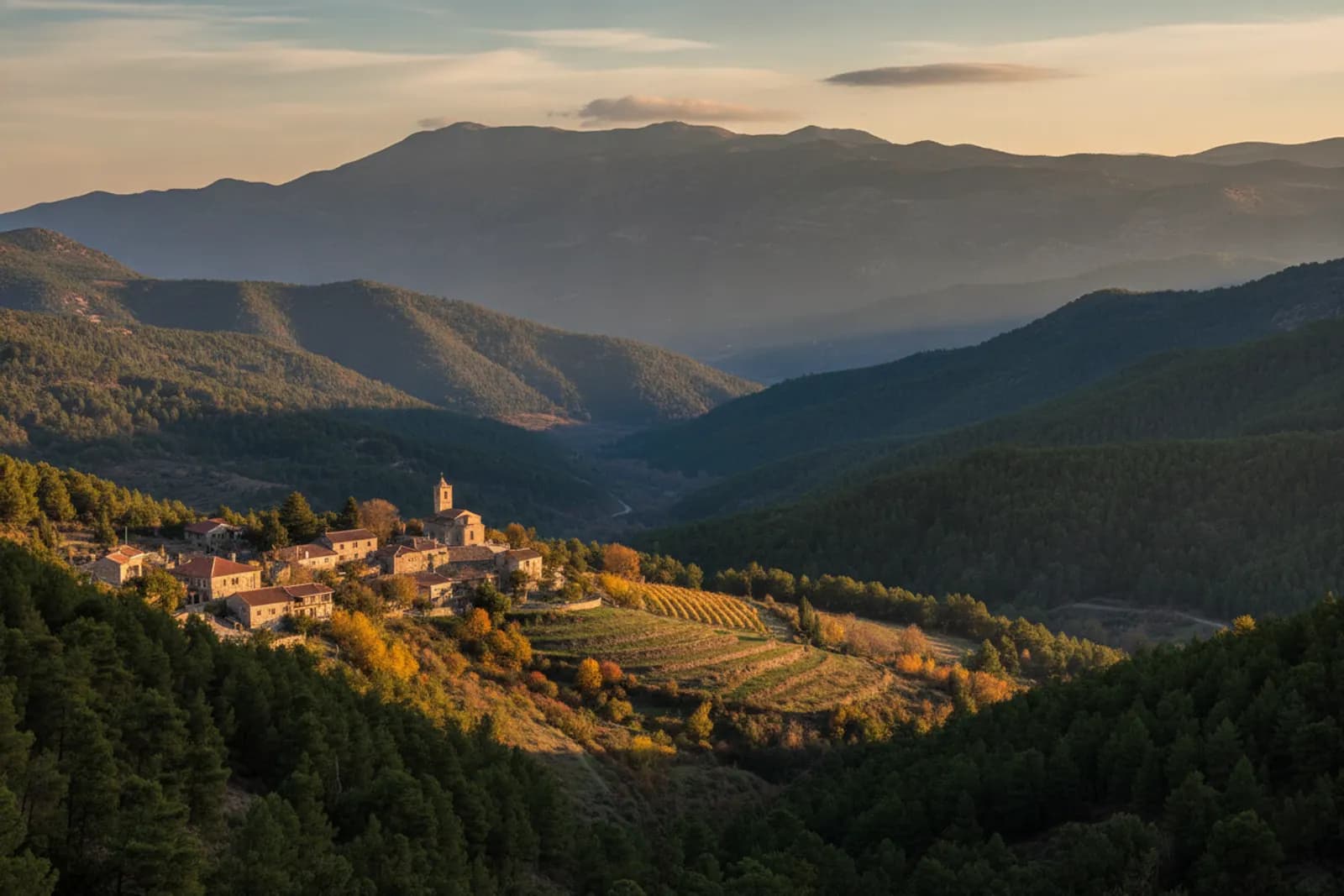
The coast around Paphos gets the beach days. The Troodos Mountains get the other kind: cool pine forest, stone villages, working monasteries and a cluster of painted churches that UNESCO lists as World Heritage. Mount Olympus, the top of the range, reaches 1,951 m. From a base in Peyia, above Coral Bay in Cyprus, you climb from the sea to the highest ground on the island in a single day.
A day-trip route from the Paphos side
The western approach goes through the Paphos Forest rather than up the Limassol side, and it is the quieter way in. A loop that works:
- Panagia. The village is about 33 km north-east of Paphos, at 850 m. It is the birthplace of Archbishop Makarios III, and the Chrysorrogiatissa monastery stands just outside it.
- Cedar Valley. The country road from Panagia to Kykkos runs through Cedar Valley, home of the Cyprus cedar, a tree that grows wild nowhere else.
- Kykkos Monastery. The richest monastery on the island, at 1,318 m.
- Pedoulas and the Marathasa valley. About 13 km from Kykkos, with three of the painted churches in this valley.
- Troodos Square, Platres and the Caledonia waterfall. The high point of the day, with the forest trails.
- Omodos. A wine village on the way down, for a late lunch or an early dinner before the run back to the coast.
That is a full day, and most people pick three or four stops rather than all six. Mountain roads are slower than the map suggests, so start early and leave room for a long lunch. Our guide to driving in Cyprus covers driving on the left, the rules and what to know before you hire a car.
Kykkos Monastery
Kykkos is the best-known monastery in Cyprus and the most lavishly decorated. It is dedicated to the Virgin Mary and holds one of three icons that tradition says were painted by the Apostle Luke, kept covered in silver gilt inside a shrine of tortoiseshell and mother-of-pearl. The story of its founding involves a hermit called Isaiah and the Byzantine emperor Alexios I Komnenos. Makarios III, later archbishop, began here as a novice.
The monastery also makes zivania, the island’s grape spirit, and holds big religious fairs on 15 August and 8 September, when it is far busier than usual.
Its opening hours in 2026:
| Season | Open |
|---|---|
| June to October | 10:00–18:00 |
| November to May | 10:00–16:00 |
It is closed on public holidays, and entry to the monastery is free. The museum next door, with icons, church vessels, manuscripts and older finds, charges for entry. Opening hours change, so check before you set off.
What to wear
Cover your shoulders and knees for any church or monastery, and expect the rules at monasteries to be stricter than at village churches. Leave the shorts and sleeveless tops in the car, or pack a long skirt or light trousers and a scarf to pull on at the door. Don’t count on borrowing something at the entrance.
The painted churches of Troodos
Ten small churches and monasteries in the Troodos were added to UNESCO’s World Heritage List in 1985, with the listing extended in 2001. From outside they look like barns, with steep pitched timber roofs built to shed rain and snow. Inside, the walls are covered in Byzantine and post-Byzantine paintings.
They are grouped by valley:
- Marathasa: Archangelos Michael at Pedoulas, Panagia tou Moutoulla and Agios Ioannis Lambadistis at Kalopanagiotis. These three fit best into a day from the Paphos side.
- Solea: Agios Nikolaos tis Stegis near Kakopetria, Panagia Podithou at Galata and Panagia Asinou near Nikitari.
- Pitsilia: Stavros tou Agiasmati, Metamorfosis tou Sotiros, Timios Stavros and Panagia tou Araka, further east and better saved for another trip.
In August 2025 the Deputy Ministry of Culture set longer visiting hours for the World Heritage churches. From 16 April to 15 September they open Tuesday to Saturday 10:00–13:00 and 14:00–17:30, and Sunday 11:00–16:30. From 16 September to 15 April it is Tuesday to Saturday 10:00–16:30 and Sunday 11:00–16:30. They are closed on Mondays, so don’t plan the trip for one. The same dress code applies as at Kykkos.
Omodos and Platres
Omodos sits at 800 m in the Limassol district’s wine country, about 42 km from Limassol. Its cobbled square is lined with stone houses and wineries, and it keeps a medieval wine press. On the square stands the Timios Stavros monastery, with old icons and carved woodwork. Look out for the narrow-knit lace, local wine, zivania and arkatena, a traditional bread. The village holds a three-day Holy Cross fair from 14 September. Our guide to Cypriot food tells you what to order.
Platres is higher, at 1,100 m. It is the natural base for the Caledonia waterfall and has a chocolate workshop and an adventure rope park.
Nature trails: the Caledonia waterfall and Mount Olympus
The Department of Forests looks after a network of signed nature trails in the Troodos National Forest Park. Two make good half-day walks.
Caledonia (Kalidonia) trail
Visit Cyprus calls the Caledonia falls the most impressive waterfall on the island. It is thought they were named by English or Scottish visitors in 1878. The trail is linear, 3 km long and takes about 1.5 hours. It starts about 350 m off the road from Troodos to Platres, about 3 km from Troodos Square, and follows the Krios Potamos (the Cold River), which runs all year. On the way it drops from 1,571 m to 1,238 m and passes the waterfall, before ending at Psilodentro above Platres.
Because it is one-way, decide how to get back to the car: walk back up the way you came, or split the group and leave a car at each end.
Artemis trail
The Artemis trail is a 7 km circuit around the top of Mount Olympus at about 1,850 m. It is graded the easiest and takes 2.5 to 3 hours. It runs through black pine forest, past two trees thought to be about 500 years old and the ruins of a Venetian fortification from 1571. It starts near the junction of the Troodos–Prodromos road with the road up to Chionistra.
Snow in winter
Cyprus has a ski club and four lifts. The Cyprus Ski Club runs them on the slopes of Mount Olympus, about 2 km from Troodos Square, with a season that usually runs from early January to late March. Snow is never guaranteed, so check the club’s piste and road conditions page and webcam before you set off.
When heavy snow does fall, the roads can close to ordinary cars. In January 2026, the main roads to Troodos were open only to four-wheel-drive vehicles or cars fitted with snow chains, in dense fog. A hire car from the coast won’t have chains, so on snowy days follow the police and Cyprus Mail updates and be ready to turn back.
Even without snow, the mountains are much colder than the coast in winter. Our January weather guide has the figures for Paphos; pack a warm layer on top of that for the mountains.
When to go
- Spring and autumn are the most comfortable seasons for walking, and the river past the Caledonia falls runs all year.
- Summer is when the mountains are most welcome, as a cool break from the coast, but Kykkos is busy around 15 August.
- Winter brings the chance of snow, short days and early closing at the monastery, so leave by mid-morning.
For more days out from the west of the island, our guide to the villages of Kathikas and the Akamas covers the wine country closer to home.
Where to stay
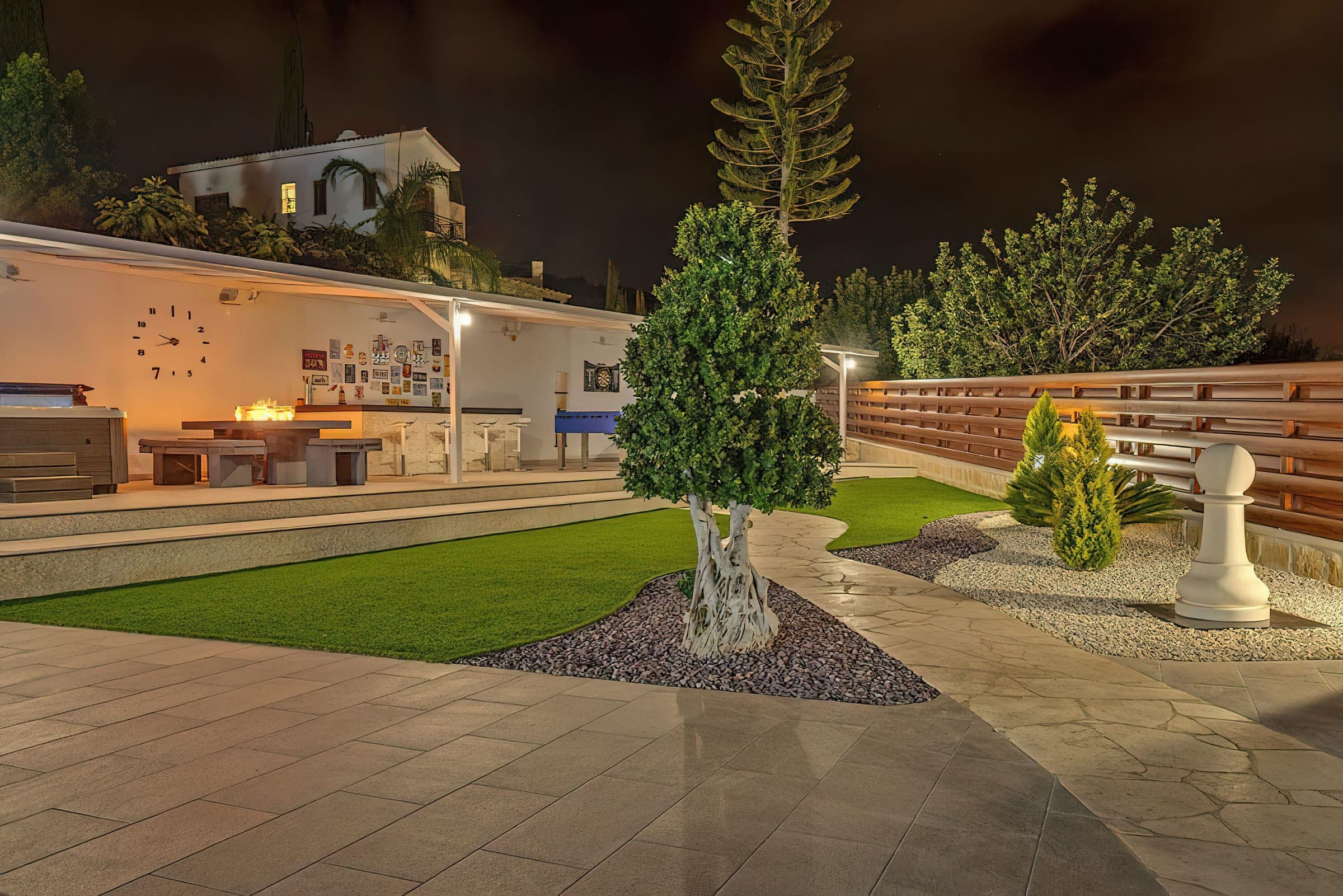
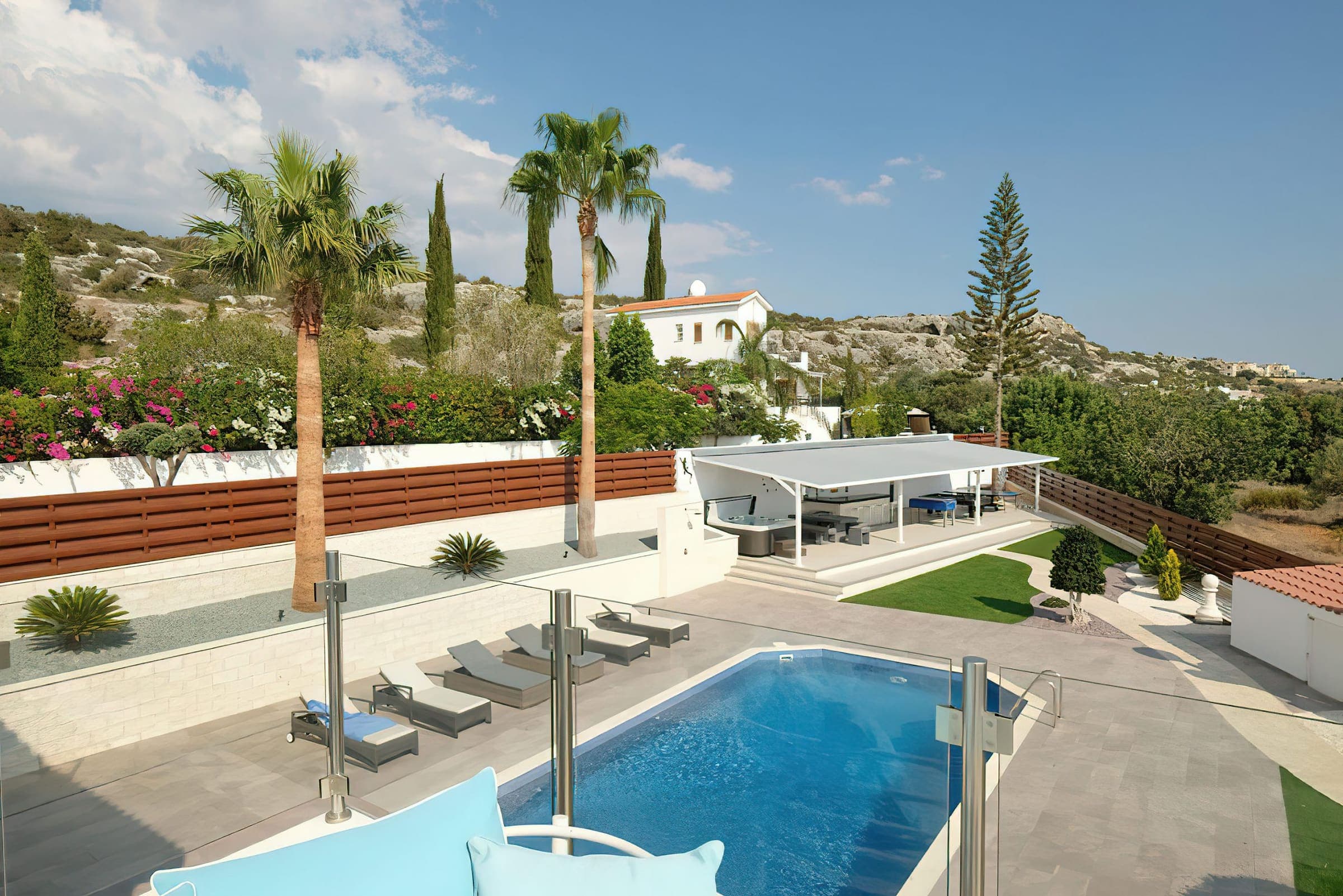
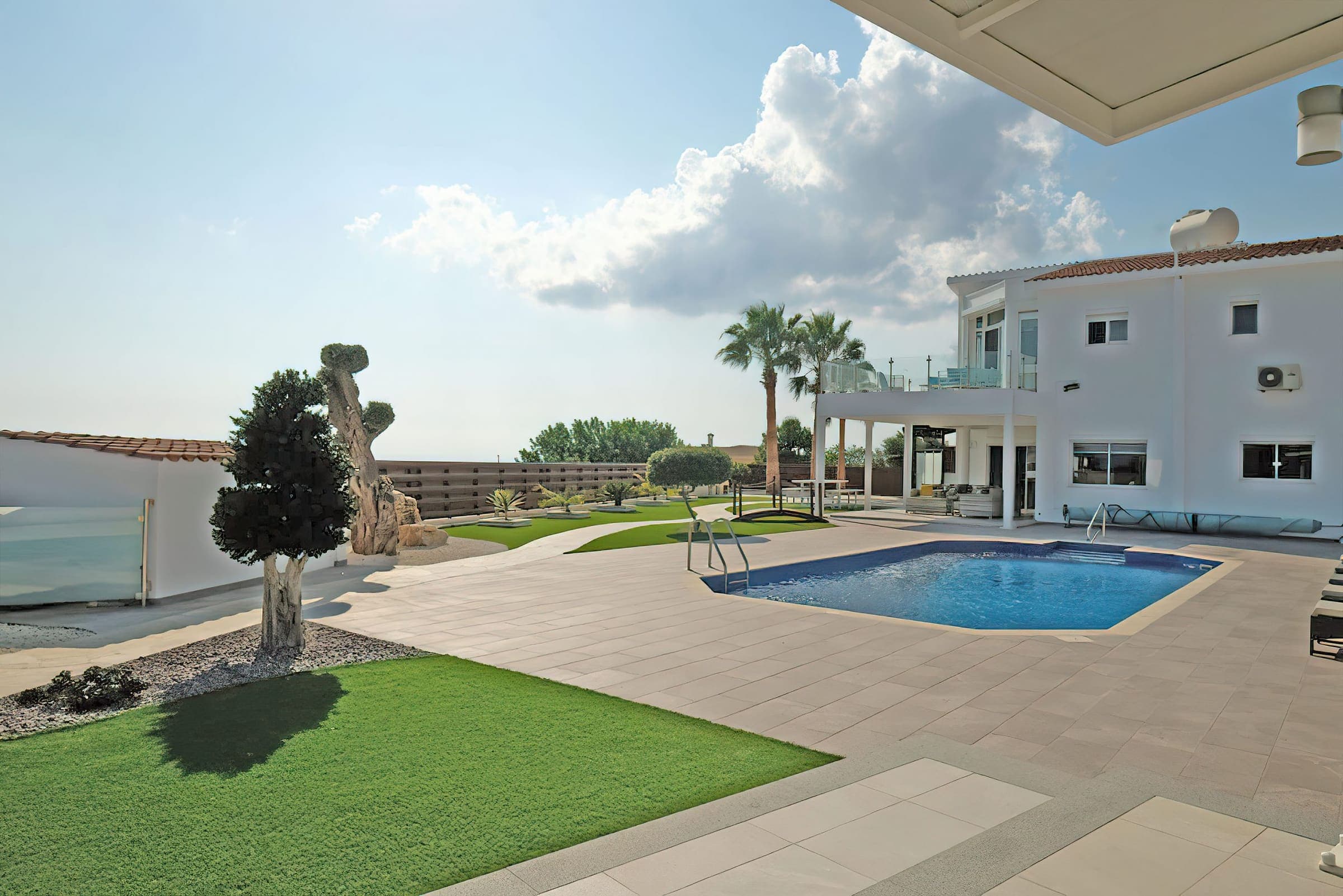
After a day in the mountains, it helps to come home to space. Villa Prasino is a private villa in Peyia for up to 6 guests, with 3 bedrooms, a 6 × 12 m diving pool, a hot tub and an outdoor bar with fire-pit seating, in 1,000 m² of gardens with sea and mountain views. The sea caves are about 2 km away and Coral Bay beach about 5 km. Read more about our villa with a private pool, check availability and rates, and when you are ready, send a booking request.