
Published · 7 min read · Facts checked 9 October 2026 against the sources below
Paphos has the harbour, the mosaics and the quieter west coast around Coral Bay. Limassol and Larnaca, further east along the south coast of Cyprus, are bigger and busier towns, each with a seafront promenade, a castle and a few sights you won’t find in Paphos. With a car or the intercity bus, either makes a day trip from the Paphos side, and Limassol pairs well with the ancient sites on the way.
The motorway: Paphos to Limassol and on to Larnaca
The A6 motorway runs from Paphos to Limassol. It is about 66 km long and was finished in 2006. At Limassol it meets the A5, which carries on east to Larnaca, so you are on motorway for the whole way from Paphos to Larnaca.
There are no toll roads in Cyprus, so the only cost is fuel and parking. A few rules for the drive:
- Cyprus drives on the left.
- The motorway speed limit is 100 km/h, and there is also a minimum of 65 km/h.
- Outside towns the limit is 80 km/h on other roads, and 50 km/h in built-up areas.
- Seat belts are compulsory in the front and the back.
Our guide to driving in Cyprus covers hire cars, parking and the rest of the rules. Larnaca is a long round trip from the west of the island, so it is better as a full day than a half day, and Limassol leaves more time for stops on the way.
By intercity bus
If you would rather not drive, Intercity Buses runs route 56 between Paphos and Limassol. In Paphos it uses Karavella bus station; in Limassol it runs to the New Port, with stops in town on the way. The journey takes about 1 hour 15 minutes, with departures through the day from early morning into the evening.
In 2026 the fares on this route are:
| Ticket | Price |
|---|---|
| Single | €5 |
| Return (from sales points, not the driver) | €9 |
| Cyprus-wide day ticket (Motion card) | €20 |
Drivers sell single tickets only, and take cash only.
For Larnaca, a through service runs from Larnaca via Limassol to Paphos and back, taking about 2 hours 45 minutes each way. On weekdays it leaves Larnaca three times a day, and it is priced as two single tickets, one for each leg. That makes Larnaca by bus a long day, so check the timetables on the Intercity Buses website (opens in a new tab) before you set off; the company was also running diversions on its Limassol routes in October 2026.
On the way to Limassol: Kourion and Kolossi
Two of the best stops in the south are just off the road between Paphos and Limassol.
Kourion is 19 km west of Limassol. Its Greco-Roman theatre was built in the 2nd century BC and enlarged in the 2nd century AD, and is still used for performances. The House of Eustolios has four panels of 5th-century mosaic floors, and there are more mosaics in the House of Achilles and the House of the Gladiators. Entry is €4.50 at the time of writing. Our Kourion guide covers the mosaics, the stadium, the Sanctuary of Apollo Hylates and the beach below.
Kolossi Castle is 14 km west of Limassol. It was first built in the 13th century and rebuilt in its present form in the 15th, and after 1291 it was the Grand Commandery of the Knights of St John. The sweet wine the Knights made and exported here gave its name to Commandaria, one of the oldest named wines in the world. Beside the castle are the remains of a 14th-century sugar mill. Entry is €2.50 at the time of writing.
Both open at 08:30 every day, closing at 19:30 from 16 April to 15 September and at 17:00 for the rest of the year. They close on Christmas Day, New Year’s Day and Orthodox Easter Sunday. If you plan to see several ancient sites, there are passes covering one, three or seven days. Opening hours and prices change, so check before you set off.
On the old coast road from Paphos, Petra tou Romiou comes before Pissouri and Kourion; our guide to Aphrodite’s Rock covers that stop.
A day in Limassol
The old town and the castle
Limassol Castle stands by the old port. It was built in the 13th century on the site of an earlier Byzantine fort, and legend says Richard the Lionheart married Berengaria of Navarre in its chapel in 1191. Today it holds the Cyprus Medieval Museum, with medieval pottery, tombstones, Byzantine silver plates, weapons and coins. It opens 09:00–17:00 on weekdays and 10:00–17:00 at weekends, closed on public holidays, and entry is €4.50 at the time of writing.
Around it lies the old town: the Great Mosque, Agia Napa Cathedral, the old stone warehouses, the Municipal Market and the shops of Agiou Andreou Street. The Deputy Ministry of Tourism and Limassol Municipality run a free guided walk every Thursday at 10:00, all year except on public holidays, from the tourist information office at the old port. It lasts about two and a half hours, and you need to book on +357 25 362756.
The marina and the seafront
Limassol Marina has berths for 650 yachts, more than 40 shops and more than 14 restaurants, bars and cafés, so it suits lunch or an evening drink. The Thursday walk also takes in the Molos, the seafront sculpture park.
Akrotiri Salt Lake
South-west of the city, Akrotiri Salt Lake is the largest inland body of water on the island. Between November and March it holds thousands of flamingos, as well as cranes and waders. It usually dries out in summer, so it is a winter and spring stop.
A day in Larnaca
Foinikoudes and St Lazarus
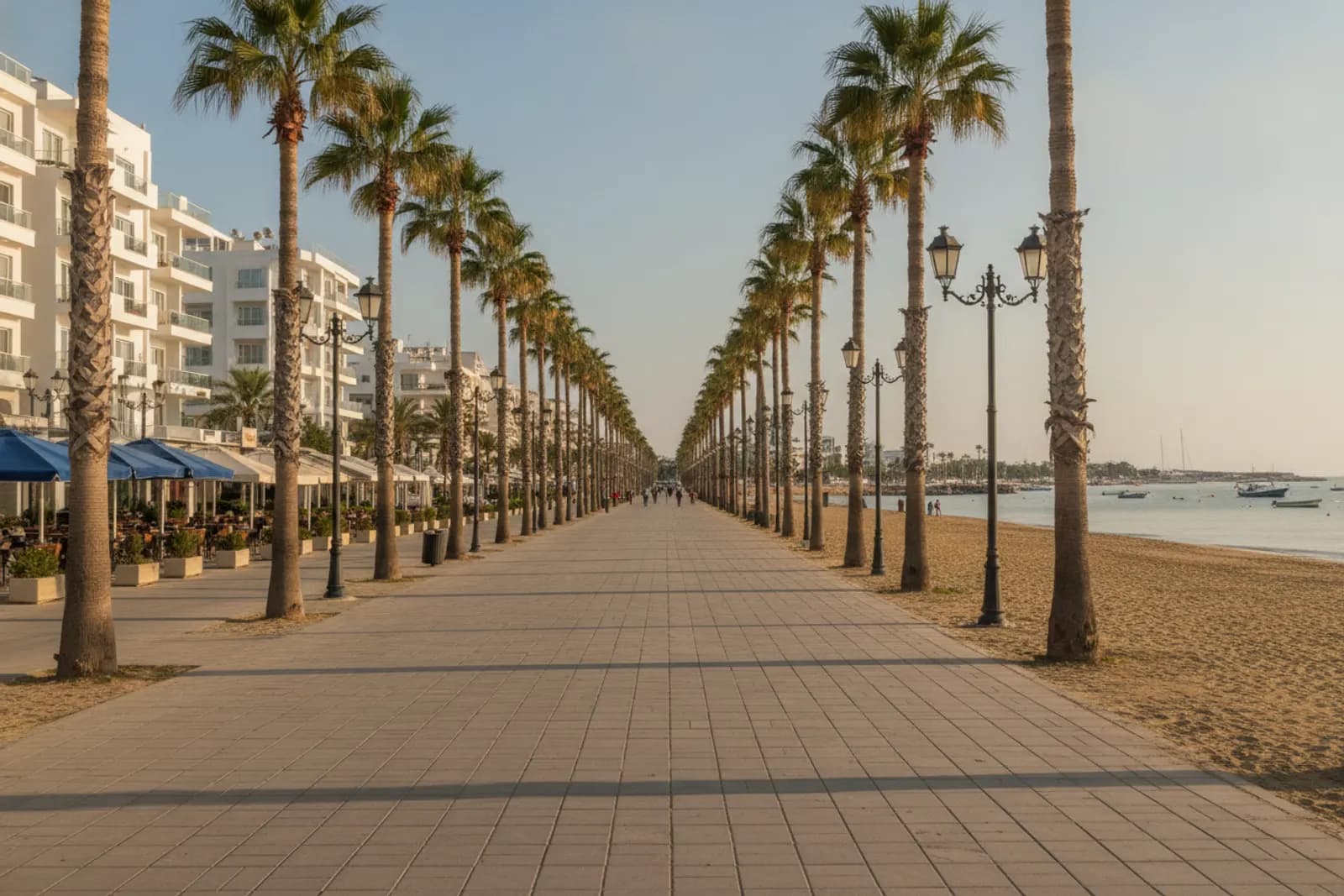
Larnaca’s seafront is the Foinikoudes promenade (often spelled Finikoudes), lined with mature palm trees and backed by the town beach, cafés and restaurants.
A few streets back stands the church of St Lazarus. Tradition holds that Lazarus, raised from the dead by Jesus, came to Cyprus, became the town’s bishop and is buried here, beneath the sanctuary. The church was built under the Byzantine emperor Leo VI in the 9th century and restored in the 17th. It lost its domes and bell tower in the early Ottoman years, but its carved iconostasis survived. Entry is free. It opens Monday to Saturday 08:00–18:30 from March to October, with a midday break in winter, and has shorter Sunday hours around the services.
Larnaca’s municipality also runs a free walking tour every Wednesday at 10:00 from the tourist information office. It takes in the palm promenade, St Lazarus and colonial buildings, and lasts about two and a half hours.
The salt lake and the flamingos
Larnaca Salt Lake lies just south-west of the town. It covers 2.2 km² and is protected under the Ramsar convention and Natura 2000. From November to March thousands of flamingos feed here on a tiny brine shrimp, and when the shrimp run short the birds move on. A signed nature trail about 4 km long follows the lake shore, with benches along the way.
On the west bank stands Hala Sultan Tekke, a mosque built in stages between 1760 and 1817 around the tomb of Umm Haram, who is revered by Muslims worldwide. It is still a place of worship, so dress modestly. Entry is free, and it opens from 08:30, closing at 19:30 in summer and 17:00 in winter.
Larnaca airport as your way in
Larnaca and Paphos are the two international airports in Cyprus, so if your dates or your home airport suit Larnaca better, it is a fair alternative. If you land there, the Kapnos airport shuttle serves Paphos among other towns, and there are 24-hour taxis outside arrivals and buses to Larnaca and Limassol. A hire car is the simplest way across the island to the villa in Peyia. Our flight checker shows who flies to Paphos, and our guide from Paphos airport to Coral Bay covers the short way in.
Where to stay
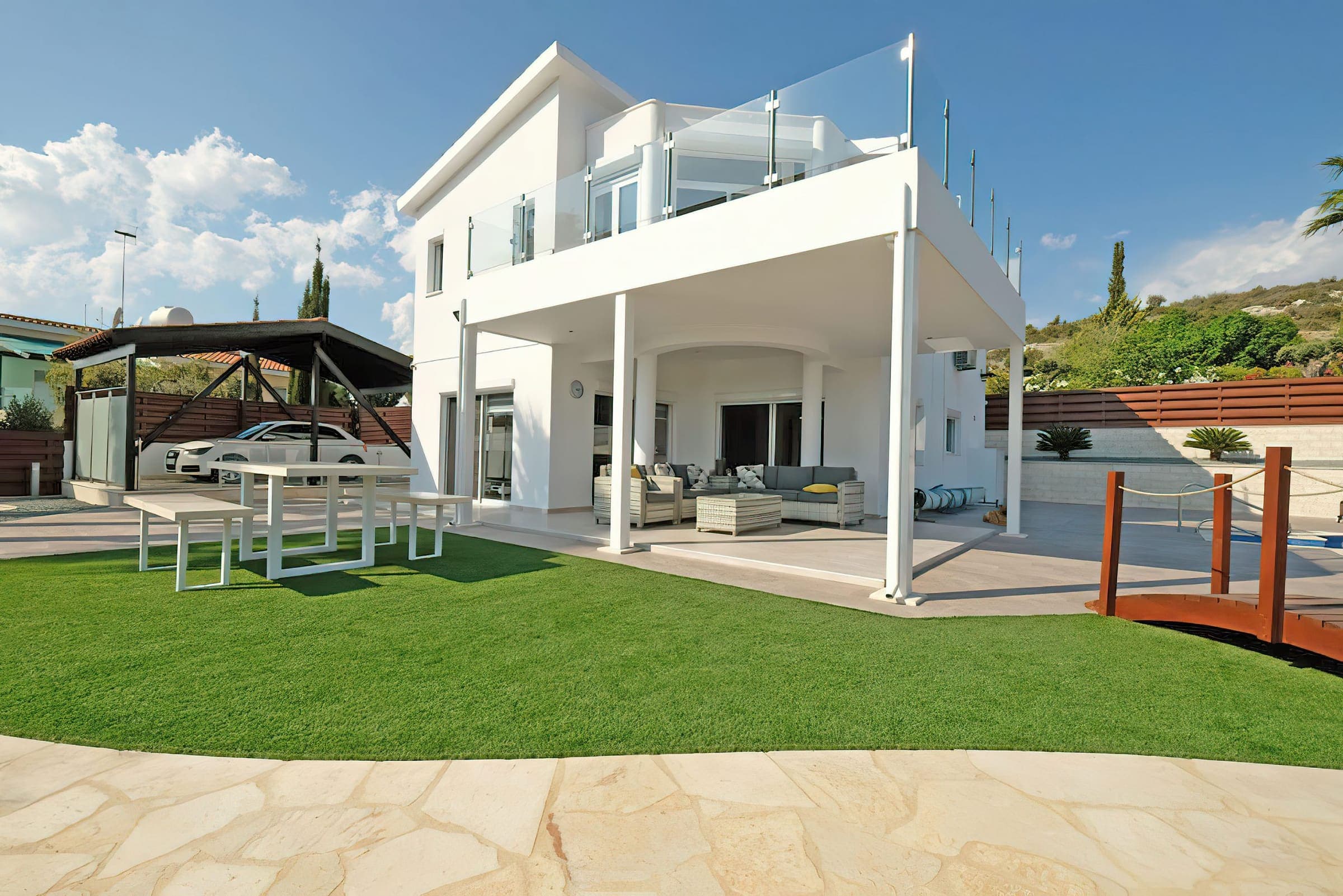
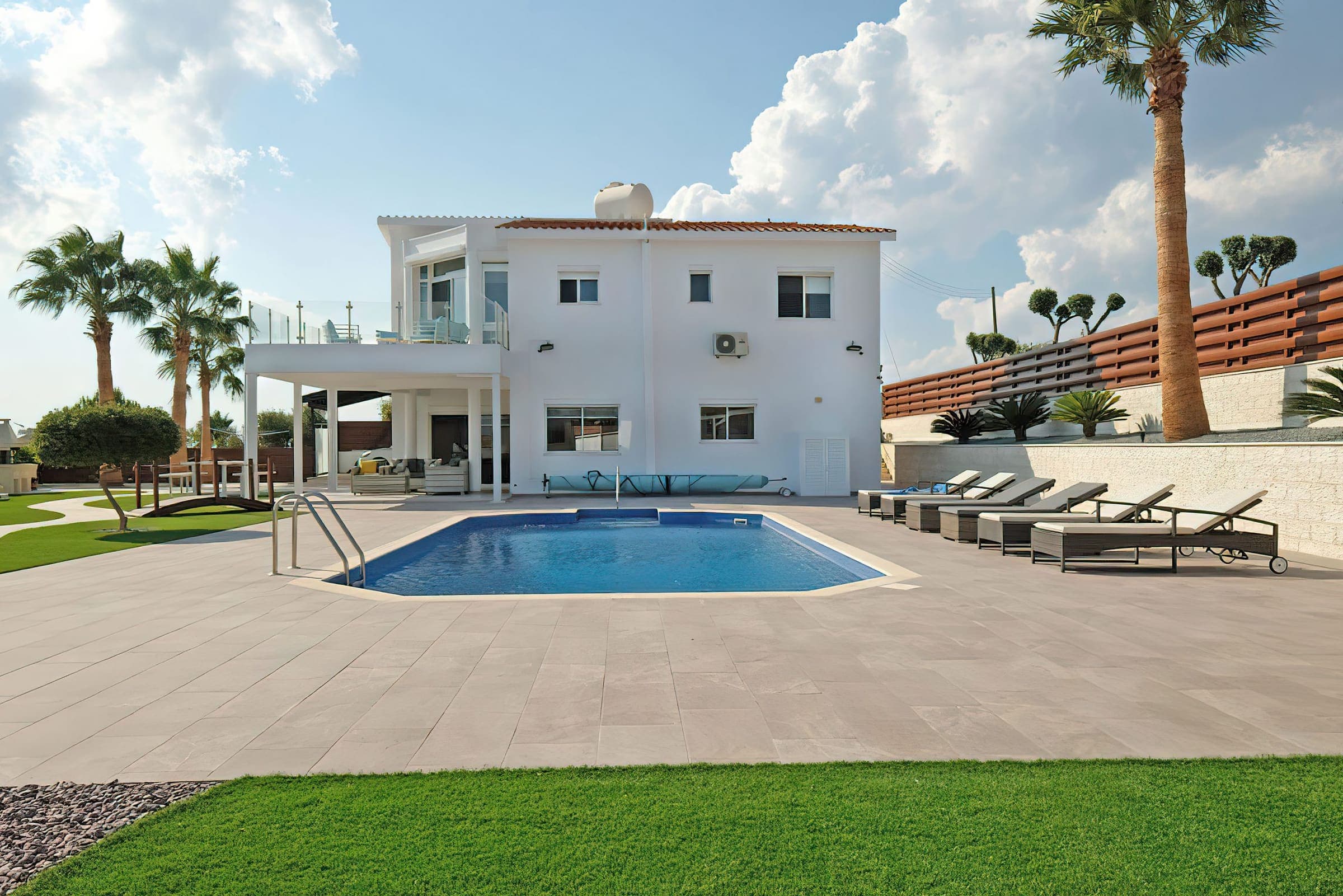
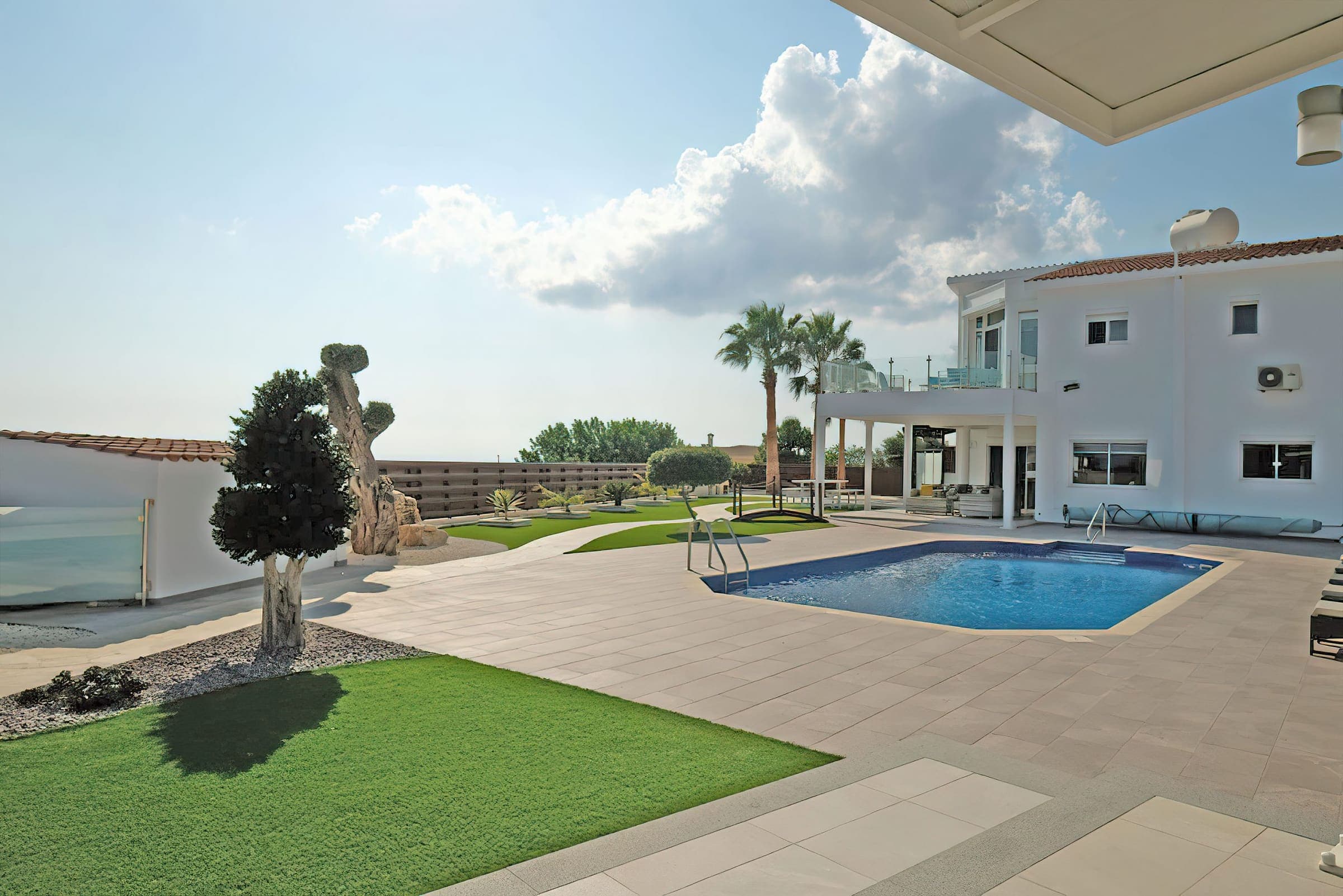
The villa above Coral Bay is a calm base for days out along the south coast. Villa Prasino sleeps up to 6 guests in 3 bedrooms, with a 6 × 12 m private diving pool, a hot tub, a traditional stone BBQ and covered outdoor dining. There is a private, gated driveway for three cars, and the sea caves are about 2 km away. See our villa with a private pool, check availability and rates, and send us a booking request when you are ready.