
Published · 6 min read · Facts checked 9 October 2026 against the sources below
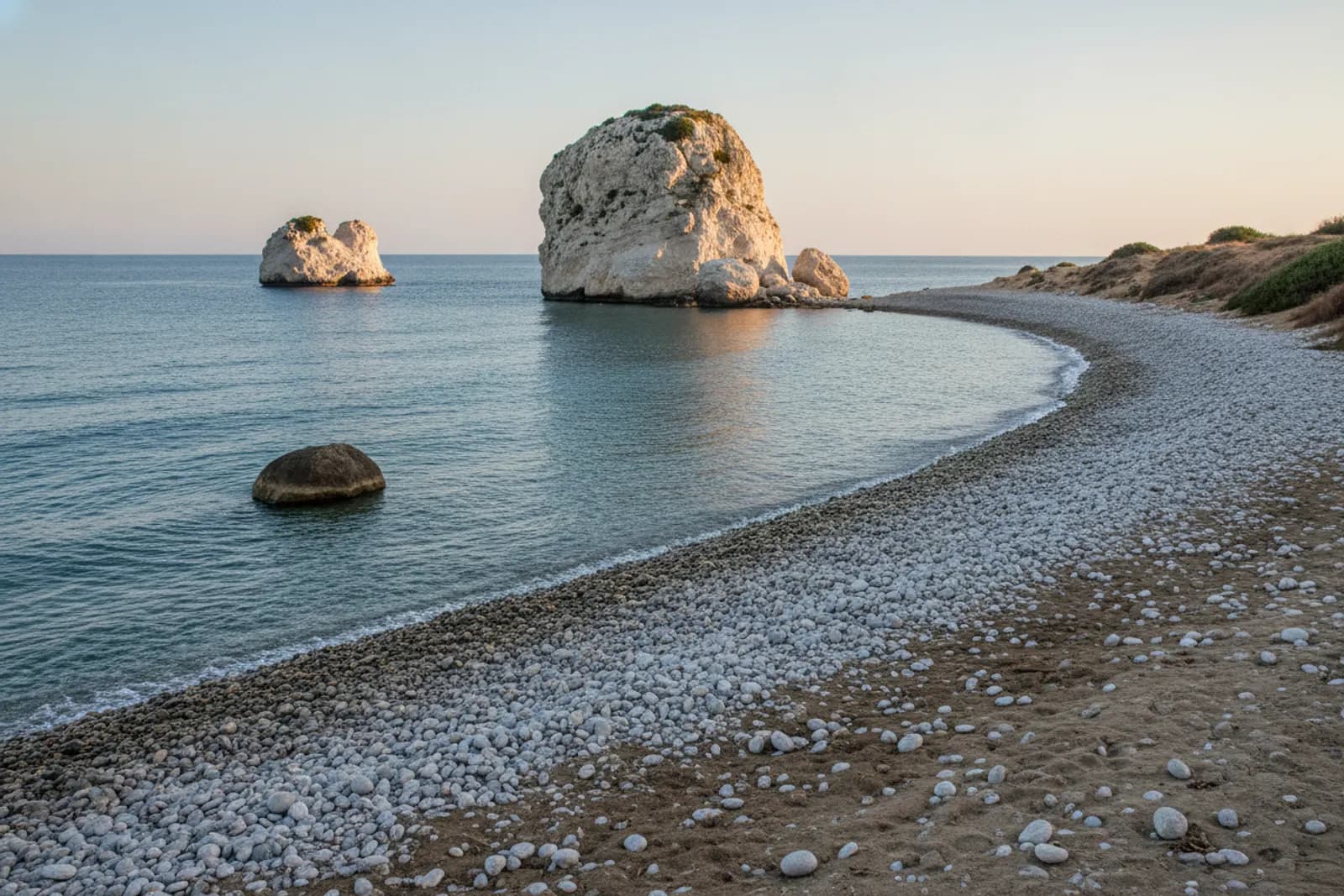
Aphrodite’s Rock is the view Cyprus puts on its postcards: a stack of pale limestone standing in the surf off a pebble beach, where the goddess of love is said to have stepped ashore. Its Greek name is Petra tou Romiou. It sits on the south-west coast of the Paphos district, on the coast road between Paphos and Limassol, so from the villa above Coral Bay it is a run down the coast, through Paphos and out the other side.
It is a stop rather than a day out. There is a beach, a car park, a café pavilion and the rock itself. Pair it with the Sanctuary of Aphrodite at Kouklia, which is on the way, time your swim for the late afternoon, and it makes a good half-day.
Why it’s called Aphrodite’s birthplace
The best-known version comes from Hesiod’s Theogony. After Cronus attacked his father Uranus, Aphrodite rose from the foam of the sea (aphros in Greek). The west wind, Zephyrus, carried her first to the island of Cythera and then to Cyprus. That is why the ancient poets called her Kypris, and why Hesiod calls her Kyprogeneia, born of Cyprus. The version most painters chose has her born of the foam and escorted to this beach on a shell. Botticelli’s Birth of Venus, which hangs in Florence, is the image most people carry in their heads.
The rock’s Greek name comes from a different story. Digenis Akritas, the hero of Byzantine legend, is said to have heaved the boulder into the sea to keep off Saracen raiders, who attacked the island between the 7th and 10th centuries. One telling has him throwing it all the way from the Pentadaktylos range in the north. Petra tou Romiou means “the rock of the Greek”.
The geology is plainer: the rock is white recrystallised reef limestone. In some sea conditions the waves hit the rocks and rise in a column of water that falls back as a pillar of foam. On a lively day you can see where the myth came from.
The swim round the rock
Local tradition says that swimming round the rock three times brings youth and beauty, luck, fertility or true love, depending on who is telling it. The Deputy Ministry of Tourism’s own booklet adds the stricter version: at midnight, under a full moon, without a swimsuit. Read the safety notes below before you try any version of it.
Getting there from Coral Bay, Cyprus
By car. Head south to Paphos, then follow the coast road east towards Limassol. The car park and the tourist pavilion are on the inland side of the road. Don’t cross the road on foot: opposite the pavilion, a passage runs under the road and down to the beach, and it is the safe way across. Our driving in Cyprus guide covers hire cars and the roads.
By bus. Pafos Buses route 631 runs from the Harbour Station in Kato Paphos to Petra tou Romiou, stopping at the Kouklia archaeological site on the way. From April to November there are around ten buses a day each way. In 2026 the first leaves the harbour at 07:25 on weekdays and Saturdays, and the last bus back from the rock leaves at 23:15. There are fewer buses from December to March, so check the timetable before you go.
On foot, from above. A Department of Forests nature trail starts above the tourist pavilion and climbs to a viewpoint about 2 km to the north-east. It links with the long-distance E4 path. It is the best way to see the whole bay from above, and much cooler in the morning than in the afternoon.
Swimming, waves and pebbles
The beach is smooth pebbles, not sand. Bring water shoes, a mat or a thick towel, and shade if you plan to stay long.
This is not an organised beach. The bay is part of a protected Natura 2000 area, and in 2017 the Cyprus Mail reported that it had no lifeguard, after a summer in which a child nearly drowned and a man was hurt slipping off the rock. The currents around the largest rock can be strong, and there is calmer water nearby.
If you would rather finish the day on sand, our best beaches near Coral Bay guide has the organised beaches closer to the villa.
Sunset and the best time to go
Petra tou Romiou is at its best in low sun. The light turns golden at sunrise and at sunset, and that is when the limestone glows. Check the sunset time for your dates before you set off.
In the middle of a summer day the beach is hot and shadeless, and the average high at Paphos Airport in August is 31.0 °C. Our plan for a summer visit: Kouklia in the morning, a long lunch and a rest, then the rock from late afternoon, with a swim and the drive home after dark. In spring and autumn you can do it the other way round.
| When | What to expect |
|---|---|
| Early morning | Few people, soft light, cool enough for the viewpoint trail |
| Midday | Hot pebbles and little shade |
| Late afternoon | Long shadows and the best light on the rock |
| After sunset | Take a torch for the passage back to the car |
The Sanctuary of Aphrodite at Kouklia
If the rock is where Aphrodite arrived, Kouklia is where she was worshipped. The sanctuary at Palaipafos, in the village of Kouklia about 16 km east of Paphos, was one of the most important shrines to the goddess in the ancient world. People worshipped a fertility goddess there long before the Greeks, and the Department of Antiquities dates the sanctuary itself to the 12th century BC. Worship carried on until the 4th century AD. With Nea Paphos, the site was among the first in Cyprus to be added to UNESCO’s World Heritage List, in 1980.
What you see today: the remains of the sanctuary, the Leda mosaic, a floor from the 2nd century AD, the north-east gate of the ancient city, and a 13th-century Lusignan manor house, whose east wing holds the site museum.
In 2026 the site opens Tuesday to Sunday from 08:30 to 17:00 and is closed on Mondays, Christmas Day, New Year’s Day and Orthodox Easter Sunday. Entry is €4.50 at the time of writing, including the museum, and it is wheelchair accessible. If you are also seeing the mosaics and the Tombs of the Kings in Paphos, a Department of Antiquities pass for one, three or seven days (€8.50, €17 or €25 at the time of writing) may cost less. Check before you go.
The Aphrodite Cultural Route links more of her sites, among them Geroskipou (once the goddess’s sacred garden) and the mosaics of Nea Paphos. Our things to do in Paphos guide covers the town.
Planning the half-day
A simple plan from the villa in Peyia:
- Drive through Paphos and out along the coast road.
- Kouklia first, while it is open: allow an hour or so for the sanctuary and the museum.
- Carry on to the rock. Park at the pavilion, take the passage under the road, swim if the sea is calm.
- Stay for the low sun, then drive home.
Pack water shoes, two towels each (one to lie on), sun cream, hats, plenty of water and a torch if you are staying after dark.
It also works the other way, with a morning at the rock and an afternoon in Kato Paphos by the harbour. On a Cyprus honeymoon, a late swim here and dinner on the way home makes an obvious romantic evening.
Where to stay
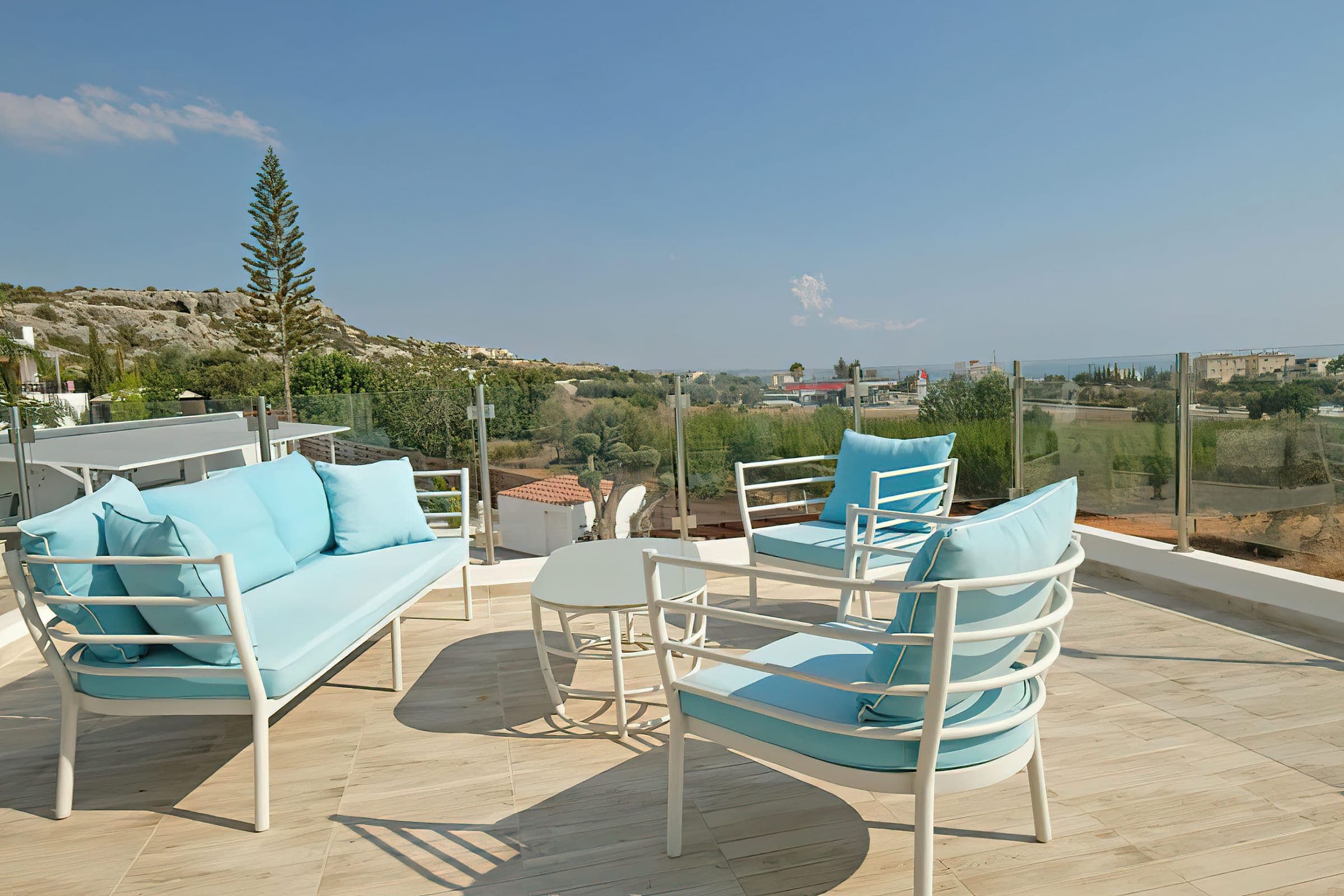
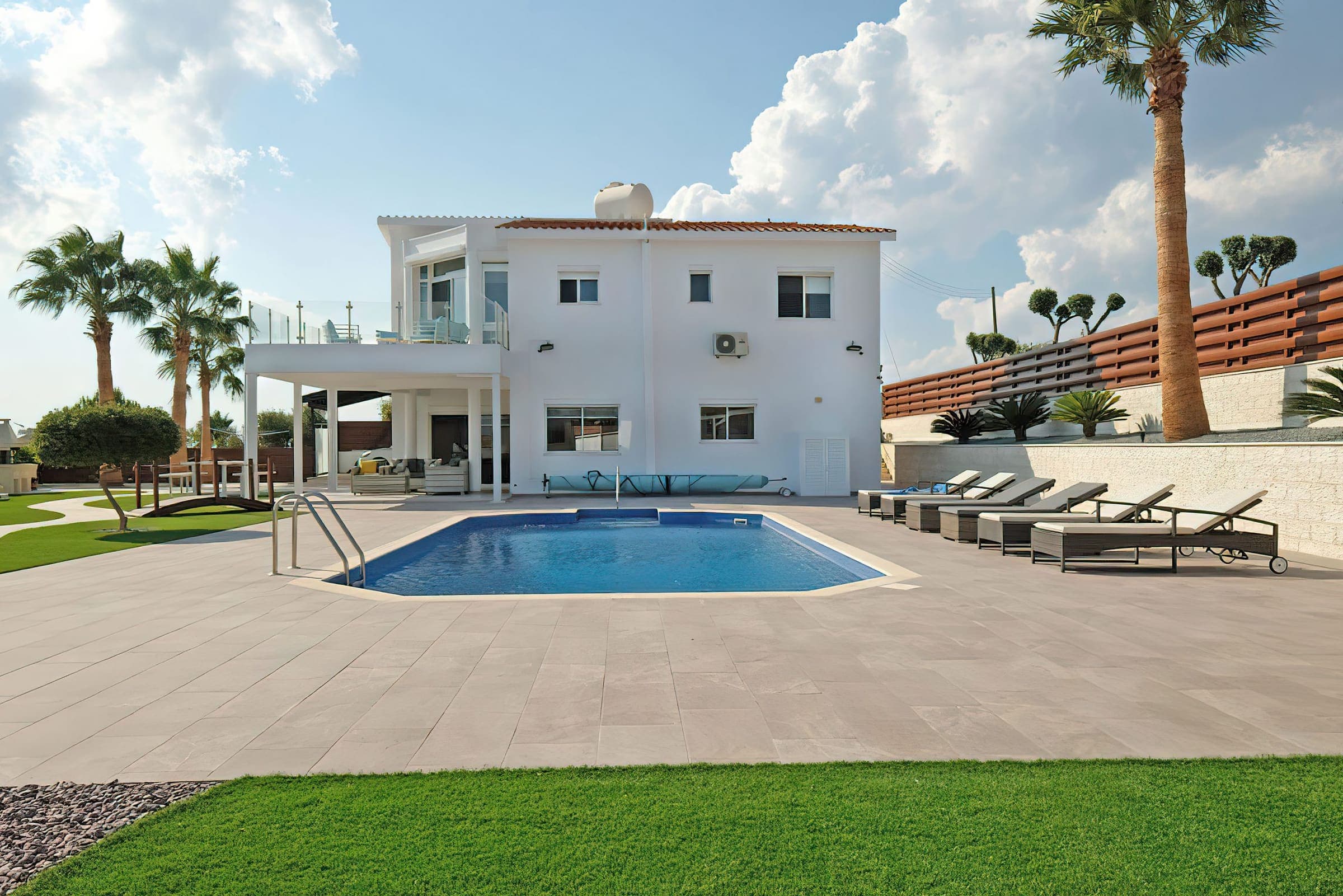
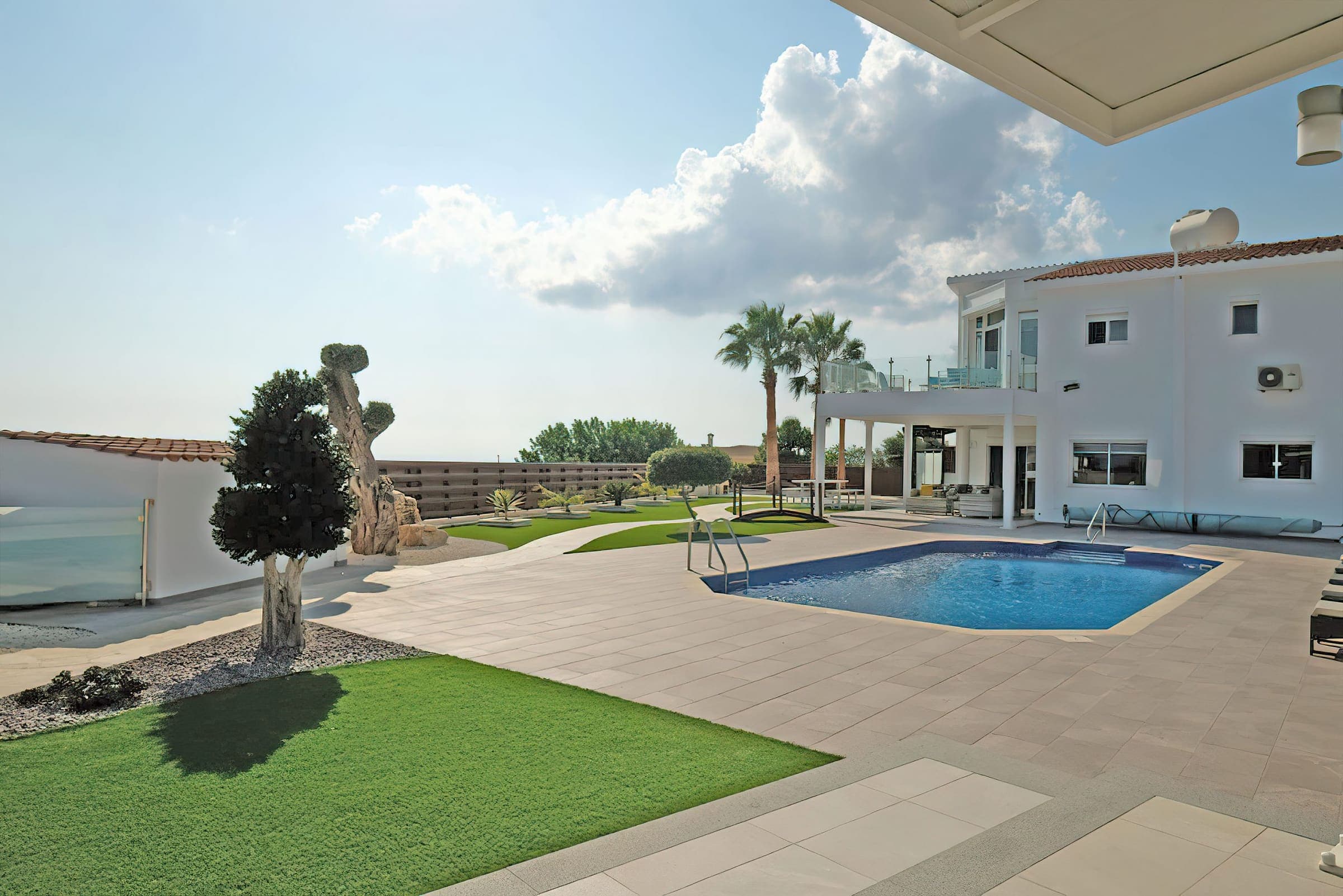
Villa Prasino is a private villa in Peyia, above Coral Bay on the Paphos coast, for up to 6 guests. After a day on the pebbles there is a 6 × 12 m diving pool, a hot tub and an outdoor bar with a fire pit, all fenced inside 1,000 m² of gardens with sea and mountain views. The Sea Caves are about 2 km away and Coral Bay beach about 5 km. See our villa for couples, and check availability and rates. When you have dates, send us a booking request and we’ll confirm availability and your price within 24 hours.