
Published · 7 min read · Facts checked 9 October 2026 against the sources below
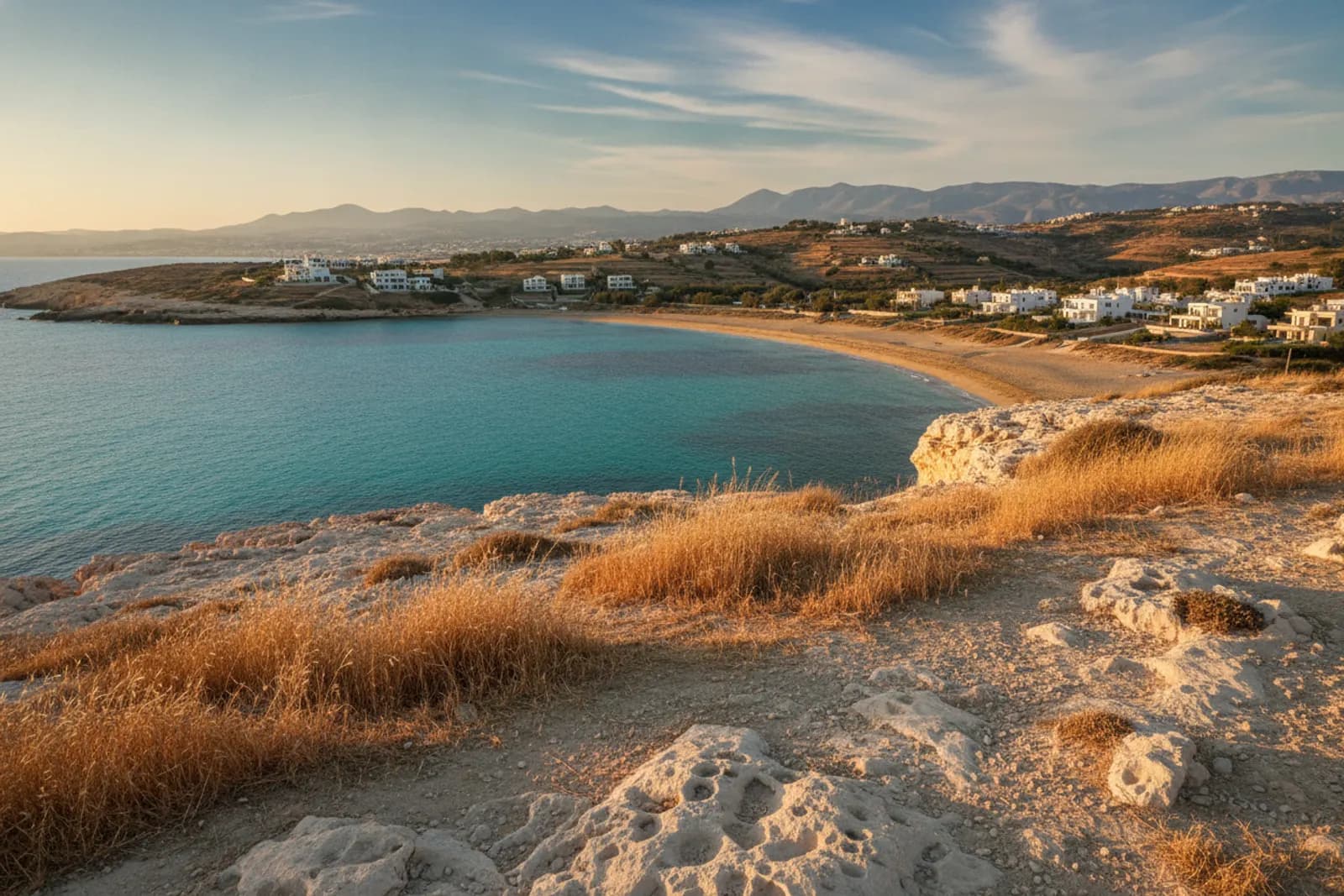
Paphos is the name of a town and of a whole district, and most of what makes a holiday here sits outside the town itself. From Coral Bay, Cyprus, you can be among Roman mosaics in the morning, at a monastery in the hills after lunch and back by the pool for sunset. This is our short list, from the villa in Peyia, with a link to a fuller guide for each.
Opening times, prices and bus routes change, so check before you set off.
Kato Paphos: mosaics, tombs and the castle
If you only do one thing in Paphos, make it the Archaeological Park of Kato Pafos. It has been on UNESCO's World Heritage List since 1980, and its mosaic floors from four Roman villas, the houses of Dionysos, Theseus, Aion and Orpheus, are the reason most people come. The same ticket covers the Odeon, the Agora, the Asklepieion and the ruined Saranta Kolones castle.
A short way north are the Tombs of the Kings, underground tombs cut from solid rock in the Hellenistic and Roman periods. The name is misleading: they were built for officials and aristocrats, not kings.
Give the park a morning and the tombs an hour; the coastal footpath links the two if it is not too hot.
Down at the water, Paphos harbour and its castle make the easy end to the day. The small fort guarding the harbour is the Ottoman rebuilding of 1592, and you can climb to the roof.
Entry is €4.50 for the park and €2.50 each for the tombs and the castle at the time of writing. All three open at 08:30 and close at 19:30 from 16 April to 15 September, and at 17:00 for the rest of the year.
Ktima, the old upper town
The upper town, Ktima, is where Paphos people actually shop and eat lunch. It has restored historic buildings, the municipal market with its local producers and crafts, the Ethnographic and Archaeological museums, the Agia Sofia Mosque and the restored Ottoman baths.
It is quieter than the seafront and pairs well with the mosaics: route 618 links Karavella bus station, in the upper town, with the Tombs of the Kings station, where the Coral Bay bus stops. Our Paphos old town guide covers the market days, museum hours and a walking order that keeps you in the shade.
East along the coast: Aphrodite's Rock and Kouklia
Petra tou Romiou, on the south-west coast of the island, is where legend says Aphrodite rose from the sea. The name means "rock of the Greek" and comes from a different story, in which the hero Digenis threw huge rocks at raiders. Tradition says that swimming around the rock three times brings good fortune. Late afternoon is the time to go, when the light turns the cliffs gold.
Combine it with Kouklia, about 16 km east of Paphos, the site of ancient Palaipafos and the Sanctuary of Aphrodite, the most famous of her sanctuaries. A small museum sits in a manor house on the site. It opens Tuesday to Sunday, 08:30 to 17:00, and entry is €4.50 at the time of writing. See our guide to Aphrodite's Rock for parking and swimming.
Inland: Agios Neophytos and the Troodos
About 9 km north of Paphos, near the village of Tala, is the monastery of Agios Neophytos, founded by a Cypriot hermit in the second half of the 12th century. He carved himself a cave, the Enkleistra, and its walls carry Byzantine frescoes from the 12th to the 15th centuries. There is also a museum of icons. It opens from 09:00 to 13:00 and 14:00 to 18:00 from April to October, and from 09:00 to 16:00 from November to March; the fee is €2 at the time of writing.
The Troodos mountains need a full day. Mount Olympus, also called Chionistra, is the highest point on the island and has skiing in winter, and the slopes below it hold wine villages and ten Byzantine churches on UNESCO's list. Our Troodos guide suggests a route.
North into the Akamas
The Akamas is the side of Paphos most visitors never see. Our Akamas page has the map; the highlights are below.
- Lara and Toxeftra are protected nesting beaches for green and loggerhead turtles. See Lara Beach and the turtles before you go.
- The Blue Lagoon near Latchi has clear water about 10 metres deep over sand, reached from the shore or by boat. The Blue Lagoon guide compares the two.
- The Aphrodite trail is a 7.5 km circular walk of three to four hours, starting at the Baths of Aphrodite. Start at first light from late spring to early autumn.
- Kathikas, at almost 700 metres and about 23 km north of the town, is a wine village known for its Xynisteri white, with views over Coral Bay, the Akamas and the Troodos. It has a small donkey sanctuary and the Akamas Avifauna and Flora Visitors Centre. More in Kathikas and the Akamas villages.
Closer to the villa
Some of the best things to do around Paphos are a few minutes from the door. Our guides to things to do in Coral Bay and the best beaches near Coral Bay cover them, and the Sea Caves page has the map.
Pafos Zoo is in Peyia too. It opens at 09:00 every day and closes at 17:00 from November to March, 18:00 from April to July and in September and October, and 19:00 in August. Our zoo and waterpark guide has the details for families.
Planning your days
Most visitors try to cram Kato Paphos into an afternoon. Give it a morning instead: arrive at 08:30, see the mosaics while it is cool, and be in the shade by midday. If you want to go further afield, our guide to things to do in Cyprus covers the rest of the island region by region.
Beating the heat and the crowds
Archaeological sites in Paphos are open ground with little shade, and the stone throws the heat back at you. From June to September, do the outdoor sites first thing and save the afternoon for the pool, a museum or the beach. The first hour after opening is usually the quietest and the coolest. Spring and autumn are the most comfortable months for walking; our Paphos weather guide has the month-by-month figures.
Pack a hat, sun cream, more water than you think you need and shoes with a proper grip, as the tombs involve uneven steps cut into the rock.
A sample week
| Day | Plan |
|---|---|
| 1 | Kato Pafos park and the Tombs of the Kings in the morning; lunch in Ktima |
| 2 | Coral Bay beach; sunset at Paphos harbour |
| 3 | Agios Neophytos, then Kathikas for lunch |
| 4 | Early start on the Aphrodite trail; afternoon at the Blue Lagoon |
| 5 | Kouklia, then Aphrodite's Rock for the late light |
| 6 | Troodos, leaving early |
| 7 | A free day: the pool, or back to the place you liked best |
If you plan to see several sites, the Department of Antiquities sells entry cards valid for one, three or seven days, at €8.50, €17 and €25 at the time of writing, which cover any of its museums and monuments.
Without a car: Pafos Buses route 615 runs from Coral Bay to the Tombs of the Kings bus station every 10 to 15 minutes. From there, route 611 continues to the harbour station, right by the entrance to the archaeological park, and route 631 runs from the harbour to Petra tou Romiou. A single ticket is €2 (€3 after 21:00) and a day ticket €6.50 at the time of writing, paid in cash on the bus. For anything inland or in the Akamas, hire a car; our guide to driving in Cyprus covers the rules.
Where to stay
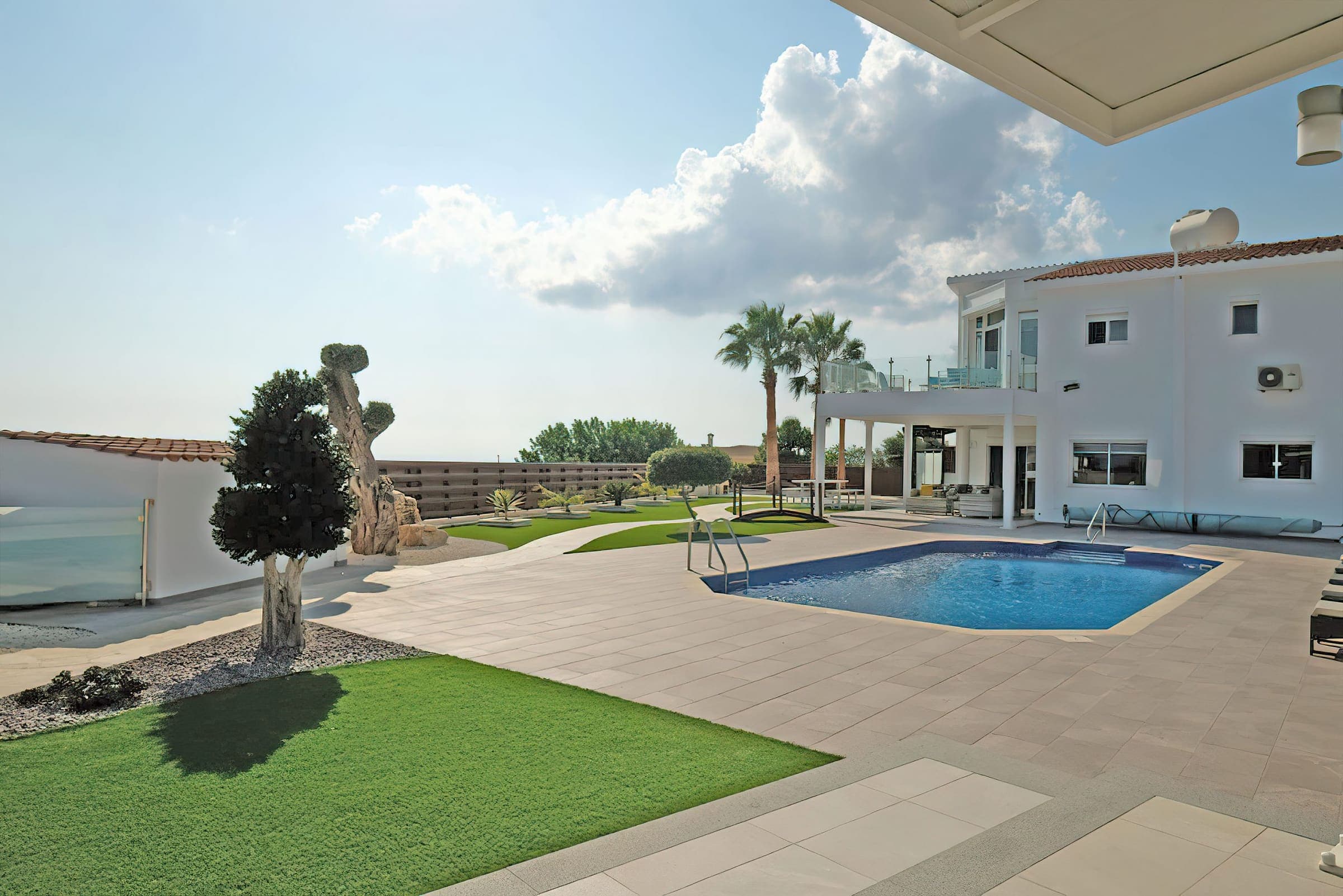
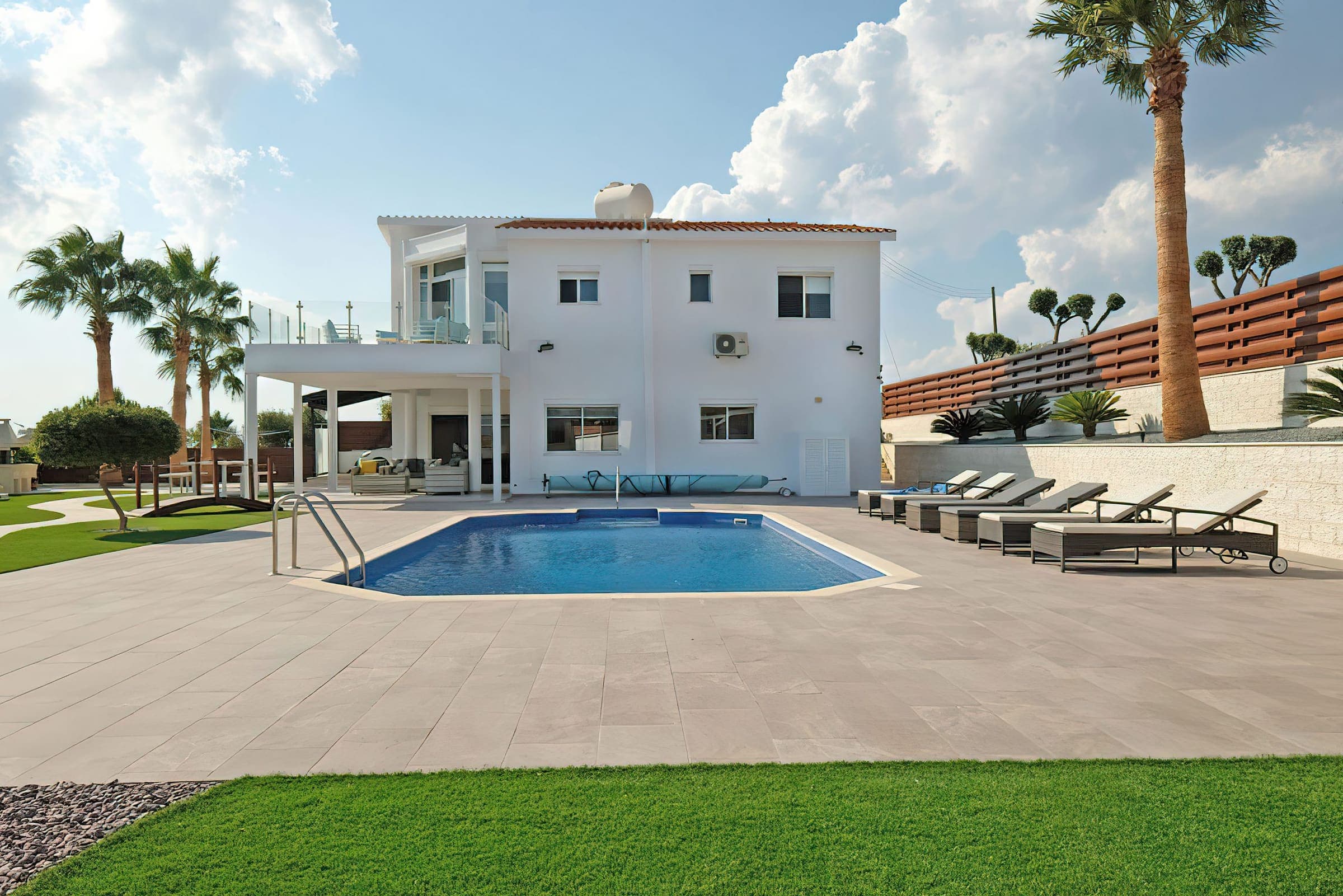
Villa Prasino is a private villa in Peyia for up to 6 guests, with a 6 × 12 m diving pool, a hot tub and an outdoor bar with a fire pit, in 1,000 m² of gardens with sea and mountain views. It sits between the town and the Akamas: the Sea Caves are about 2 km away, Coral Bay beach about 5 km and the Akamas National Park about 5 km, so you can head south for the mosaics one day and north for the turtle beaches the next. See our villa near Coral Bay, check availability and rates, and send a booking request when you're ready.