
Published · 6 min read · Facts checked 9 October 2026 against the sources below
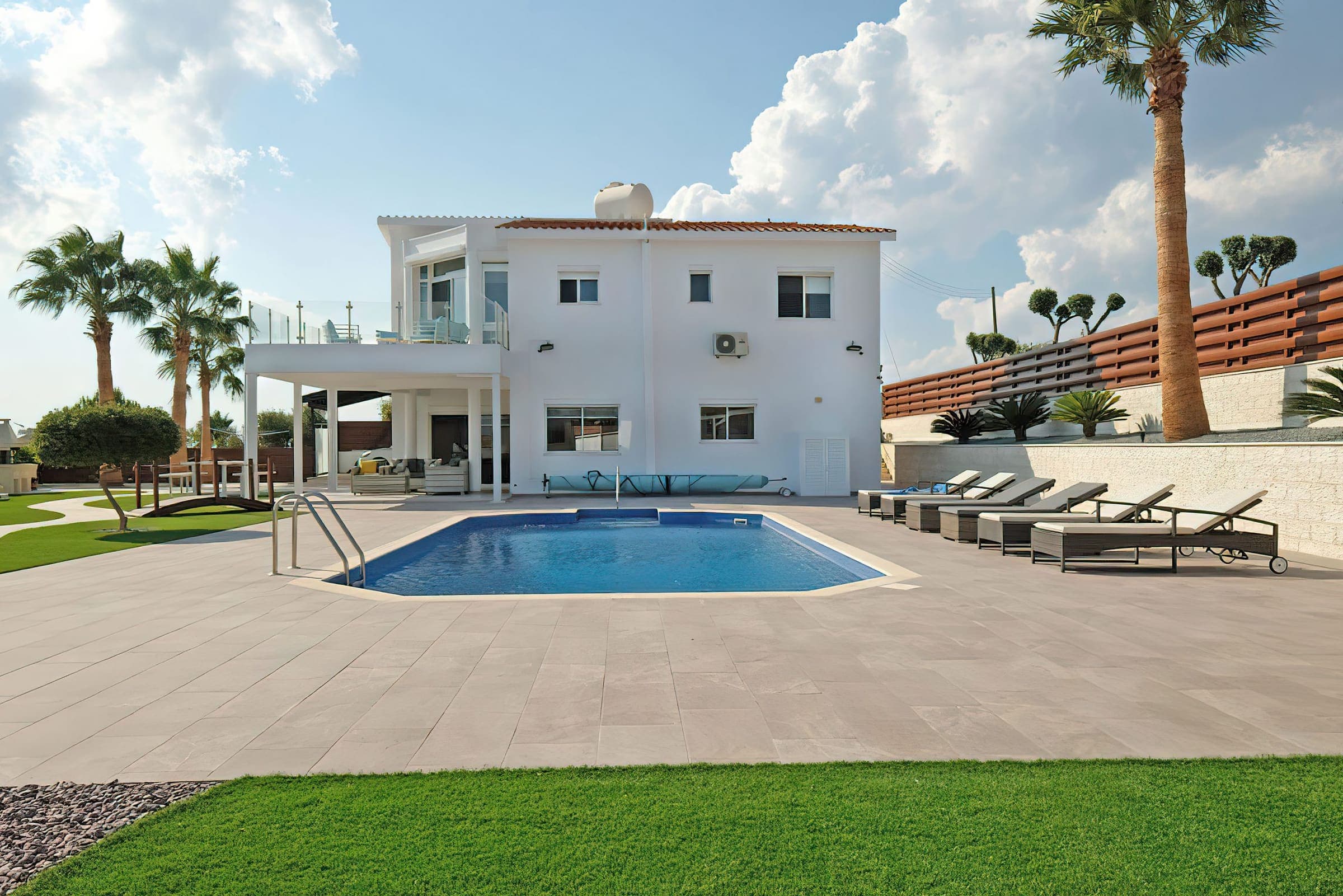
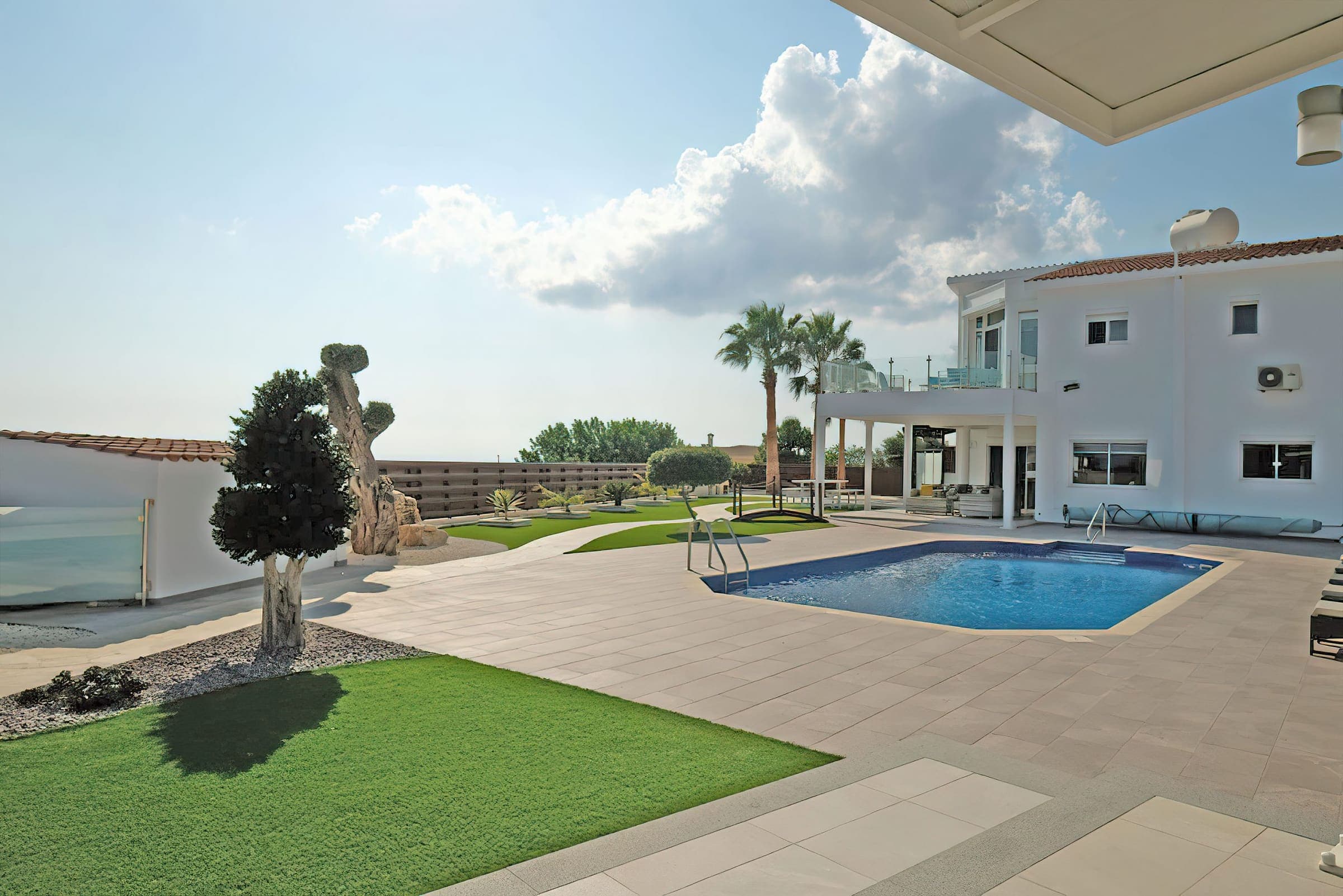
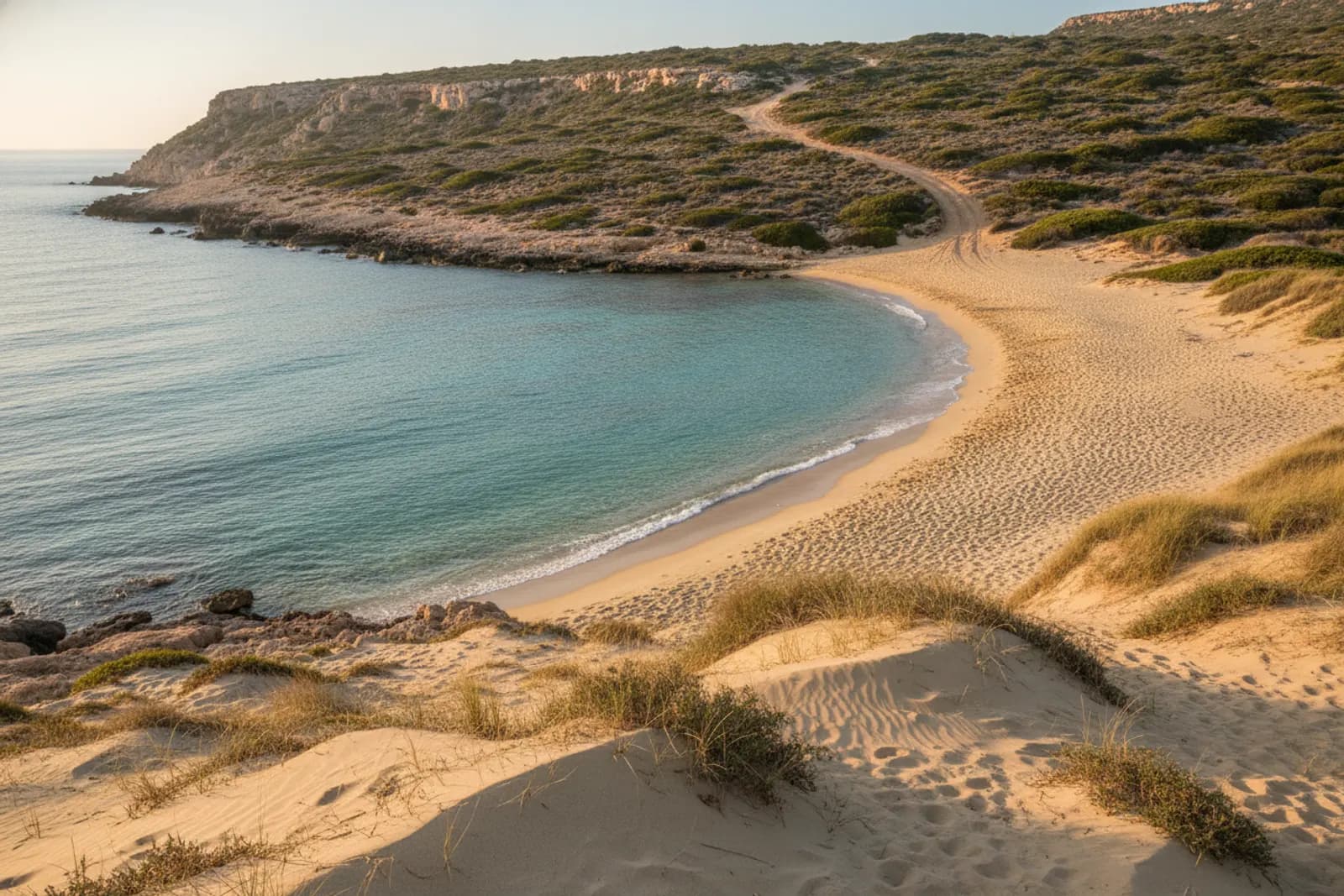
Lara Beach in Cyprus is a stretch of soft sand on the west coast of the Akamas, north of Coral Bay, Paphos, reached on dirt tracks. It is also one of the most important places in the Mediterranean for green and loggerhead turtles to lay their eggs, and that shapes everything about a visit. From the villa, the Akamas National Park is about 5 km.
The Lara-Toxeftra turtle reserve
Lara and the neighbouring beaches at Toxeftra form the Lara-Toxeftra turtle reserve, protected under Cyprus fisheries law since 1989. It covers about 650 hectares, 550 of them at sea, along roughly 10 kilometres of coast. It is part of the EU's Natura 2000 network and has been on the Mediterranean list of Specially Protected Areas (SPAMI) since 2013.
The Department of Fisheries and Marine Research manages it. Its conservation work at Lara began in 1978 with the turtle station there, and today the programme is run with the conservation group MedTRACS. Nests are protected where the mother laid them rather than being moved.
The reserve matters for other animals too: Mediterranean monk seals and ghost crabs are recorded along this coast.
Green and loggerhead turtles
Two species nest in Cyprus, and both use Lara:
- Loggerhead turtles (Caretta caretta) nest mainly along the island's west coast, Lara included.
- Green turtles are rarer. As of 2023, around 100 or fewer female green turtles nested on the island, mainly in the Akamas, which is why Lara matters so much.
Across Cyprus, more than 2,300 nests were recorded in 2023. The odds for each hatchling are poor: the fisheries department has said that only one or two in a thousand survive to adulthood and return to breed. Every nest that is not trampled or driven over counts.
When turtles nest and hatch
| What happens | When |
|---|---|
| Eggs laid | May to mid-August |
| Nests on the beach | Mid-May to the end of September |
| Hatching | July to late September or early October |
| Summer beach rules | 1 June to 30 September |
| No boats in the area | 1 May to 31 October |
The eggs hatch about seven weeks after they are laid. You may see newborn turtles at Lara, but most hatching happens at night, when the beach is closed to visitors in summer, so treat a sighting as luck rather than something to plan around.
If you want to learn more without disturbing anything, the Turtle Museum in the village of Ineia opened in June 2023, a short drive inland from Lara Bay. It fits well into a day in the Kathikas and Akamas villages.
The rules: what you can and can't do
The rules are set by the fisheries department. Its officers patrol in summer, and in 2021 the department warned of fines of up to €8,543 for breaking them.
| Rule | When it applies |
|---|---|
| No umbrellas, sunbeds or tents | 1 June to 30 September |
| No one on the beach from an hour before sunset until an hour after dawn | 1 June to 30 September |
| Fishing only from the shore, with rod and line | 1 June to 30 September |
| No boats used or moored in the area | 1 May to 31 October |
| No vehicles on the beach | All year |
| No fires, no pollution, no collecting sand crabs | All year |
There are also two simple habits the department asks of everyone. Level any holes or sandcastles before you leave, so hatchlings heading for the sea do not get trapped. And keep to the existing paths and steps, so the dune plants that hold the beach together are not trampled.
What you can do is simple. Walk the bays, swim, sit on a towel, and bring shade you can carry, such as a hat and a long-sleeved shirt. Take every bit of rubbish home, and bring plenty of water: do not count on buying anything there.
The organised-beach debate
In August 2026 the deputy mayor of Ineia proposed putting umbrellas and sunbeds on the eastern section of Lara Bay. Environmental groups and the Animal Party opposed it, and a similar proposal in 2023 was stopped after the fisheries department said it was incompatible with the reserve. For now the rules above still apply.
Lara outside the summer
The summer rules end on 30 September, but that does not make Lara a free-for-all in the autumn. Late nests can still be hatching into early October, the ban on boats runs to 31 October, and the year-round rules never lift: no driving onto the sand, no fires, no litter and no collecting sand crabs.
Spring and autumn are, for most visitors, the better time to go anyway. The sand is cooler underfoot, the tracks are easier to face without the midsummer heat, and you have room to spread out. In early October there may still be late nests in the sand, so keep digging to a minimum and level what you do disturb.
Winter is quiet and often windy on this exposed coast. It is a fine time for a walk on the sand, but check the forecast, as the tracks can be harder going after heavy rain.
Visiting with children
Lara makes a good lesson in why rules exist. Explain the nests before you arrive, talk about the odds each hatchling faces, and get everyone to help flatten the sand before you leave. Then visit the Turtle Museum in Ineia on the way home for the full story.
Getting there on the tracks
Lara is reached on unsurfaced tracks through the Akamas, and their condition varies. The roads in the national forest park are part of a 13.4-kilometre improvement project, including the tracks above Lara beach. Work stopped in October 2023, was approved to restart in August 2025, and the plan is to surface the roads towards Lara Bay and Toxeftra in roller-compacted concrete, with completion planned by 2027. We don't know how far the work has got, so ask locally before you set off.
4x4 or hire car
A 4x4 or a car with good ground clearance is the safer choice on rough tracks. The bigger issue is insurance. Read your hire agreement before you leave the tarmac: Enterprise, for example, states that its insurance does not cover damage that happens off road, and other companies have similar terms.
Whatever you drive, park only where others have parked, well back from the sand, and never drive onto the beach. Our driving in Cyprus guide covers hire cars and road rules in more detail.
Planning a day at Lara
- Go early. With umbrellas banned in summer, shade is whatever you carry. Mornings are cooler and quieter, and you have plenty of time to leave before the evening cut-off.
- Pack for self-sufficiency. Water, food, sun protection and a bag for rubbish.
- Combine it. The Avakas Gorge lies along the same coast, but it has been closed by the Department of Forests since December 2025; our Kathikas and Akamas villages guide has the latest. On the way back, the Edro III wreck at the Peyia sea caves makes a good sunset stop: see our Edro III shipwreck guide.
- Or see the other side. The north coast of the Akamas has the Blue Lagoon, reached by boat from Latchi. Our Blue Lagoon guide explains the options.
Where to stay
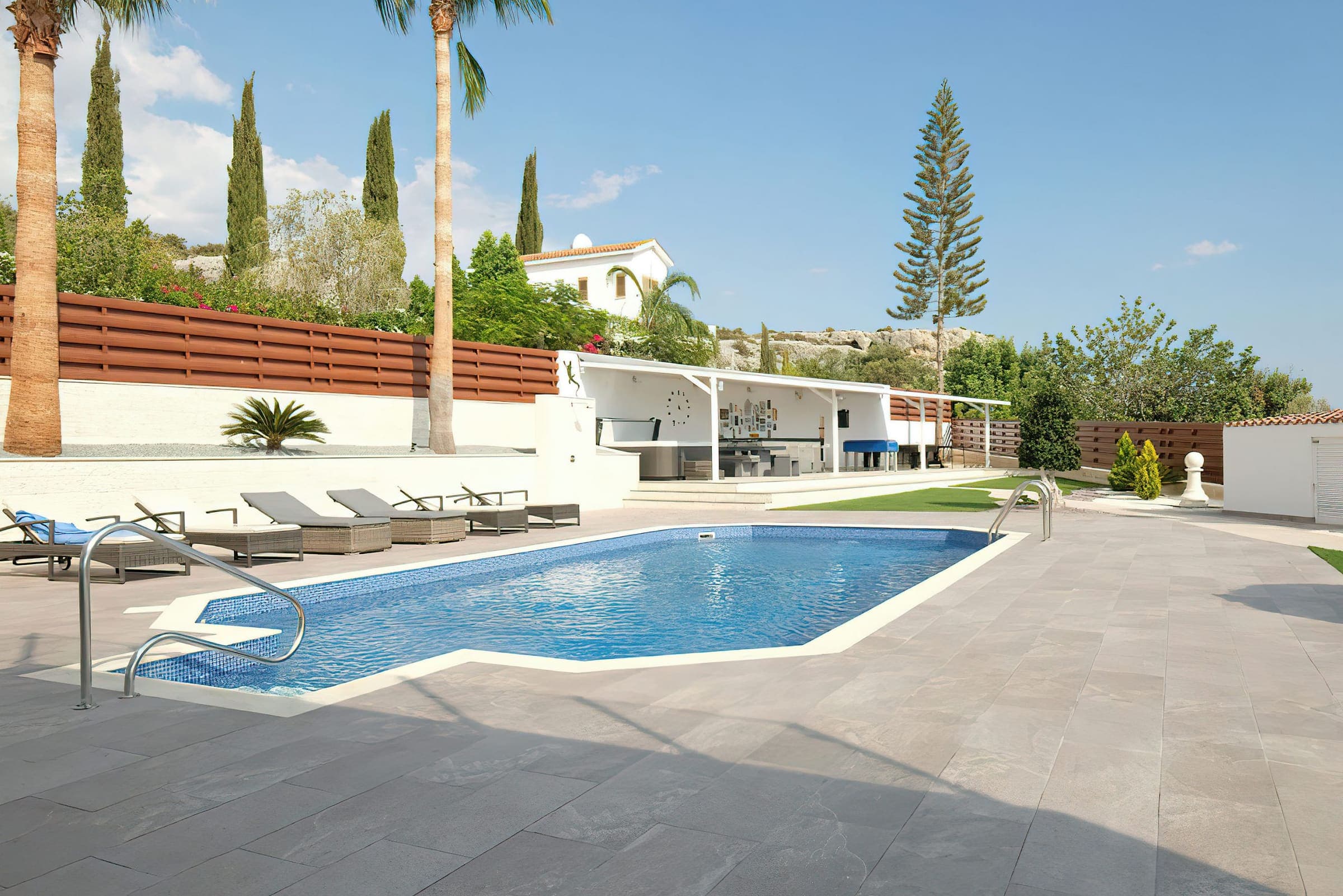
Villa Prasino is a private villa in Peyia for up to 6 guests, on the Akamas side of Paphos. After a morning at Lara without umbrellas or sunbeds, there is a 6 × 12 m diving pool with loungers, a hot tub and a covered terrace to come back to. The private driveway takes three cars. See our villa by the Akamas, check availability and rates, or send us a booking request and plan Lara for a cooler morning in the first or last weeks of the season.