
Published · 6 min read · Facts checked 9 October 2026 against the sources below
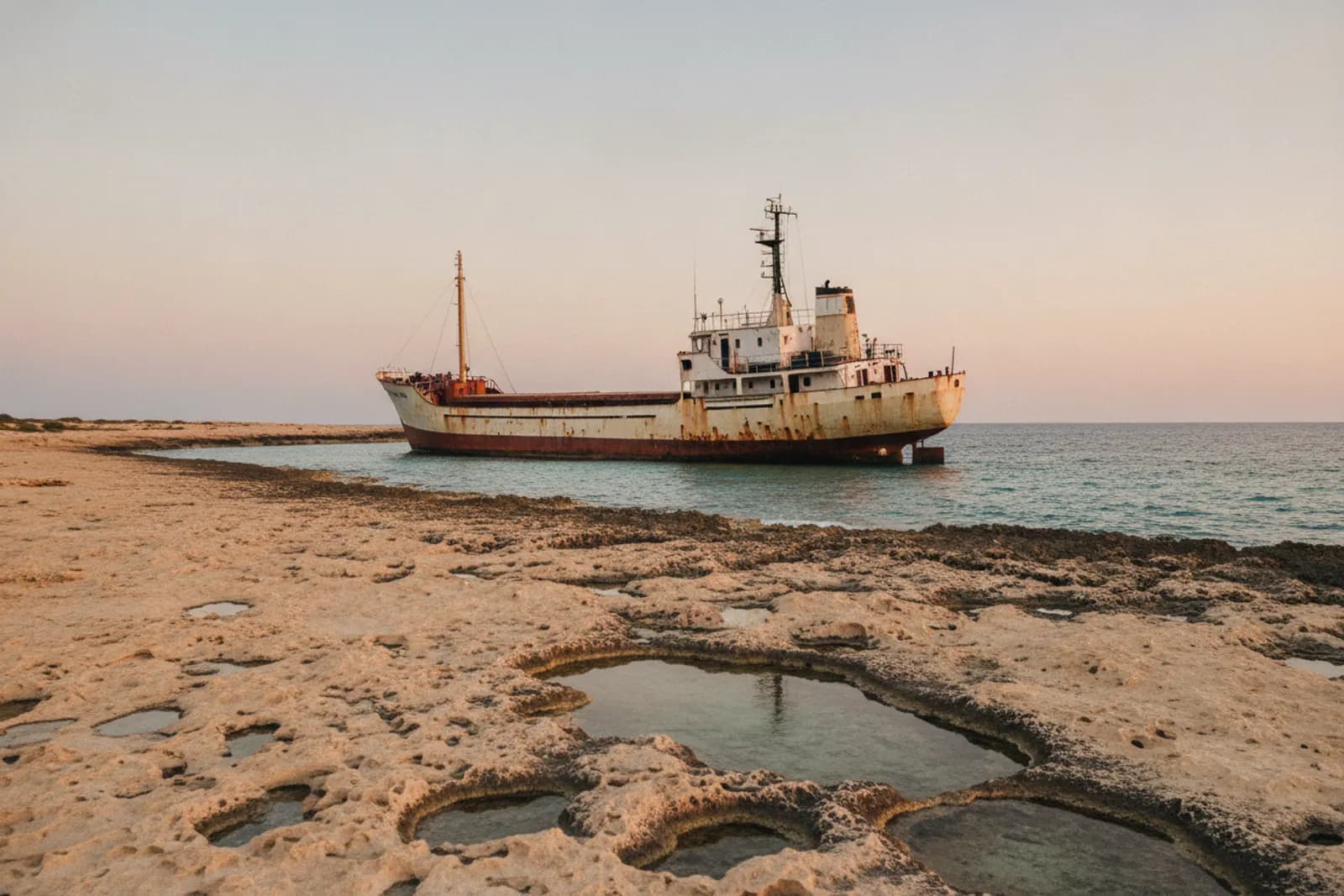
The Paphos shipwreck everyone photographs is the Edro III, a cargo ship lying on the rocks at the sea caves of Peyia, just up the coast from Coral Bay, Paphos. It has been there since December 2011, slowly rusting and leaning towards the sea, and it is now as much a part of the view as the caves themselves. From the villa, the Sea Caves are about 2 km.
How the Edro III ran aground
At 06:10 on the morning of 8 December 2011, the Edro III signalled mechanical trouble. It was a stormy day. The ship had left Limassol and was heading for Rhodes when its engine failed in bad weather, and strong winds drove it onto the rocks at the sea caves.
It was an Albanian-owned ship flying the flag of Sierra Leone, built in the late 1960s, of about 2,345 tonnes and more than 80 metres long. All nine crew were saved and lifted off by helicopter.
| Fact | Detail |
|---|---|
| Date aground | 8 December 2011 |
| Voyage | Limassol to Rhodes |
| Cause | Engine failure in stormy weather |
| Flag | Sierra Leone |
| Size | About 2,345 tonnes, over 80 m long |
| Crew | Nine, all rescued by helicopter |
| Where it lies now | On the rocks at the Peyia sea caves |
Why it is still there
An insurance company tried to tow the ship away, but that proved impossible. By 2014 the waste on board had been cleared, but removal had stalled over insurance. Taking the ship away would have cost more than it was worth as scrap.
There is a second obstacle. The sea caves are part of a Natura 2000 protected area, so cutting the ship up where it lies is not legally possible. Fuel and other pollutants were removed after the grounding, and the hull has been left in place.
As far as we know, there are no current plans to remove the wreck, and the last news of any attempt dates from 2014. Nor do we know of any recent fire or collapse on board.
Seeing the wreck from the cliffs
The Edro III is one of the few wrecks in Cyprus you can see up close without diving, and people visit all year. You look down on it from the low cliffs and rock platforms along the shore, where the sea has carved caves, arches and small islets out of the limestone. In places the rocky shore stands 20 metres high.
There is a café at the site, and benches looking out to sea. It is an easy place to spend an hour: walk the cliff top, look into the caves, then sit with a drink and watch the swell break over the hull.
Seals rest and occasionally breed in the caves, which is one reason the area is protected. Keep noise down near the cave mouths and take your rubbish home.
Villa Prasino
Peyia
2 km
Sea Caves
Approximate distance from the villa.
Can you swim out to it?
We would not. There is no beach at the wreck: the ship sits on rocks, the shore is rock too, and the sea breaks against both. Getting in and out of the water means climbing over sharp limestone, and the ban on boarding applies just as much if you arrive by water.
If you want a swim on the same outing, drive back down to the sandy beaches at Coral Bay instead. Our guide to the best beaches near Coral Bay covers the calm, lifeguarded options.
The best time for photos
Late afternoon into sunset is the time to go. The low sun lights the rust on the hull and warms the pale limestone, and the shadows give the caves some shape. A piano concert held in front of the wreck in June 2023 began at 6.45pm, timed to the sun going down.
Midday light in summer is flat and harsh, and the rock gets very hot underfoot. Early morning is quieter and cooler, but the light is softer and less dramatic on the ship.
A few practical points:
- Bring a wide lens and a longer one. The wide shot takes in the cliffs and caves; a short telephoto picks out the rust and the angle of the hull.
- Watch the sea state. After a winter storm the swell throws spray right over the deck, which makes the best pictures and the most slippery rocks. Our Paphos weather guide shows when the wetter months fall.
- Stand still to shoot. Pick your spot, check what is behind you, then take the picture.
- Leave the drone at home unless you know the current rules for the protected area.
Combining it with the Sea Caves walk
The wreck and the caves share the same stretch of shore, so the natural plan is to walk the cliff top looking into the caves and make the ship your end point, timed for the evening light. Wear proper shoes: the rock is uneven, pitted and sharp in places, and it is slippery after rain.
If you have time afterwards, carry on north up the coast to Agios Georgios, where three 6th-century basilicas and a small medieval chapel stand on Cape Drepano. Entry is €2.50 at the time of writing, but check before you go.
Further on, the Akamas begins. Our guide to Lara Beach and its turtles explains the rules on the protected turtle beaches, and the Peyia with kids guide has ideas for families.
Planning your visit
The wreck lies on open coast and is not a ticketed attraction, so you can come at any time of year and any time of day. That freedom is also the main thing to plan around: there is no fence between you and the drop, and nobody on duty to tell you where to stand.
What to bring
- Shoes with grip. Sandals and flip-flops are a poor idea on wet or pitted limestone.
- Water and a hat from May to October. There is little shade on the cliff top, and the rock throws the heat back at you.
- A light layer in winter and for sunset. The wind off the sea can be cold once the sun has gone.
- A torch or phone light if you stay after dark, for the walk back over uneven ground.
With children
Children tend to love the wreck: a real ship, leaning on the rocks, with waves breaking over it. The risk is the edge, not the ship. Hold hands near the drop, agree a line nobody crosses before you get out of the car, and do the looking from well back. A pair of binoculars gives them a close view of the rust and the cave mouths without anyone going near the edge.
Winter visits
The Edro III went aground in a December storm, and winter is when the sea here is at its most dramatic. On a rough day the swell breaks right over the hull. It is worth a look then, but from further back than usual, because spray and wet rock make the edges more dangerous.
Where to stay
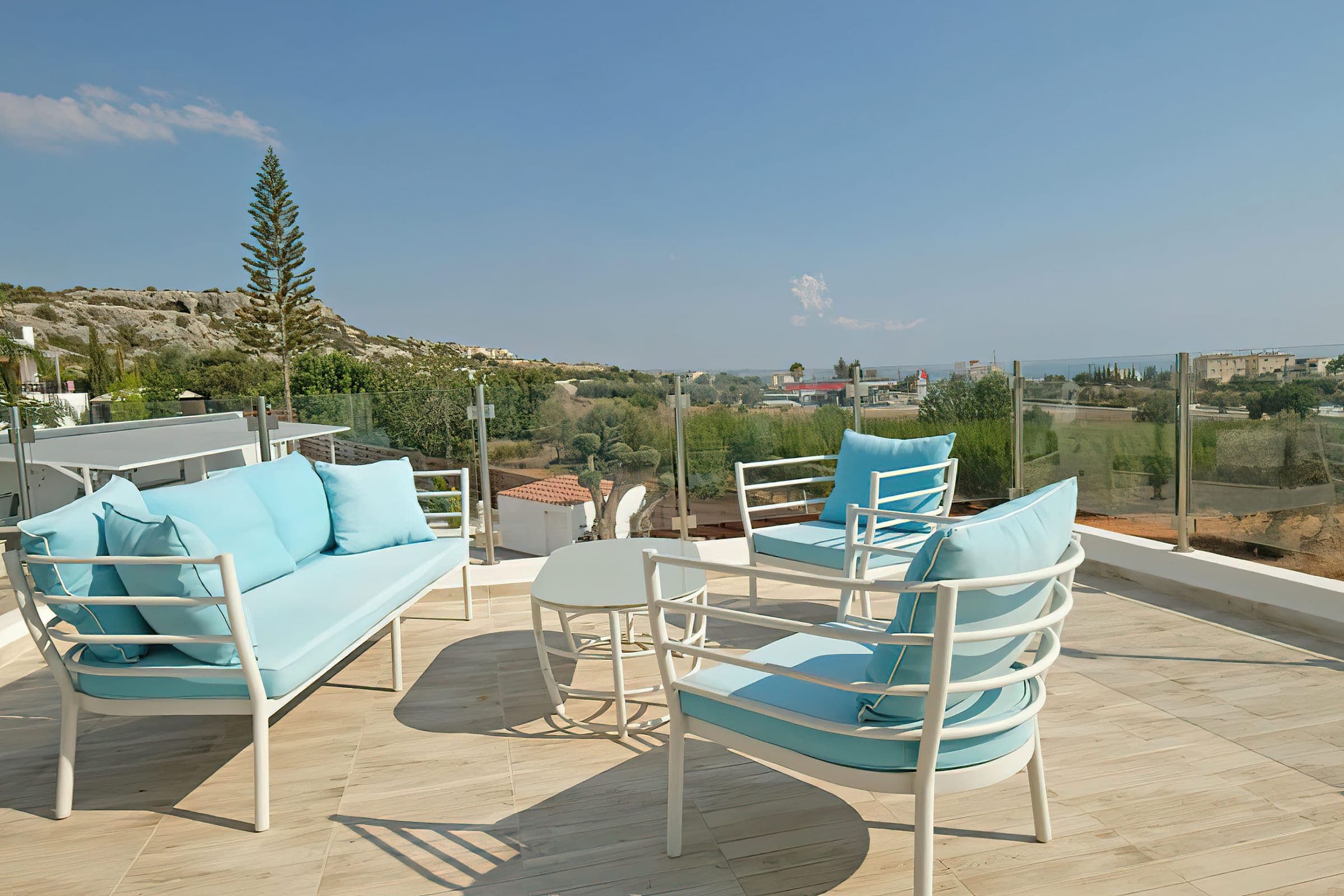
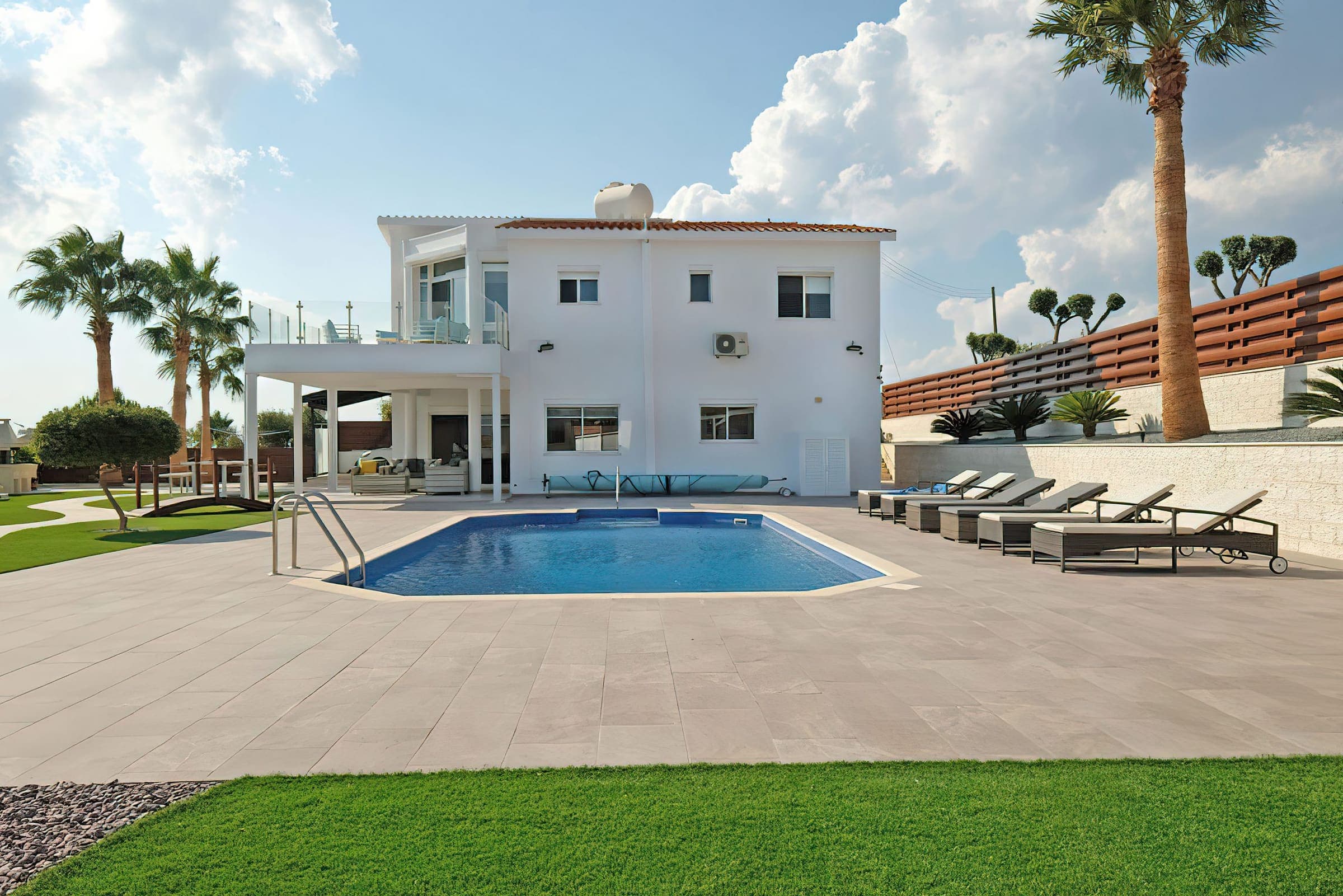
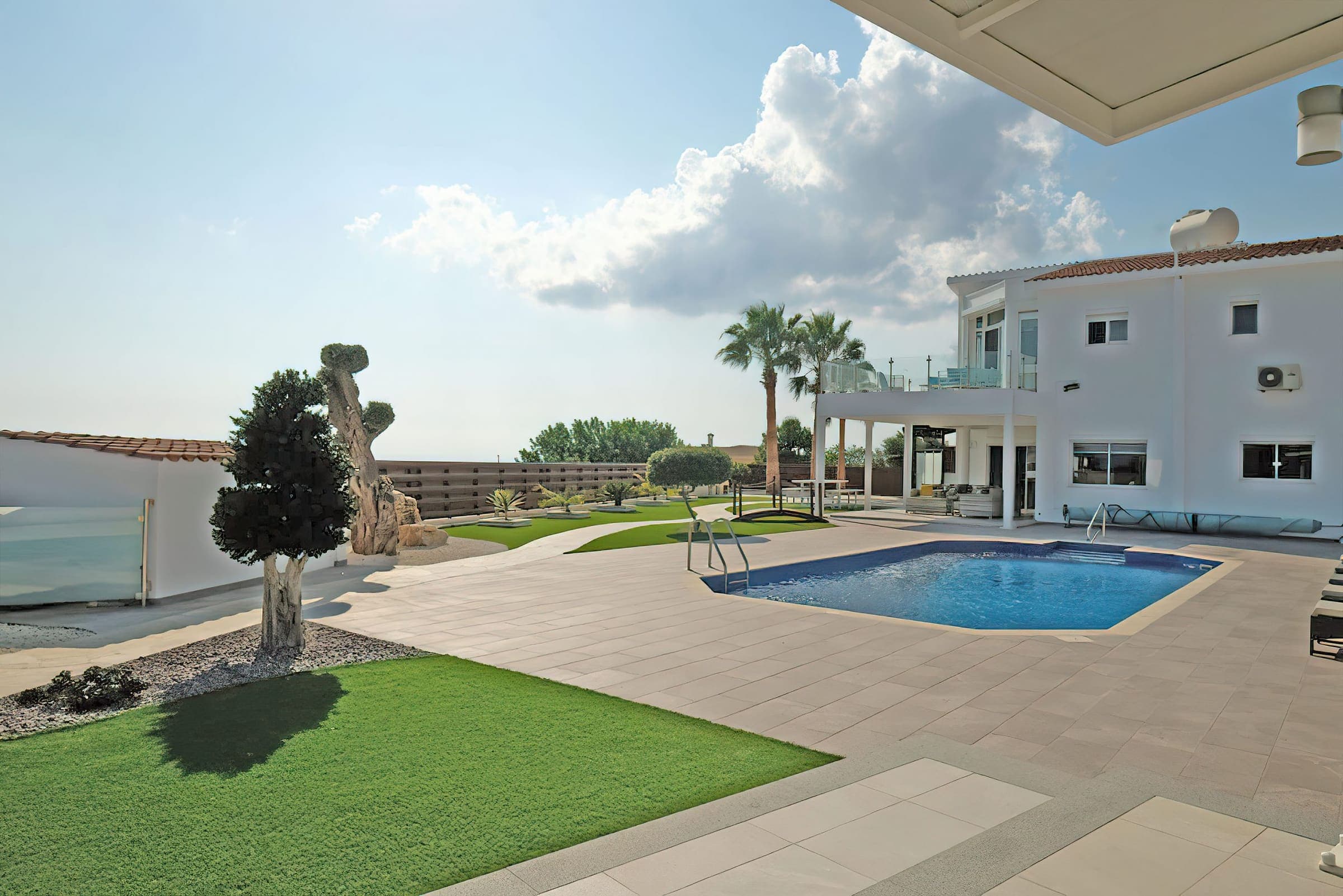
Villa Prasino is a private villa in Peyia for up to 6 guests, a short drive from the Sea Caves and the Edro III. After an evening on the cliffs, come back to a 6 × 12 m diving pool, a hot tub and an outdoor bar with a fire pit, in 1,000 m² of gardens. The page for our villa by the Sea Caves has a map showing where the villa sits in relation to the caves and the wreck. When you have dates, check availability and rates or send us a booking request.