
Published · 6 min read · Facts checked 9 October 2026 against the sources below
Ask for the Paphos old town and you may be sent to two different places. Ktima, the upper town on the hill, is the old Cypriot town of houses, churches, the market and the museums. Kato Paphos, down by the harbour, is far older: the ancient city of Nea Pafos, with Roman mosaics and tombs cut into the rock.
They are linked by a frequent town bus, and the best day out from Coral Bay, Cyprus, takes in both. Opening hours, prices and bus times change, so check before you go.
Ktima, the upper town
Ktima is where Paphos lives rather than holidays. Here you will find restored historic buildings, the Public Library, the Town Hall and other neoclassical buildings, Saint Kendeas Church, the Agia Sofia Mosque and the restored Ottoman baths, with workshops selling ceramics, copperware, woven goods and jewellery in between. It is a place for wandering rather than ticking off sights; give it two or three hours and stop for a long lunch.
The market
Alongside the Municipal Fruit Market, on weekend mornings there is a producers' market at the Pervola car park, from 06:00 to 13:00, where farmers sell directly; on other days the space reverts to a car park. In October 2025 the municipality announced a new shelter for it.
Go early: the producers arrive at first light, and the best of the bananas, avocados, spicy rocket, dried wild oregano and the day's fish goes first. Bring cash and a bag. Our guide to Cypriot food explains what to look for.
The museums
Two museums are worth an hour each:
- The Archaeological Museum of the Pafos District, on Griva Digeni Avenue, sets out finds from the Neolithic period to 1700 AD across five rooms, from Palaipafos, Nea Pafos and Marion-Arsinoe. It opens Tuesday to Sunday, 09:00 to 16:30, and entry is free.
- The Ethnographic Museum is a private collection, opened in 1958 in a stone house built in 1894. It opens Monday to Saturday, 10:00 to 17:00 in winter and to 18:00 in summer, and 10:00 to 14:00 on Sundays. Entry is €3 at the time of writing.
Both close on public holidays, and the Archaeological Museum also closes on Mondays.
The Kato Paphos Archaeological Park
King Nicocles moved the city down to the harbour at the end of the 4th century BC, and from the 2nd century BC to the 4th century AD Nea Pafos was the capital of Cyprus. What survives is the Archaeological Park of Kato Pafos, on UNESCO's World Heritage List since 1980.
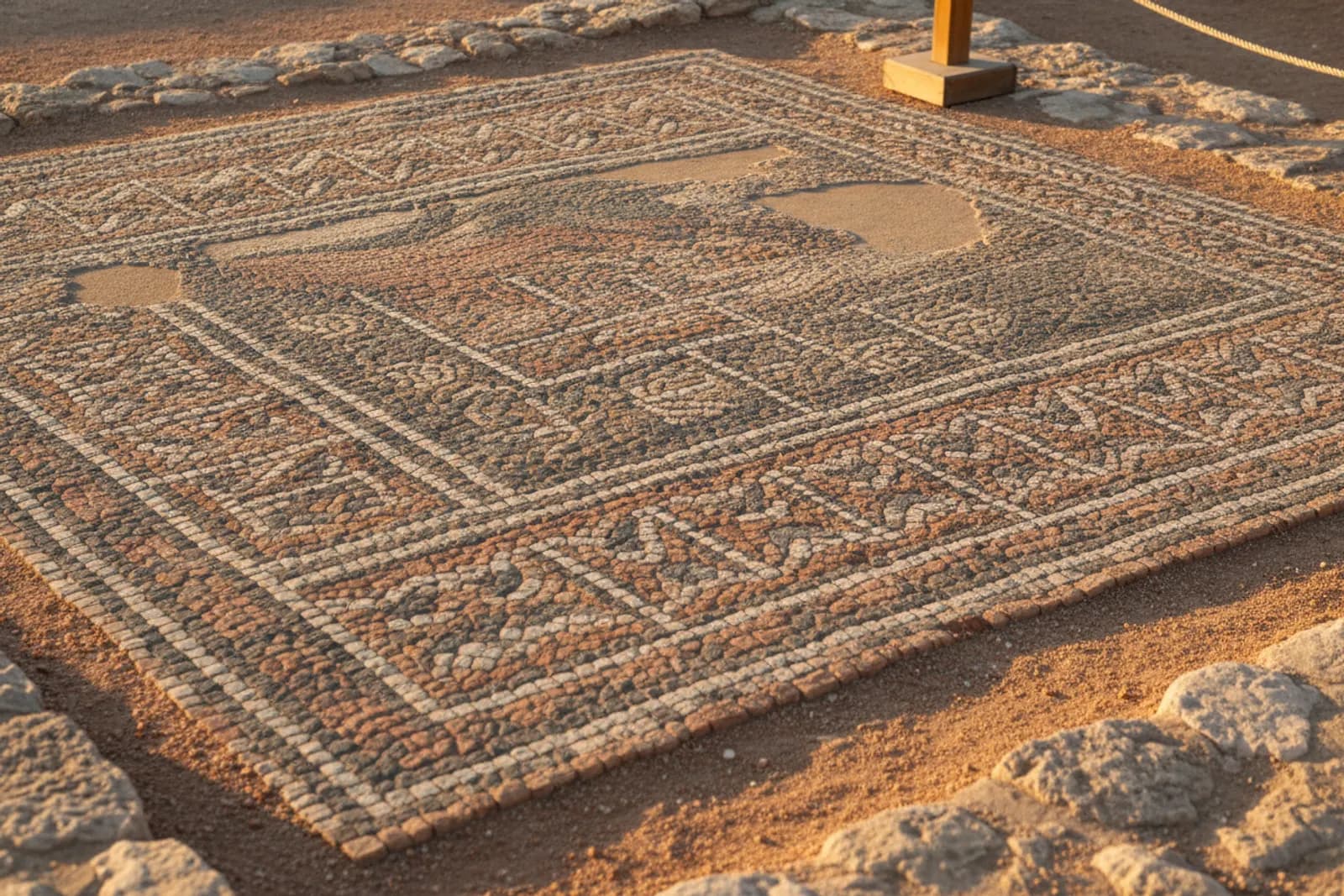
The reason to come is the floors. Four Roman villas, the houses of Dionysos, Theseus, Aion and Orpheus, keep their mosaics of gods, heroes and myths.
Allow at least two hours. Beyond the villas the ticket covers the Odeon, the Agora, the Asklepieion, the Limeniotissa basilica and the ruins of the Saranta Kolones castle. The park is partly wheelchair accessible, and its entrance is right beside the harbour bus station, so it combines easily with the castle and lunch by the water.
Pick up a plan at the entrance and work out your route before you set off: the site is large and open, and doubling back across it in the midday sun is worth avoiding. Do the mosaic houses first, while you are fresh, and leave the Odeon and the Agora for the walk out.
Conservation work on the mosaics was announced in February 2026, so a room or two may be screened off when you visit.
The Tombs of the Kings
About 2.5 km north-west of the harbour castle, the Tombs of the Kings are the most visited archaeological site in Cyprus. Despite the name, no kings were buried here. These are underground tombs cut from solid rock in the Hellenistic and Roman periods for high-ranking officials and aristocrats. The grandest have open courtyards ringed with Doric pillars, carved from the rock itself, like tombs found in Alexandria.
Expect uneven steps down into the courtyards, so wear shoes with grip. Wheelchair users can see the tombs from above only. In February 2026 the deputy culture minister set out plans for better visitor facilities and protective shelters here.
A coastal footpath runs between the archaeological park and the tombs, a good walk on a cool morning.
Children tend to love the tombs more than the mosaics: there are courtyards to explore and chambers to peer into. The drops into the courtyards are real, though, so keep small ones by the hand.
Early Christian Paphos
Christianity reached Paphos early, and tradition says St Paul himself came here. Two smaller sites from that story are worth a short stop on the way between the harbour and Ktima.
Chrysopolitissa and St Paul's Pillar. A 13th-century church stands over the remains of the largest Early Byzantine basilica on the island, and parts of its mosaic floors survive. Tradition says St Paul was tied to one of the columns and flogged before the Roman governor, Sergius Paulus, became a Christian. Pedestrian bridges carry you over the excavations.
Agia Solomoni. These are Hellenistic chamber tombs: an open court with five rock-cut chambers. Inside are 12th-century wall paintings, graffiti left by Crusaders in the 13th century and a spring. Above them, a tree is hung with strips of cloth tied as offerings.
Hours and tickets
| Site | Hours | Entry |
|---|---|---|
| Archaeological Park of Kato Pafos | 08:30–19:30 (16 Apr–15 Sep); 08:30–17:00 (16 Sep–15 Apr) | €4.50 |
| Tombs of the Kings | As the park | €2.50 |
| Archaeological Museum | Tue–Sun 09:00–16:30 | Free |
| Ethnographic Museum | Mon–Sat 10:00–17:00 (winter) or 18:00 (summer); Sun 10:00–14:00 | €3 |
Prices and hours are for 2026. The park and the tombs close on Christmas Day, New Year's Day and Orthodox Easter Sunday.
The Department of Antiquities also sells entry cards valid for one, three or seven days, at €8.50, €17 and €25 at the time of writing, that cover any of its museums and monuments. They pay off if you add the castle, Kouklia or Agios Neophytos; our hub of things to do in Paphos lists the options. Groups of more than ten get 20% off.
A day from Coral Bay
Here is the order we suggest. It works best on a weekend, when the producers' market is on; avoid a Monday, when the Archaeological Museum is closed.
- 08:30, the Tombs of the Kings. Pafos Buses route 615 runs from Coral Bay to the Tombs of the Kings bus station every 10 to 15 minutes.
- 10:30, the archaeological park. Walk the coastal path or take route 611 to the harbour station, which is next to the park entrance.
- 13:00, lunch in Ktima. Route 610 links the harbour with the Municipal Market.
- 15:00, the museums, then a slow walk back through the old streets.
- Evening, the harbour. Finish with dinner by the water; see our guide to Paphos harbour and castle.
To get home, route 618 runs from Karavella station in Ktima to the Tombs of the Kings station, where you pick up the 615. A single ticket is €2 at the time of writing (€3 after 21:00) and a day ticket €6.50, paid in cash on the bus.
Driving instead
If you would rather drive, the municipality runs a Pafos Smart Parking app, on Google Play and the App Store, which helps you find a space in town. Another option is to park once in Ktima and use the 610 bus down to the harbour and back.
What to bring
A hat, sun cream, a refillable bottle, cash for the market and the bus, and shoes with grip for the tombs. A light layer for covering shoulders helps if you plan to step inside a church.
Where to stay
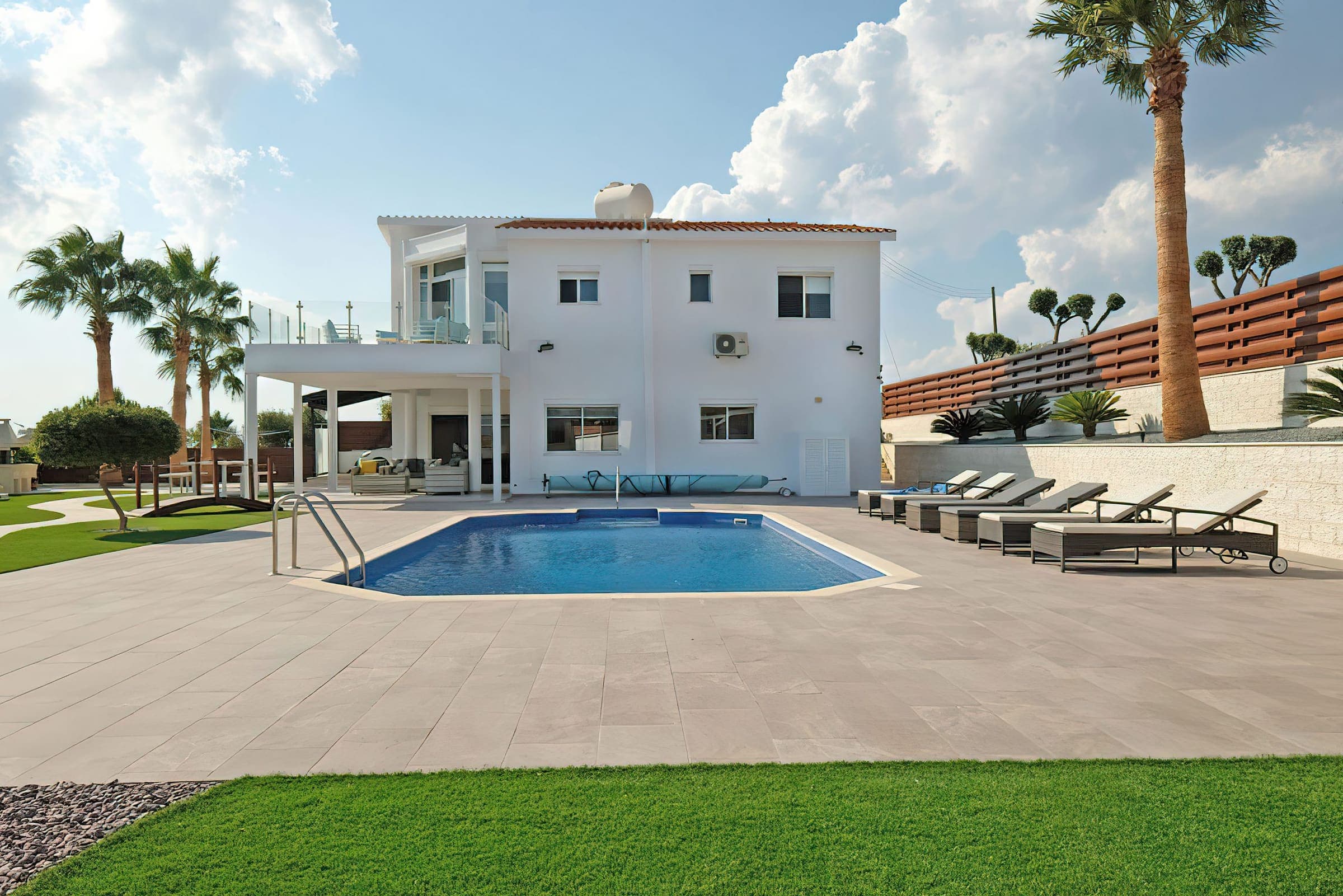
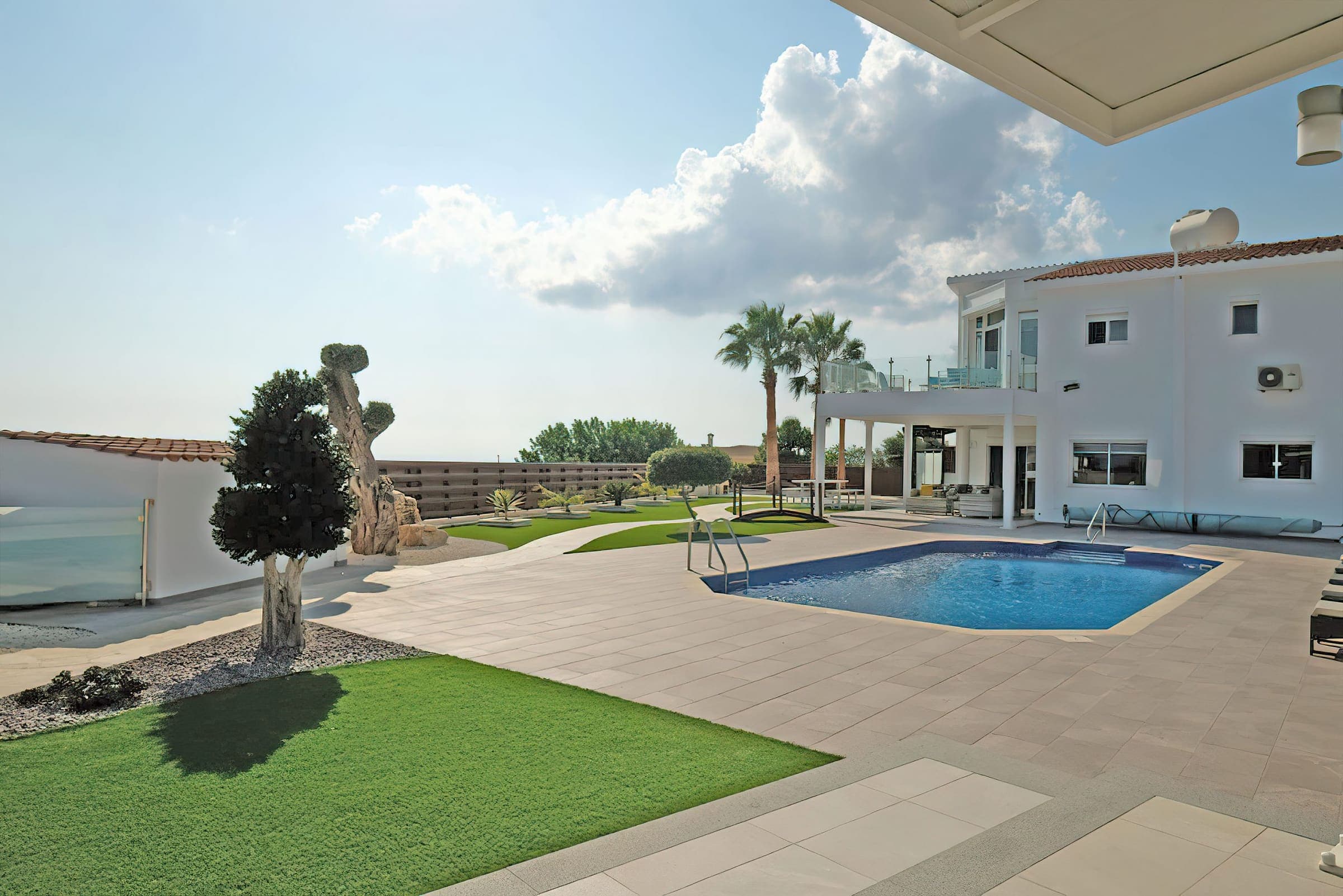
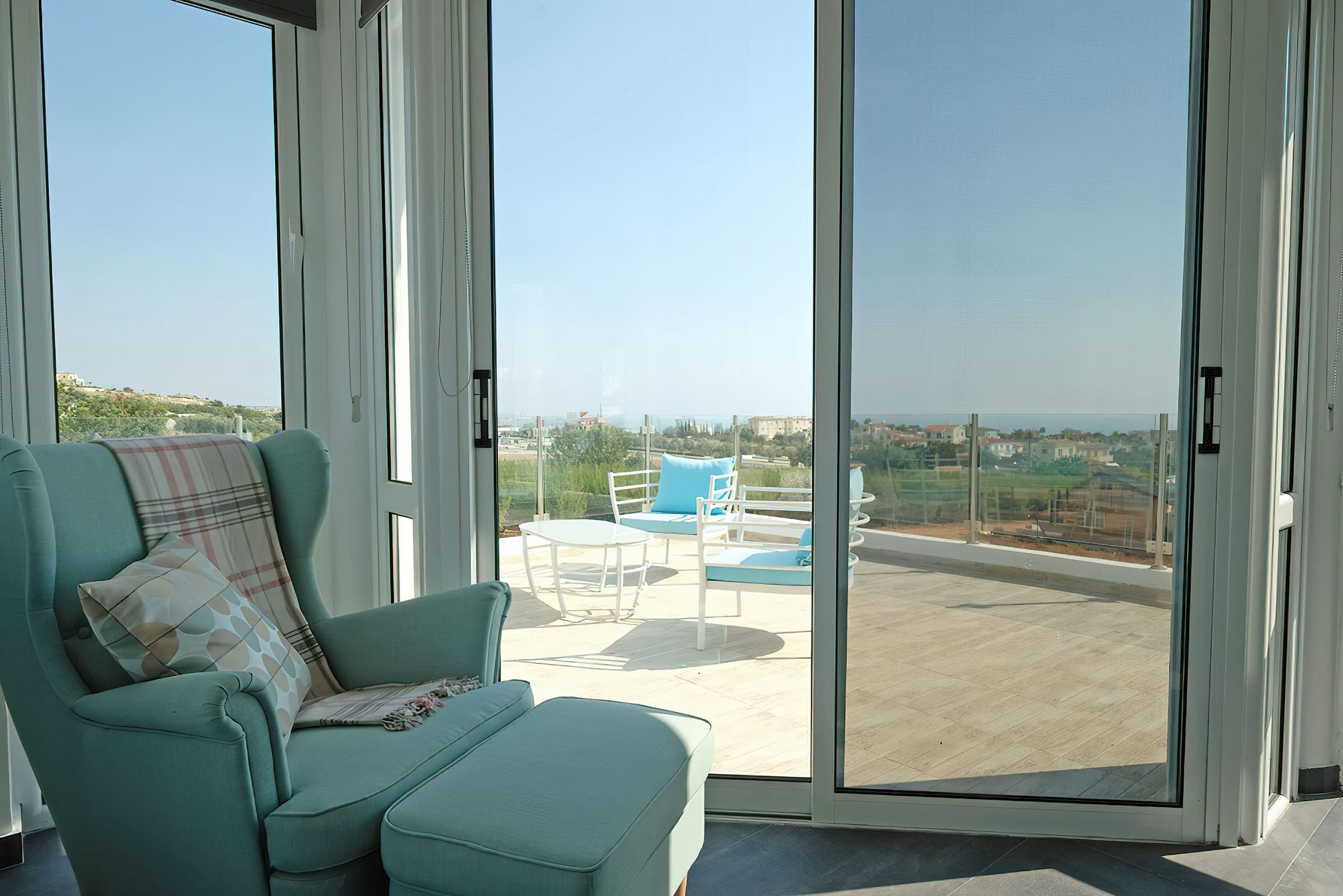
Villa Prasino is a private villa in Peyia for up to 6 guests, with 3 bedrooms, a 6 × 12 m diving pool and a hot tub, set in 1,000 m² of gardens with sea and mountain views. After a morning on hot stone, it is a quiet place to come back to. Coral Bay beach is about 5 km away, and the Coral Bay bus runs straight to the Tombs of the Kings bus station. Have a look at our villa near Coral Bay, check availability and rates, and if you are planning a trip around days like this, send a booking request when you have dates.