
Published · 6 min read · Facts checked 9 October 2026 against the sources below
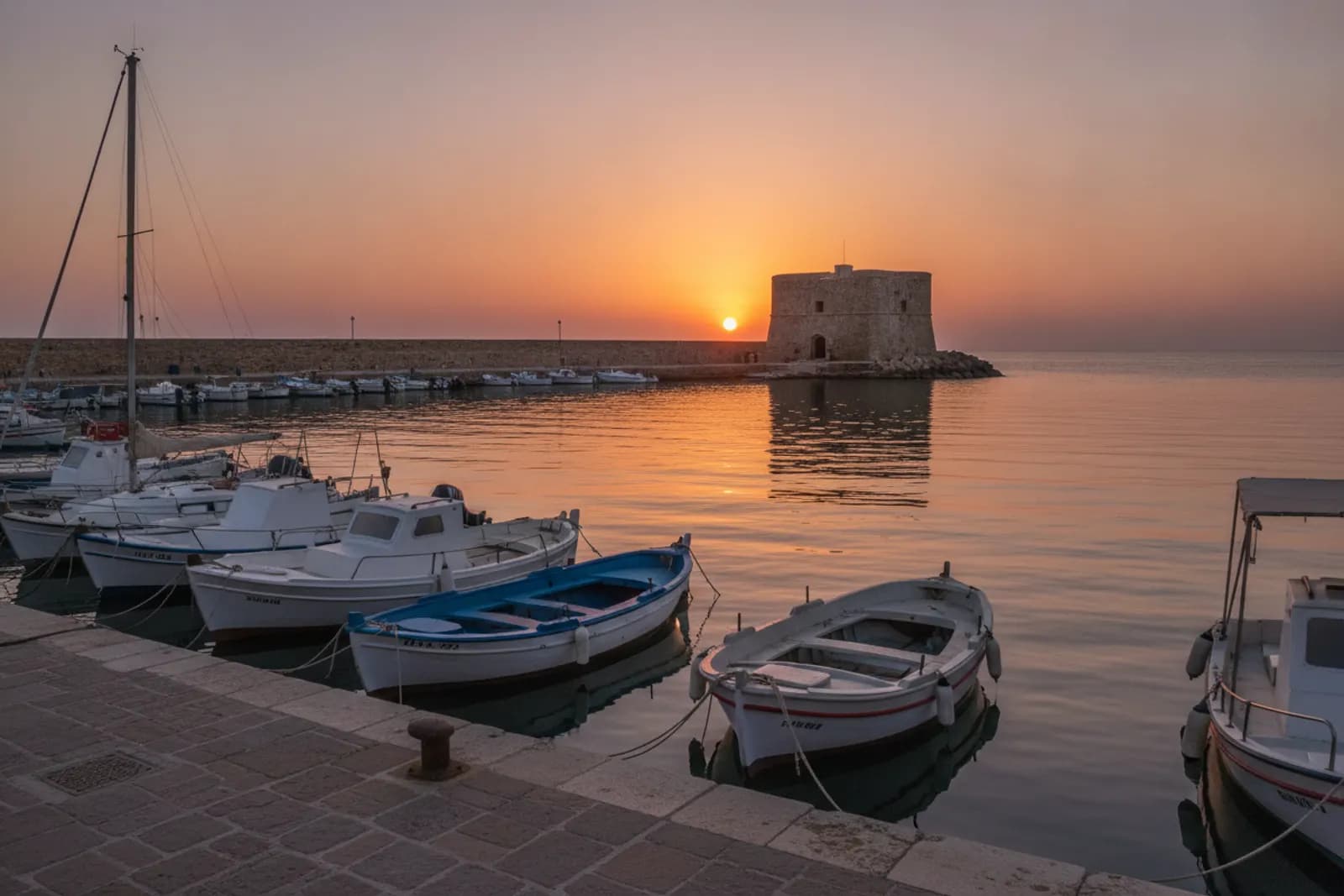
Paphos harbour is small. A breakwater, a quay lined with boats, a strip of restaurants in old stone warehouses and, at the end, a squat limestone fort. That is part of its appeal after a hot morning among the ruins.
From Coral Bay, Cyprus, it makes the natural finish to a day in Kato Paphos: the archaeological park is right beside it, and the light over the water at the end of the day is the reason to stay for dinner. Opening hours and bus times change, so check before you go.
The harbour, then and now
The harbour is the reason Paphos is where it is. At the end of the 4th century BC, King Nicocles moved the city down from the hills to this stretch of coast, and from the 2nd century BC to the 4th century AD Nea Pafos, the new city around the harbour, was the capital of Cyprus. The mosaics, theatre and tombs you see nearby all belong to that city.
The stone warehouses around the harbour, once used for storing goods, now hold fish taverns, shops and exhibition spaces. In the morning the quay belongs to the boats and people out for a walk; by the evening it is tables, menus and couples deciding where to eat.
There is change coming. In July 2026 the Cyprus Ports Authority and the municipality were discussing a longer breakwater behind the castle, a cruise pier of 40 to 50 metres, a refuelling point and a new shelter in front of the shops. No timetable had been set, so expect the harbour to look much as it does now for a while yet.
The harbour bus station is right next to the entrance of the Kato Pafos Archaeological Park, which holds the Roman mosaics. Our guide to Paphos old town and the mosaics covers the park, and it combines easily with an afternoon here.
Paphos Castle
The castle stands on the west side of the harbour and is the one landmark everyone photographs. It is smaller than people expect, a two-storey block of limestone with a single gate on the east side, but it has had a busy life.
A Byzantine fort first guarded the harbour here. The Lusignans, who ruled Cyprus in the Middle Ages, built a castle here in the 13th century to replace Saranta Kolones, an older castle about 600 metres to the north-east whose ruins are now in the archaeological park. The Venetians dismantled it shortly before 1570, and the Ottomans rebuilt it in 1592; an inscription above the entrance records the date. About 50 metres away, the ruins of a second tower lie in the sea.
Under the Ottomans the ground-floor rooms were prison cells. Its twelve cannon battlements were removed in 1878, and under British rule the building was used as a salt store until 1935, when it was declared an Ancient Monument.
Climbing to the roof
Inside, 31 steps take you to the upper floor, where one room served as a mosque. Another 17 steps lead to the roof, and this is the part not to miss. The view takes in the harbour and the hotels along the shore, the mountains behind the town, Kouklia to the east, and the coast running north to St George's islet off Peyia.
That is 48 steps in all, so it is not one for anyone unsteady on their feet. Allow 30 to 45 minutes for the whole visit; it is a good stop while you wait for the light to soften.
Hours and tickets
In 2026 the castle opens at 08:30 and closes at 19:30 from 16 April to 15 September, and at 17:00 for the rest of the year. It is closed on public holidays. Entry is €2.50 at the time of writing, with 20% off for groups of more than ten.
The Department of Antiquities' entry cards, valid for one, three or seven days at €8.50, €17 and €25 at the time of writing, also cover the castle, the archaeological park and the Tombs of the Kings, so they are worth buying if you are seeing all three.
The seafront walk
Paphos promenade is the easiest way to see the town's coast. From the archaeological park beside the harbour, a coastal footpath runs to the Tombs of the Kings, about 2.5 km north-west of the castle. It is a good way to link the sites on foot.
In summer it is a walk for the first hour of the day or the last; there is little shade. For a shorter stroll, follow the walkway from the castle towards the remains of the Limeniotissa basilica, then head about 850 metres north-east of the castle to the church of Chrysopolitissa and St Paul's Pillar, where tradition says the apostle was flogged.
Boat trips from the harbour
Short boat rides leave from the harbour. Prices, routes and times vary by operator and season, so compare a few before you choose, and check what is included before you pay.
We cover what to expect, and how to choose between the harbour boats and trips from Latchi on the Akamas coast, in our guide to Paphos boat trips.
Sunset and the evening
A harbour afternoon, step by step
- Mid-afternoon: the archaeological park, when the worst of the heat has passed. Check the closing time: 19:30 from mid-April to mid-September, 17:00 the rest of the year.
- An hour before closing: the castle and its roof.
- Before sunset: walk out along the waterfront past the castle.
- Dinner: at one of the old warehouses on the quay.
- Home: route 611 back to the Tombs of the Kings station and the 615 to Coral Bay, which runs late into the night from April to November.
Where to watch the light
The castle is on the west side of the harbour, so in the evening you look across the water towards it as the light goes. Get there an hour before sunset, walk out past the castle, and choose a table once the quay starts to fill. Our Paphos weather guide has the conditions month by month, and the October page covers the autumn evenings.
For couples, harbour dinner then home to the hot tub is hard to beat. If you are planning a special trip, our Cyprus honeymoon guide has more ideas, and our guide to Paphos nightlife covers where to go after dinner.
Getting there and parking
By bus. Pafos Buses route 615 runs between Coral Bay and the Tombs of the Kings bus station, with night buses from April to November. From there, route 611 continues to the harbour station. Other routes from the harbour include 610 to the Municipal Market in the old town, 631 to Petra tou Romiou and 606 to Geroskipou. A single ticket is €2 at the time of writing (€3 after 21:00) and a day ticket €6.50, paid in cash on the bus.
By car. The municipality's Pafos Smart Parking app, on Google Play and the App Store, helps you find a space before you arrive. If you want a drink with dinner, take the bus.
What to bring. Cash for the bus fare, comfortable shoes for the castle steps and the waterfront, a hat for the afternoon and a light layer for after dark. If you are combining the harbour with the archaeological park, bring more water than you think you will need.
Nearby, at a glance
| Place | From the castle |
|---|---|
| Saranta Kolones (in the archaeological park) | About 600 m north-east |
| Chrysopolitissa and St Paul's Pillar | About 850 m north-east |
| Tombs of the Kings | About 2.5 km north-west, by the coastal footpath |
All three appear in our guide to Paphos old town and the mosaics, along with the market and museums of the upper town, a short ride up the hill on route 610.
Where to stay
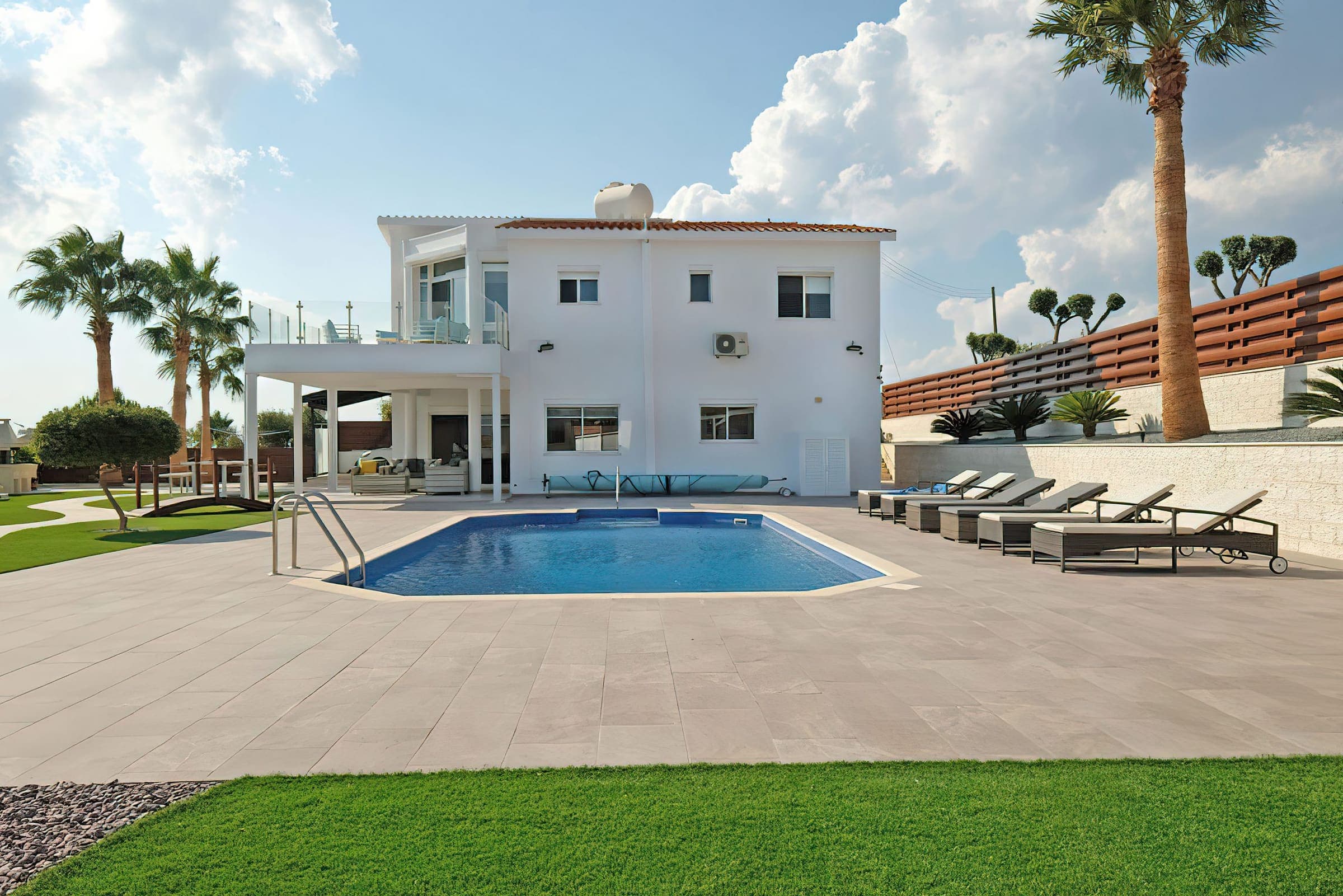
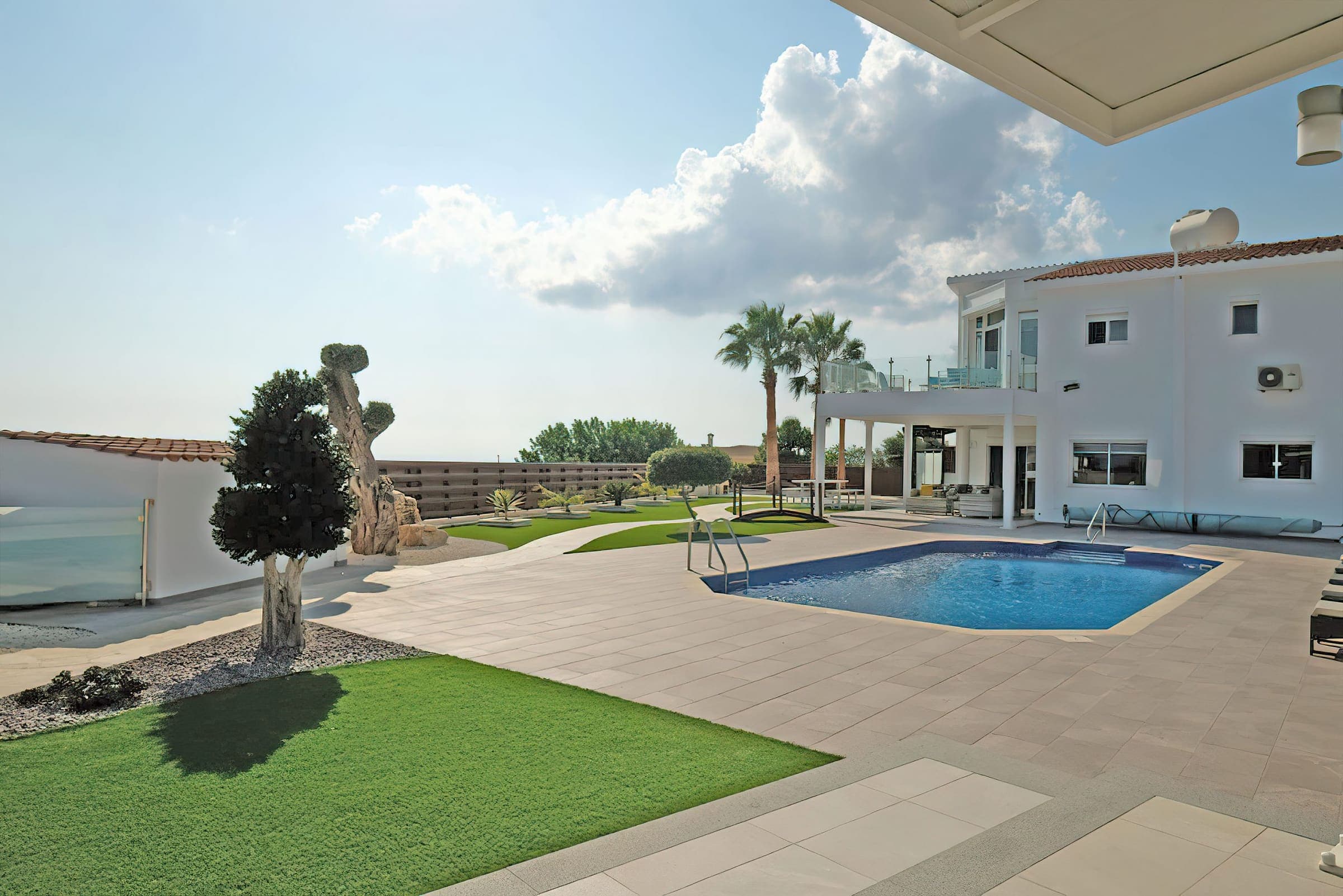
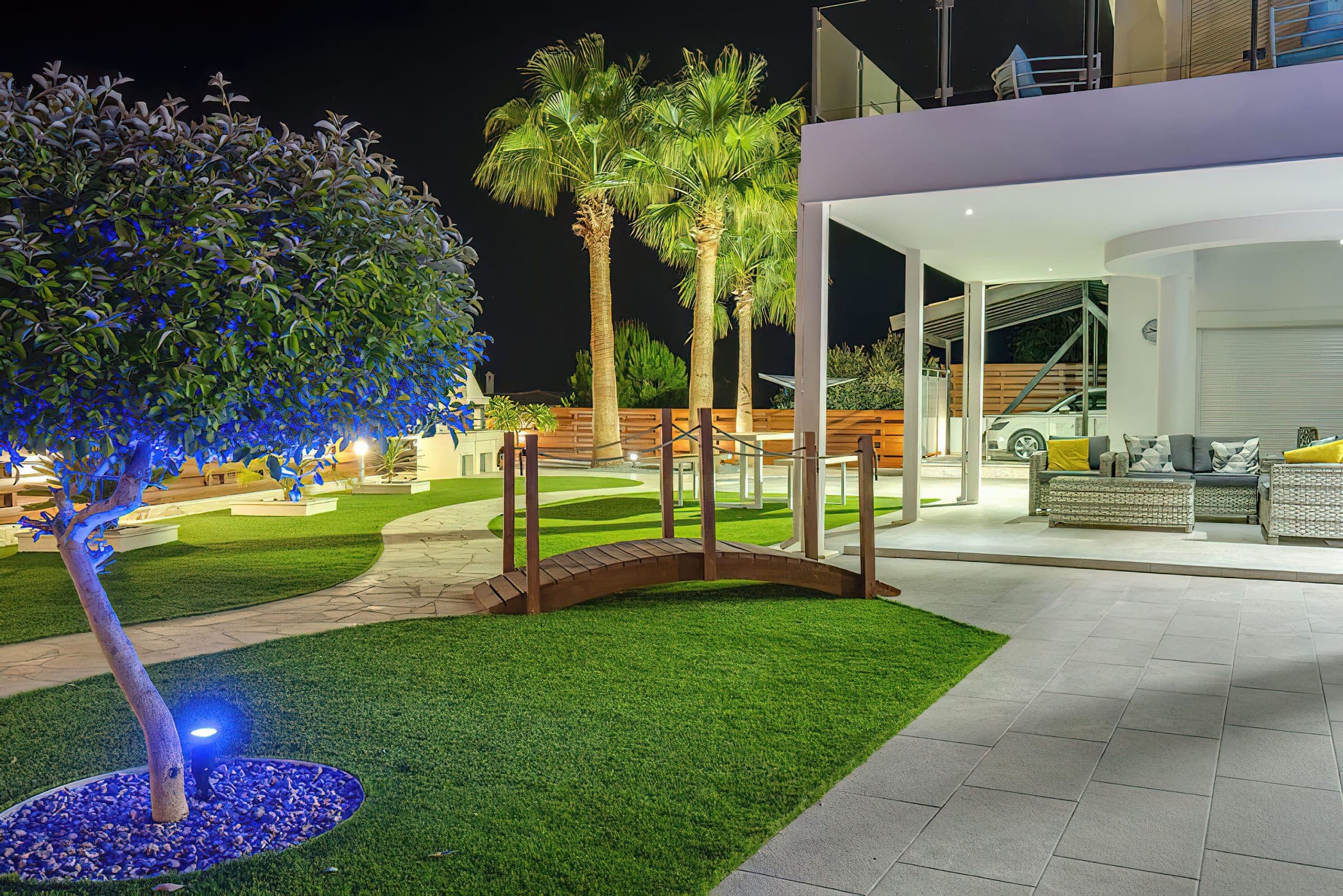
Our villa for couples is Villa Prasino, a private villa in Peyia, above Coral Bay. After an evening at the harbour, you come back to a hot tub, a 6 × 12 m diving pool, an outdoor bar with a fire pit, a balcony off the master bedroom, and sea and mountain views, all in 1,000 m² of private gardens. Coral Bay beach is about 5 km away and the Sea Caves about 2 km. Check availability and rates, and if an evening like this is what you are after, send a booking request once you have dates.