

Skip to content
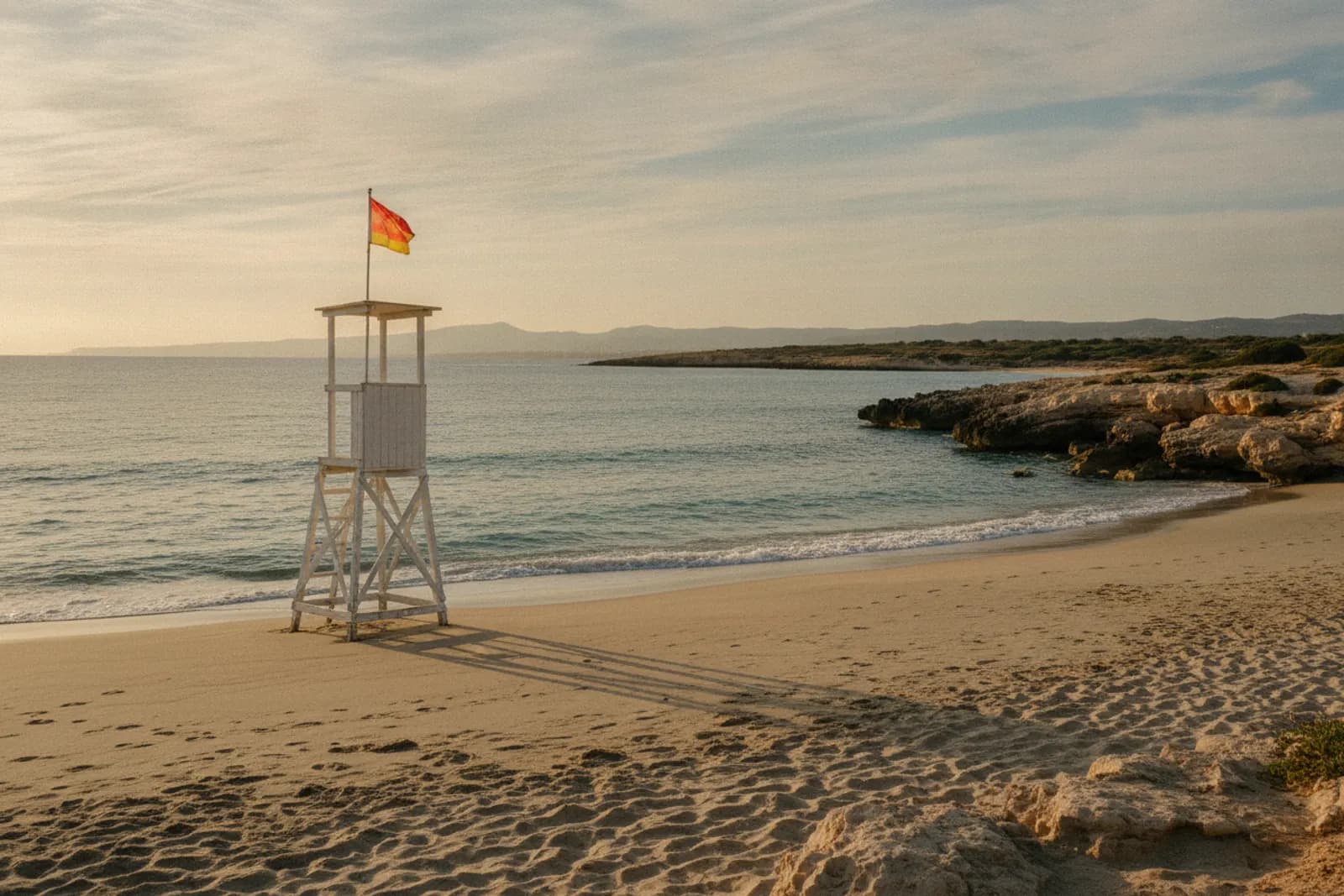
Empty lifeguard tower on a sandy cove in Cyprus at golden hour, with calm turquoise sea and low limestone rocks

Is Cyprus safe?

For most visitors, yes. Here is what the UK government's travel advice says today, and the everyday risks worth planning for: the roads, the summer heat, wildfires and the sea.

AI-generated illustration

Published · 7 min read · Facts checked 9 October 2026 against the sources below

The short answer is yes: Cyprus is a safe place for a holiday, and that is broadly how the UK government sees it. The Foreign, Commonwealth & Development Office (FCDO) does not advise against travel to any part of the island, and its advice, last updated on 14 August 2026, describes crime against tourists as not common.

That isn't the same as no risk at all. The things most likely to spoil a trip are ordinary ones: the roads, the summer sun, wildfires in a dry year and the sea on a windy day. What follows is the official advice on each, as it stood in October 2026, seen from a stay at Coral Bay in Paphos, on the island's west coast. Travel advice changes, so read the FCDO's Cyprus page (opens in a new tab) again before you fly.

What the FCDO says right now

The FCDO's advice has no warning against travel to any part of Cyprus. Its headline points are these:

  • The Middle East. The situation in the region "remains unpredictable", and British nationals are asked to follow local news and keep their plans under review. Demonstrations are likely in Cyprus because of events in the region, and the advice is to stay away from them.
  • Terrorism. As for most countries, attacks "cannot be ruled out", and there is a high global threat to UK interests.
  • Wildfires. There is a high risk from April to October (more on this below).
  • Insurance. "No travel can be guaranteed safe", and your policy should cover your whole itinerary and the activities you plan.

Cyprus is in the EU but not in the Schengen area. British passport holders can stay up to 90 days without a visa; make sure your passport is stamped on the way in and out.

Crime and personal safety

Both the FCDO and Visit Cyprus, the island's official tourism site, describe crime as low. Visit Cyprus says it is "comparatively, at a very low level". The usual precautions still apply: keep passports, money and phones out of sight, and don't leave bags on show in a parked car.

The FCDO does give some specific warnings:

  • Drink spiking. Personal attacks, including sexual assaults, are infrequent but do happen, and drugs such as GHB are used. Buy your own drinks, keep them in sight and stay with your friends on a night out.
  • Drugs. Cyprus enforces a zero-tolerance policy, and that includes cannabis and laughing gas.
  • Photographs. Don't take pictures near military buildings or other sensitive sites. You could be arrested.
  • Passports as deposits. Some rental firms ask for your passport as a deposit for a car, moped or quad. That is illegal, so don't hand it over.

The north, the buffer zone and the crossing points

Since 1974 the island has been divided by a UN-controlled buffer zone, also called the Green Line, which runs about 180 km from coast to coast. The Republic of Cyprus, which runs the south including Paphos, is a full EU member. The north is run by the self-declared "Turkish Republic of Northern Cyprus", which the UK does not recognise. Most of the buffer zone is off limits without UN permission, but crossing points between north and south have been open since April 2003.

You can cross, and many visitors do, but go in knowing the rules:

  • Consular help is limited in the north. The authorities there do not share information with the British High Commission about British nationals, so in the FCDO's words you "may be more vulnerable".
  • Use an official crossing point. Ledra Palace and Ledra Street in Nicosia are for pedestrians only. Agios Dometios, Pergamos, Strovilia, Astromeritis–Zodhia, Kato Pyrgos–Karavostasi, Lefka–Apliki and Deryneia are open to vehicles and pedestrians.
  • Don't enter through the north. Arriving at Ercan airport counts as illegal entry to the Republic of Cyprus, and you could be fined or refused entry or exit.
  • Time in the north counts towards your 90 days.
  • Shopping limits apply on the way back, including for goods from Pyla, a village inside the buffer zone. The limit on cigarettes, for example, is 40 per person.

For a day out across the line on foot, see our Nicosia day trip guide.

Roads and driving

This is the one area where the official advice is blunt. The FCDO says "driving standards are poor and there is an increased risk of road deaths compared to the UK". The numbers back that up: a European Transport Safety Council report put Cyprus at 46 road deaths per million people in 2025, against an EU average of 43, although deaths are down 13.5% since 2019. In December 2025 the transport minister said 19 of the 43 deaths that year so far were linked to mobile phones or inattention.

The rules will feel familiar. Cyprus drives on the left, seat belts are compulsory in the front and back, children must be in a seat suited to their weight, and hand-held phones are banned. The speed limits are 100 km/h on motorways, 80 km/h on other roads and 50 km/h in towns, and the drink-drive limit is 22 micrograms of alcohol per 100 ml of breath. Fines for breaking these rules are heavy.

Mopeds and quad bikes deserve extra thought. Hire firms usually provide only third-party cover, so you pay for any damage, and you could be arrested if you don't. Our guide to driving in Cyprus has more on hiring a car and the roads around Paphos.

Sun, heat and wildfires

Cyprus summers are hot, and inland is hotter than the coast. On 15 July 2026, for example, a yellow weather warning was issued for the afternoon, with around 39°C forecast in Nicosia and 31°C in Paphos. Watch for weather warnings, which are most common in summer. Plan the middle of the day around shade and water, and see our Paphos weather guide for what each month is like.

Wildfires are the bigger summer risk. The FCDO rates the risk as high from April to October and asks visitors to make sure their phone can receive emergency alerts. The large fire in the Limassol district in July 2025 is a reminder of how fast they spread; by the end of June 2026 the state had paid €23.2 million to those affected.

The Department of Forests' rules are simple. Never throw a lit cigarette or match, and in the countryside only light a fire to cook in the barbecues at official picnic sites.

The sea and lifeguards

The FCDO's view is that "bathing is generally safe, but there can be strong waves and currents". It advises following warning signs and swimming only on approved beaches.

Lifeguards make the difference. Coral Bay beach has lifeguards with first aid from April to October. Hours are shorter than many people assume: shifts end at 5pm, 6pm or 7pm depending on the beach. In August 2026, 8 of the 33 lifeguard towers in the Paphos district were closed. So swim at a staffed beach, during staffed hours, and don't swim off the rocks around the sea caves.

Our guide to the best beaches near Coral Bay covers the sandy, sheltered options.

Health, healthcare and 112

Healthcare is good, and most doctors speak English. For an emergency call 112 and ask for an ambulance. Paphos has a state general hospital, Pafos General Hospital, as well as private clinics. The FCDO keeps a list of English-speaking medical providers (opens in a new tab) in Cyprus.

Take your GHIC or EHIC, which covers medically necessary state healthcare. The FCDO is firm that it "is not an alternative to travel insurance": it won't pay for private treatment or a flight home.

Mosquitoes are the other thing to plan for. TravelHealthPro, the UK's travel health service, advises avoiding insect bites day and night, and it reported locally acquired cases of West Nile virus in Cyprus in 2026. Pack repellent, and our Cyprus travel tips have more on the practical side.

Where to stay

Villa Prasino is a private villa in Peyia, above Coral Bay, for up to 6 guests. The 1,000 m² plot is fully fenced, with electric gates, a private driveway, CCTV, shutters and an alarm with 24/7 call-out. For young children, add our Kids upgrade and we'll fit a pool safety fence, stair gates, corner protectors and anti-slip for outdoor areas before you arrive.
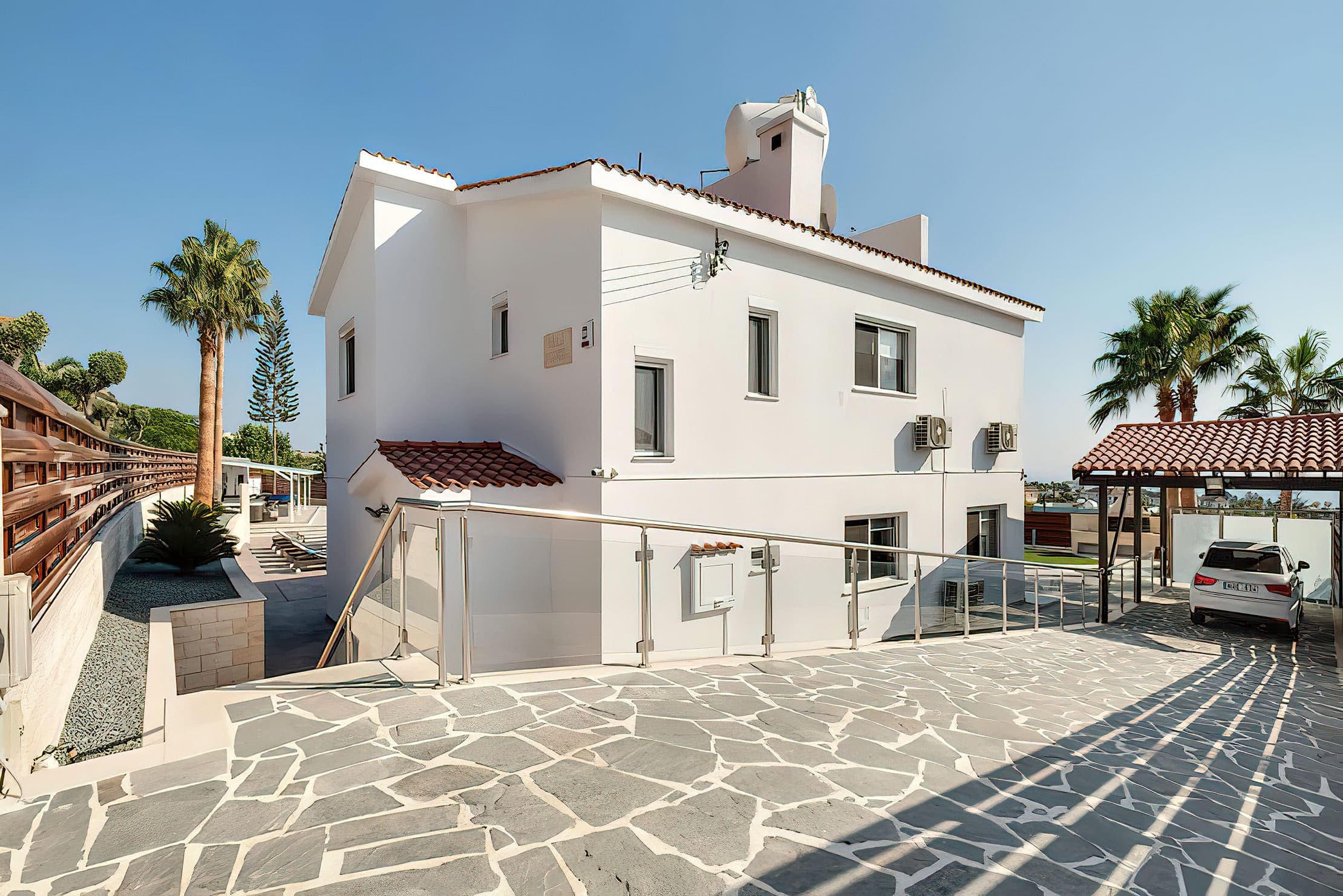
Villa entrance with gated private driveway and covered parking
The gated private driveway at the villa in Peyia.

Coral Bay beach, with its lifeguards, is about 5 km away. See holidays with children, check availability and rates, and when you have dates, send a booking request and we'll confirm within 24 hours.
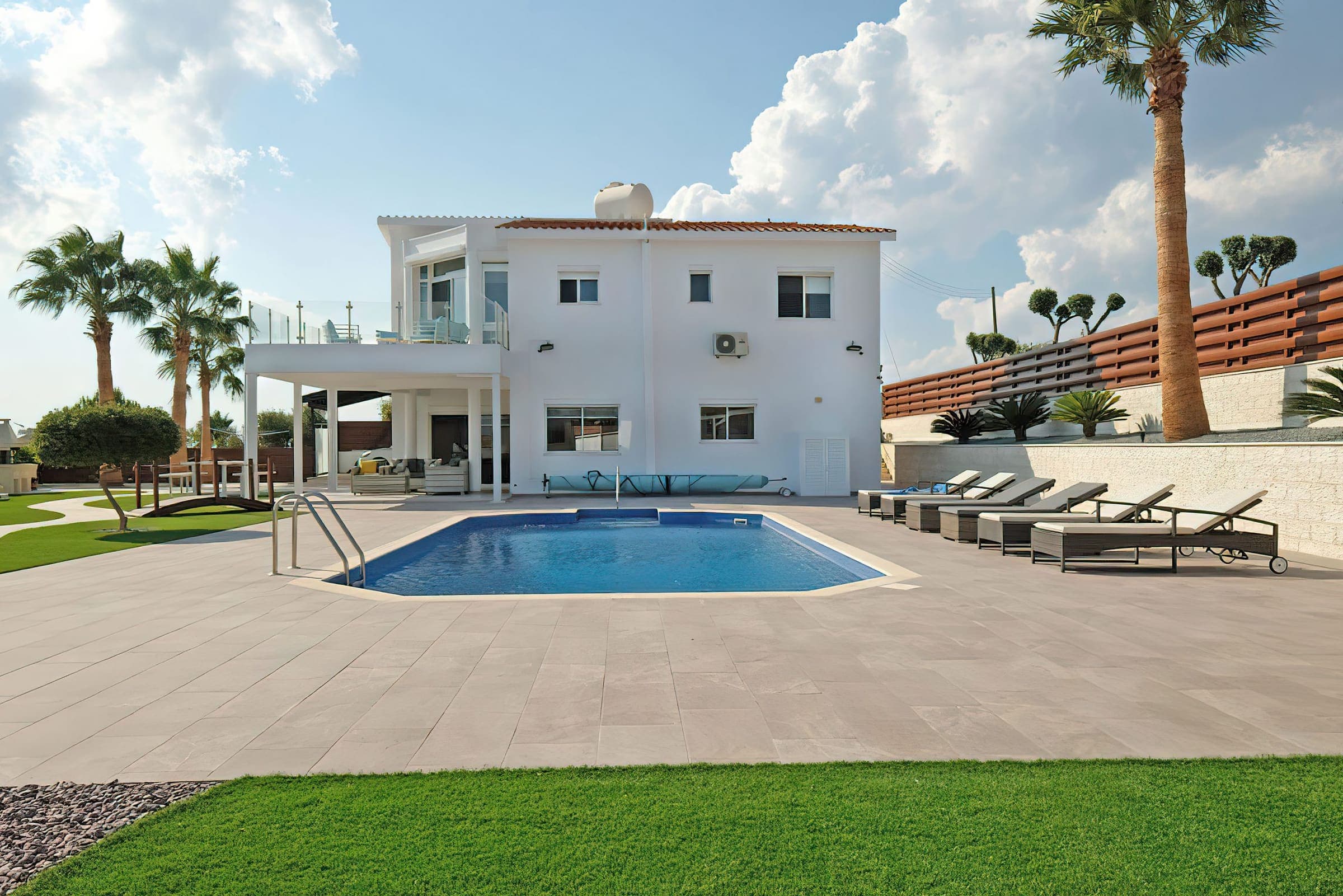
The white two-storey villa behind the pool and sun loungers

Where to stay

Villa Prasino, Peyia

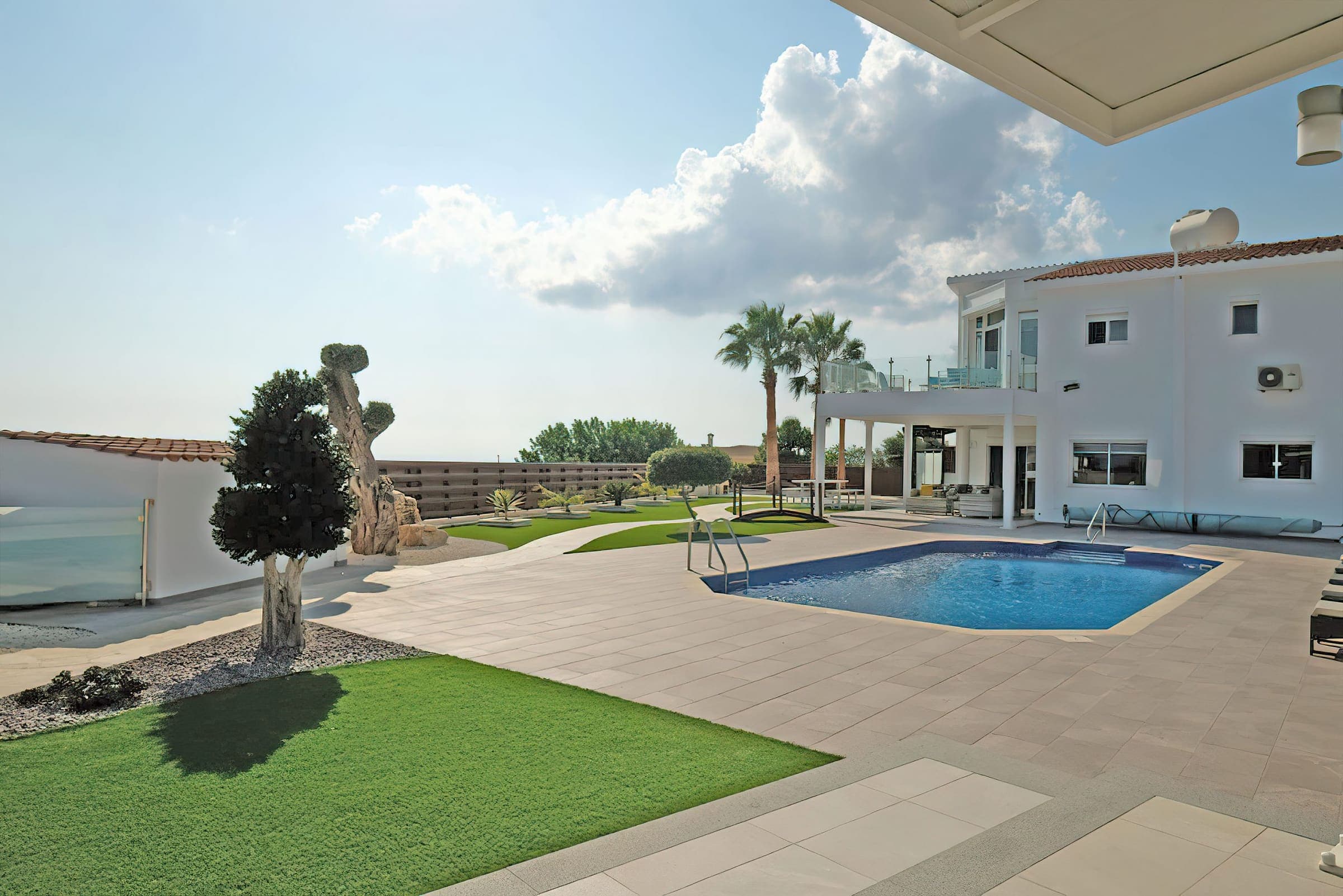
Villa Prasino is a beautifully landscaped, 1,000 m² private holiday hideaway, just a short drive from Coral Bay. Set between the sea caves of Peyia and the unspoilt Akamas Peninsula, it’s the perfect base for your holiday in Paphos, Cyprus.

Sleeps 6 · 3 bedrooms · 3.5 bathrooms · 6 × 12 m diving pool · hot tub

Questions

Good to know

Is Cyprus safe for tourists right now?

Yes, for most visitors. The UK Foreign Office (FCDO) does not advise against travel to any part of Cyprus and describes crime against tourists as not common. It does flag an unpredictable situation in the Middle East, a high wildfire risk from April to October and poor driving standards, so check its advice before you travel.

Is it safe to visit northern Cyprus?

Many visitors cross the Green Line without trouble, but the FCDO can only give limited consular support in the north. Use an official crossing point, don't enter the island through the north, and remember that time there counts towards your 90 days.

Can I take a hire car to the north of Cyprus?

Only with the right insurance. Cars hired in the Republic often have no cover in the north, and you won't be allowed through a crossing without the correct documents. Some crossing points, including Agios Dometios, sell insurance for the north.

What is the emergency number in Cyprus?

Call 112 for an ambulance, the fire service or the police. To report smoke or a fire in the countryside, you can also call the Department of Forests on 1407.

Are the beaches in Cyprus safe for swimming?

The FCDO says bathing is generally safe but warns of strong waves and currents, so swim on approved beaches and follow the warning signs. Coral Bay beach, about 5 km from the villa, has lifeguards from April to October.

Is the villa suitable for young children?

Yes. Add our Kids upgrade when you book and we’ll fit a pool safety fence, stair gates, corner protectors and anti-slip for outdoor areas before you arrive, with a kids’ welcome pack. Child car seats and a pram are also available to hire.

Sources

How we checked this guide

The facts about the area come from these sources, checked on 9 October 2026. Opening times, prices and timetables change, so check with the operator before you set off. Distances from the villa and our hire prices come from us.

  1. 01

    Foreign, Commonwealth & Development Office (GOV.UK)

    Cyprus travel advice: warnings and insurance (opens in a new tab)

    The advice was last updated on 14 August 2026; it does not advise against travel to any part of Cyprus; the Middle East situation remains unpredictable; high wildfire risk from April to October; no travel can be guaranteed safe; insurance should cover your itinerary and activities.

    Checked 9 October 2026

  2. 02

    Foreign, Commonwealth & Development Office (GOV.UK)

    Cyprus travel advice: safety and security (opens in a new tab)

    Terrorism cannot be ruled out; demonstrations are likely; crime against tourists is not common; drink spiking; zero tolerance of drugs; photographs near military buildings; swimming safety; adventure sports insurance; poor driving standards; hire cars often uninsured in the north, insurance sold at some crossings including Agios Dometios; moped and quad cover; passports as deposits are illegal; weather warnings; wildfires and emergency alerts; earthquakes.

    Checked 9 October 2026

  3. 03

    Foreign, Commonwealth & Development Office (GOV.UK)

    Cyprus travel advice: regional risks (opens in a new tab)

    The Green Line; the UK does not recognise the self-declared 'Turkish Republic of Northern Cyprus'; only limited consular support in the north, and the authorities there do not share information with the British High Commission.

    Checked 9 October 2026

  4. 04

    Foreign, Commonwealth & Development Office (GOV.UK)

    Cyprus travel advice: entry requirements (opens in a new tab)

    Any crossing point can be used; Ledra Palace and Ledra/Lokmaci Street are for pedestrians only; time in the north counts towards the 90 days; entering through the north (such as Ercan) counts as illegal entry; limits on goods brought south, including from Pyla in the buffer zone (40 cigarettes).

    Checked 9 October 2026

  5. 05

    Foreign, Commonwealth & Development Office (GOV.UK)

    Cyprus travel advice: health and getting help (opens in a new tab)

    Call 112 and ask for an ambulance; GHIC or EHIC for medically necessary state healthcare, which is not an alternative to travel insurance; FCDO list of English-speaking medical providers; 112 for ambulance, fire and police; FCDO in London on +44 20 7008 5000, 24 hours a day.

    Checked 9 October 2026

  6. 06

    United Nations Peacekeeping Force in Cyprus (UNFICYP)

    About the buffer zone (opens in a new tab)

    The UN-controlled buffer zone, or Green Line, dividing the island since 1974; about 180 km long; civilian access needs UN authorisation outside the civil use areas such as Pyla; crossing points open since April 2003.

    Checked 9 October 2026

  7. 07

    Department of Customs and Excise, Ministry of Finance, Cyprus

    Crossing Points – Green Line Regulations (opens in a new tab)

    The list of crossing points and which are for pedestrians only or for vehicles and pedestrians.

    Checked 9 October 2026

  8. 08

    Visit Cyprus (Deputy Ministry of Tourism)

    Health & Safety (opens in a new tab)

    Crime is comparatively at a very low level; emergency number 112; most doctors speak English; state hospitals and private clinics; Pafos General Hospital's number; pharmacy hours; sunglasses for drivers; no vaccinations required.

    Checked 9 October 2026

  9. 09

    Visit Cyprus (Deputy Ministry of Tourism)

    Transportation (opens in a new tab)

    Driving on the left; seat belts front and back; speed limits; the alcohol limit of 22 µg per 100 ml of breath; hand-held mobile phones banned; child restraints.

    Checked 9 October 2026

  10. 10

    Cyprus Mail

    Report finds Cyprus road deaths on the decline despite increase last year (23 June 2026) (opens in a new tab)

    Road deaths rose 9.8% in 2025; 46 deaths per million inhabitants against an EU average of 43; down 13.5% between 2019 and 2025.

    Checked 9 October 2026

  11. 11

    Cyprus Mail

    Distracted driving blamed for nearly half of all road deaths in Cyprus (12 December 2025) (opens in a new tab)

    19 of the 43 people killed on the roads in 2025 up to that date died because of mobile phone use or inattention.

    Checked 9 October 2026

  12. 12

    Cyprus Mail

    Yellow weather warning issued as temperatures climb to 40C (15 July 2026) (opens in a new tab)

    A yellow warning for 2pm to 4.30pm, with around 39C forecast in Nicosia and 31C in Paphos.

    Checked 9 October 2026

  13. 13

    Department of Forests, Ministry of Agriculture

    Fire safety guide (opens in a new tab)

    No throwing lit cigarettes or matches; fires for cooking only in the barbecues at picnic sites; report smoke or fire to the Department of Forests on 1407.

    Checked 9 October 2026

  14. 14

    Cyprus Mail

    €23.2 million paid to wildfire victims (3 August 2026) (opens in a new tab)

    The July 2025 wildfire in the Limassol district and the €23.2 million paid to those affected by 30 June 2026.

    Checked 9 October 2026

  15. 15

    Cyprus Mail

    'Criminal' to close lifeguard towers at 6pm, federation chief says (17 August 2026) (opens in a new tab)

    Lifeguard shifts end at 5pm, 6pm or 7pm depending on the beach; 8 of the 33 towers in the Paphos district were closed.

    Checked 9 October 2026

  16. 16

    Visit Cyprus (Deputy Ministry of Tourism)

    Coral Bay Beach – Blue Flag (opens in a new tab)

    Lifeguards with first aid at Coral Bay beach from April to October.

    Checked 9 October 2026

  17. 17

    TravelHealthPro (UK Health Security Agency)

    Cyprus: country information (opens in a new tab)

    Avoid insect and tick bites day and night; locally acquired West Nile virus cases reported in 2026; leishmaniasis.

    Checked 9 October 2026

Get the next guide

A few emails a year: new guides like this one, quiet weeks and offers from the villa.

A few emails a year about dates, offers and the villa. No sharing with anyone else, and you can leave from any email. How we use your details.

Villa exterior with pool, lawn and a mature olive tree

Availability

Plan your stay

Pick your dates, see your price and pay the deposit by card to book direct with us.

Next available arrival

Saturday 17 October 2026

Saturday & Wednesday arrivals · A week or more, 3 nights in winter · From €230 a night

Booking direct, step by step

  1. 1Choose your dates and tell us who’s coming
  2. 2Choose a package and any extras you’d like
  3. 3See your full price and pay securely online
  4. 4Your stay is confirmed as soon as your payment goes through

Rather ask us first? The booking form can send a request instead.