
Published · 7 min read · Facts checked 9 October 2026 against the sources below
A Nicosia day trip is the easiest way to see the other side of Cyprus. The capital has an old town inside Venetian walls, and the line that has divided Cyprus since 1974 runs straight through it. In one day from Paphos you can see the walled city's museums and lanes, then walk across at Ledra Street to Büyük Han and Selimiye Mosque in the north.
It suits anyone staying in Peyia, near Coral Bay, Paphos, who wants one day inland. Opening hours, timetables and crossing rules change, so check before you go.
Paphos to Nicosia by car
From the centre of Paphos, Nicosia is about 150 km by road, and the drive takes about two hours. It is motorway almost the whole way: the A6 east along the coast to Limassol, then the A1 north to Nicosia.
The walled city's moat is now used partly for car parks, so aim for one of those and walk in. The old town is best explored on foot, and the Ledra Street crossing is for pedestrians only, so the car stays in the south whatever you plan.
Our guide to driving in Cyprus covers speed limits, cameras and parking rules before you set off.
Paphos to Nicosia by intercity bus
If you would rather not drive, Intercity Buses runs a direct service from Karavella station in Paphos to Solomou Square in Nicosia. The journey takes about two hours.
The 2026 timetable is below. Weekend times also apply on public holidays.
| Bus | Departures | First | Last |
|---|---|---|---|
| Paphos to Nicosia, weekdays | 14 a day | 05:00 | 19:45 |
| Paphos to Nicosia, weekends | 8 a day | 08:00 | 18:30 |
| Nicosia to Paphos, weekdays | 14 a day | 04:45 | 19:15 |
| Nicosia to Paphos, weekends | 9 a day | 07:00 | 19:00 |
A single fare is €8 at the time of writing, paid in cash to the driver or with a motion card. A return is €15 on a motion card, and a day ticket on the intercity network is €20, both at the time of writing. Check the timetable before you go: services change, and they can be thinner on public holidays.
On a weekday, the 08:00 or 09:00 from Paphos gives you most of the day in Nicosia, with buses back until early evening.
The Venetian walls and Famagusta Gate
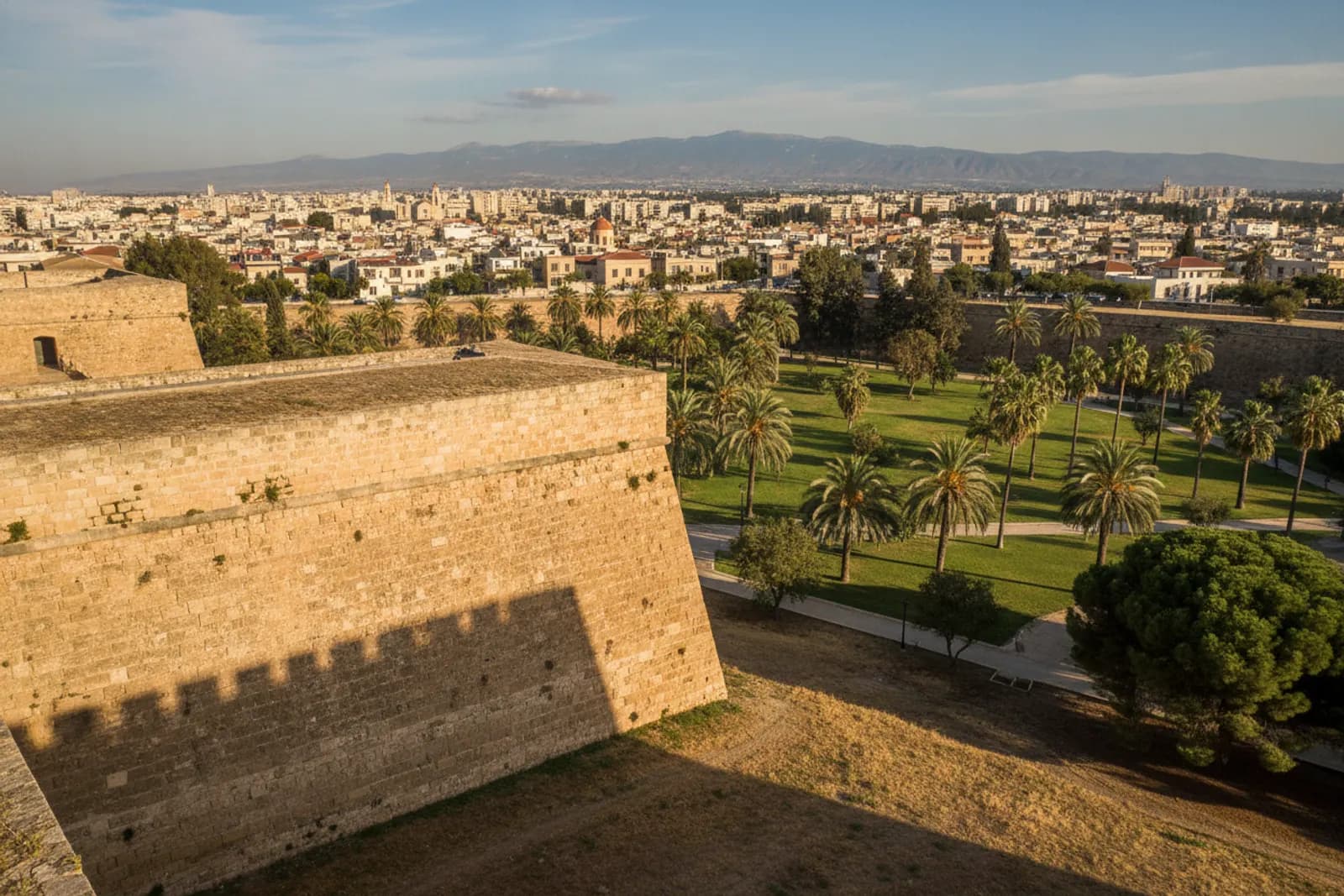
The old town of Nicosia sits inside a ring of 16th-century Venetian walls, built to replace earlier walls of the Franks. There are eleven heart-shaped bastions, and the moat around them, 80 m wide, now holds sports grounds, public gardens, an open-air sculpture exhibition and car parks.
Famagusta Gate is the largest of the three old entrances to the city. It was designed by Giulio Savorgnano in 1567 and was first called Porta Giuliana. Today it is the Nicosia Municipal Multicultural Centre, with free entry. It opens Monday to Friday, 10:00 to 13:00 and again from 16:00 to 19:00 between October and April, or 17:00 to 20:00 between May and September. It is closed at weekends and on public holidays.
Laiki Geitonia and Ledra Street
Laiki Geitonia is a small, preserved quarter of early 20th-century houses and cobbled lanes in the walled city. It has craft workshops, traditional shops and cafés, and it is a good place to start a walk.
Ledra Street and the pedestrian streets around it are the commercial heart of Nicosia, lined with shops and cafés. Follow Ledra Street to its end and you reach the crossing point.
Museums in the walled city
The walled city holds some of the island's most important collections, but the museums close on different days. These are the 2026 hours.
| Museum | What you'll see | Open | Entry |
|---|---|---|---|
| Cyprus Museum | The island's archaeology, from the Neolithic to the Early Byzantine | Tue–Fri 08:00–18:00, Sat 09:00–17:00, Sun 10:00–13:00; closed Monday | Free |
| Byzantine Museum | Over 200 icons from the 9th to the 19th century, and mosaics | Tue–Sat 09:30–17:00; closed Sunday, Monday and public holidays | €7 |
The Cyprus Museum is the island's largest archaeological museum, in a building put up between 1908 and 1924. Look for the cross-shaped Chalcolithic idol and a 1st-century BC statue of Aphrodite.
The Byzantine Museum, on Archbishop Kyprianos Square, holds the richest collection of Byzantine art in Cyprus, including 6th-century mosaics from the church of Panagia Kanakaria.
The Archbishop's Palace is the seat of the Church of Cyprus, built in 1960 in a Neo-Byzantine style. The old archbishopric beside it dates from 1730, and its ground floor houses the Ethnographic Museum.
A divided capital
Since 1974, Cyprus has been divided by a UN buffer zone, also called the Green Line, which runs about 180 km across the island. In parts of old Nicosia it is only a few metres wide.
The south of the island, including Paphos and Nicosia's southern half, is the Republic of Cyprus, an EU member. The north is run by the self-declared "Turkish Republic of Northern Cyprus", which the British government does not recognise. Visit Cyprus, the Republic's tourism ministry, describes the south as the area under the control of the Republic of Cyprus.
It is a sensitive subject on both sides, so this guide follows the neutral wording GOV.UK uses. Our guide to whether Cyprus is safe has the full FCDO advice.
Crossing to north Cyprus at Ledra Street
Crossing points between north and south have opened since April 2003, and Ledra Street is one of three in Nicosia. It is for pedestrians only, and you can use any official crossing point to come back.
The rules, from GOV.UK and the Cyprus authorities:
- Take your passport. Time spent in the north counts towards your 90 visa-free days in the Republic of Cyprus.
- Cross only at an official crossing point. Entering Cyprus through the north, for example by flying into Ercan airport, counts as illegal entry, and you could be fined or refused entry or exit.
- Mind what you bring back. Goods for personal use are limited to €260 a person, including 40 cigarettes and 1 litre of spirits, and rolling tobacco is not allowed. Goods over the limit can be confiscated.
- Consular help is limited. The FCDO can only give limited consular support in the north.
Büyük Han
In the old town on the northern side is Büyük Han, the Great Inn, built by the Ottomans in 1572, the year after they took Cyprus from the Venetians. It is the largest caravanserai in Cyprus: a square courtyard ringed by 68 rooms on two floors, where travellers once slept above the stables, stores and shops. Since its restoration it has been an arts centre, with galleries and craft workshops around the courtyard.
Selimiye Mosque
Selimiye Mosque began life as the Cathedral of Ayia Sophia. Work started in 1209 and it was consecrated in 1326, and the Lusignan kings of Cyprus were crowned there. Under the Ottomans it became a mosque and gained its two minarets.
Visitors are allowed inside. Dress modestly, leave your shoes at the entrance, keep your voice down, and try not to arrive at one of the five daily prayer times.
Planning your Nicosia day trip
The best days for a Nicosia day trip are Tuesday to Friday, when the Cyprus Museum, the Byzantine Museum and Famagusta Gate are all open. On a Monday the main museums are closed, and on a Sunday the Cyprus Museum shuts at 13:00.
A simple plan: arrive mid-morning, start at the Cyprus Museum, walk through Laiki Geitonia to Ledra Street, cross for lunch near Büyük Han and Selimiye, and come back through the crossing for the Byzantine Museum before heading home. Our Cyprus travel tips cover public holidays and shop hours, and the guide to Paphos to Limassol and Larnaca has more days out along the same motorway.
Where to stay
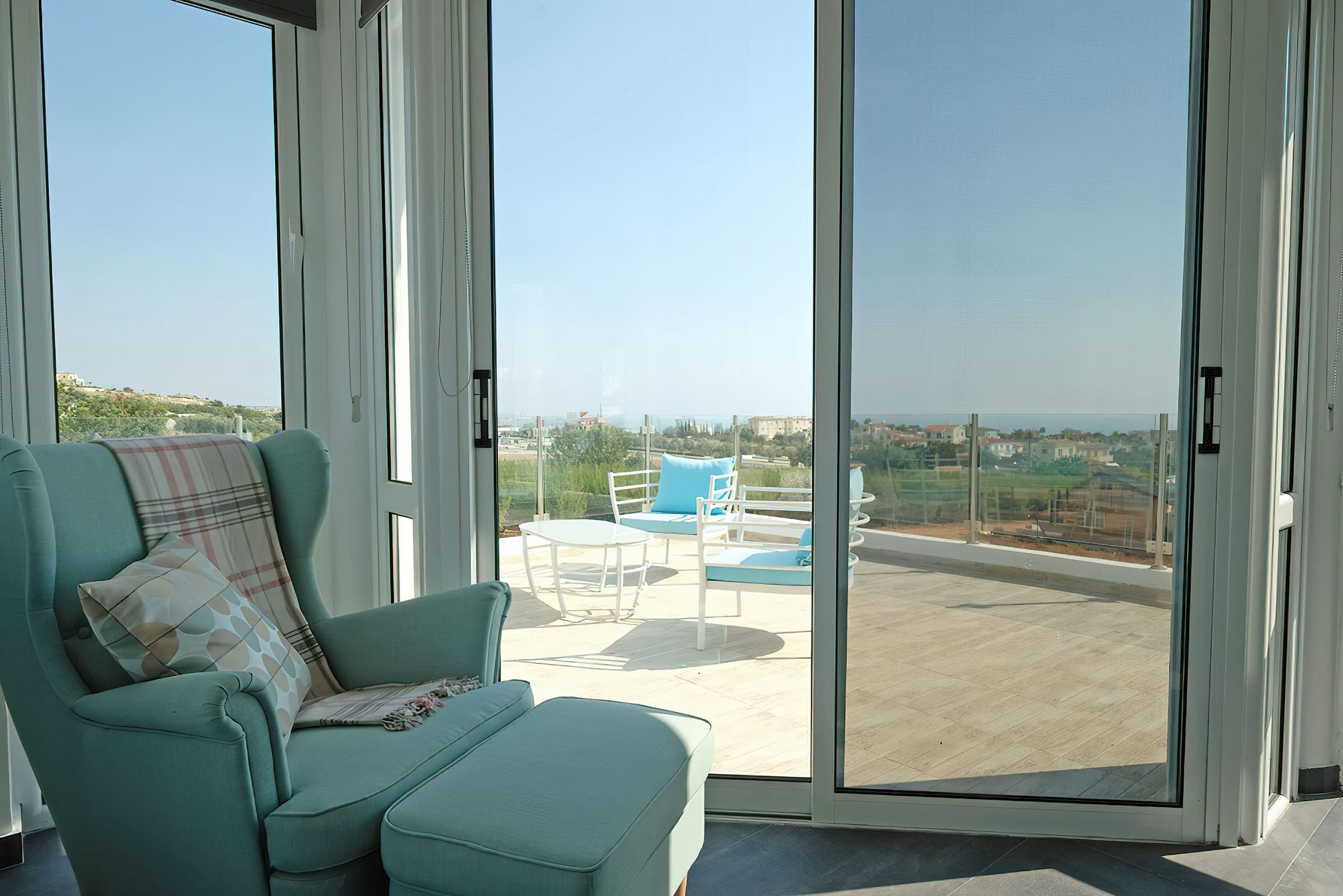
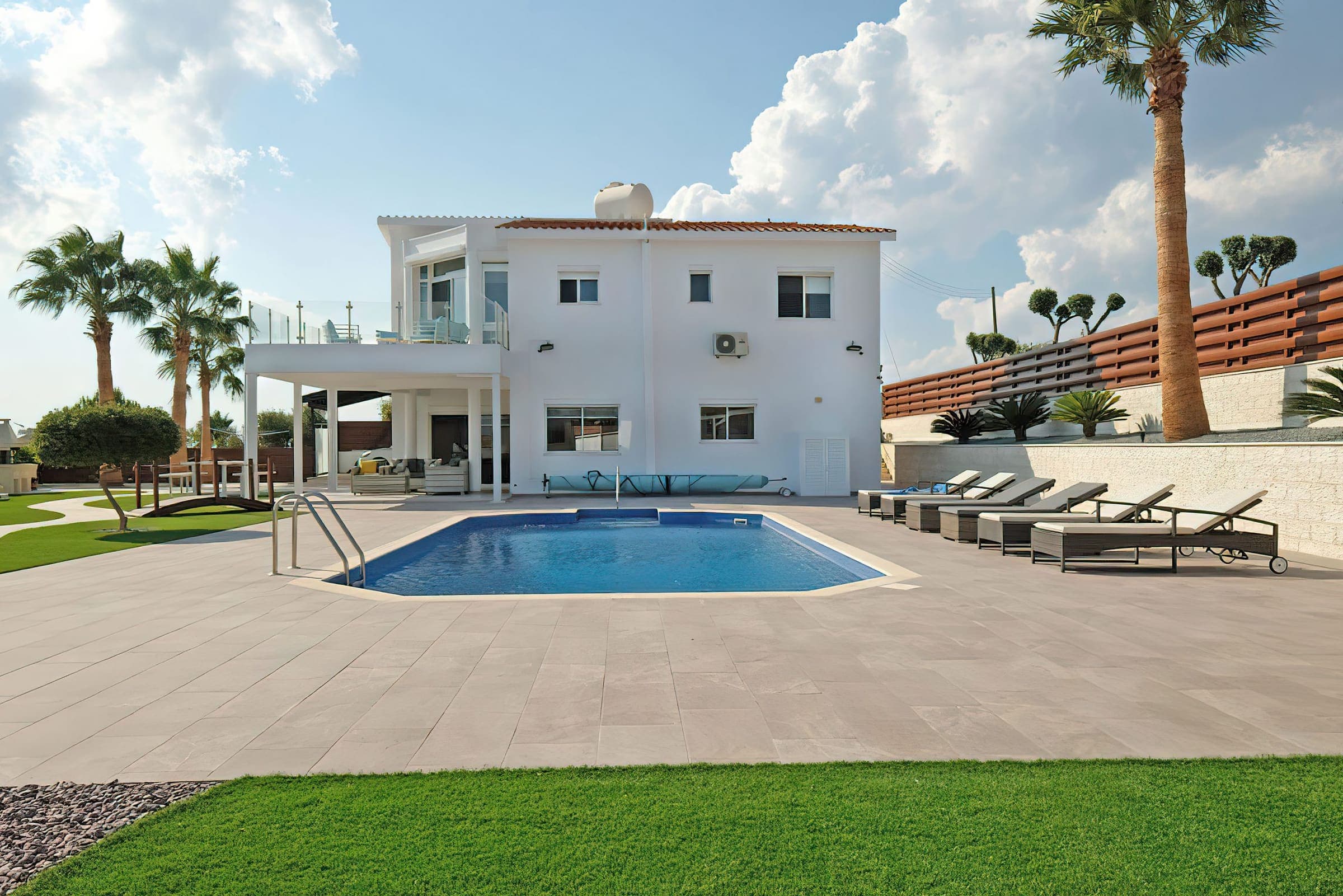
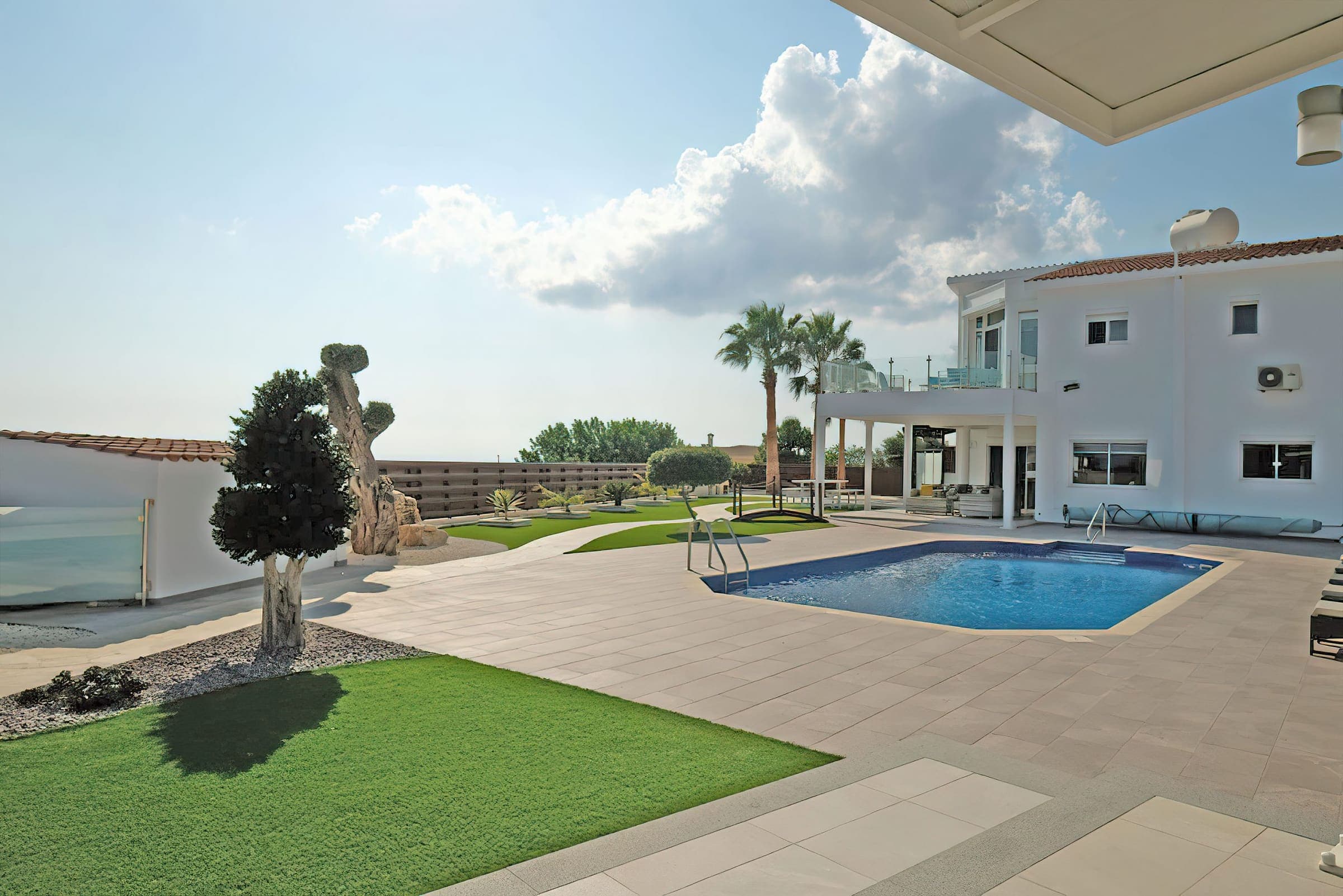
After a day in the capital, Peyia is a quiet place to come back to. Villa Prasino sleeps 6 in 3 bedrooms with 3.5 bathrooms, and has a 6 × 12 m diving pool, a hot tub, an outdoor bar with fire pit seating and a covered games area, in 1,000 m² of gardens with sea and mountain views. Coral Bay beach is about 5 km away for the days you stay put. See the villa, check availability and rates, and when you have dates, send us a booking request and we will help you fit Nicosia in on the right day of the week.