
Published · 7 min read · Facts checked 9 October 2026 against the sources below
Easter in Cyprus is the biggest week of the Greek Orthodox year, and if your holiday overlaps it you will see the island at its most traditional. Churches fill for a week of services, families bake flaounes, and on Easter Sunday lamb turns on the spit in gardens all over the island. For a family staying in Peyia, near Coral Bay, Paphos, it helps to know what happens each day, what closes, and how the dates work. Customs differ from village to village, so treat this as a guide rather than a timetable, and check local times before you go.
When is Greek Orthodox Easter in Cyprus?
Most Greek Cypriots are Greek Orthodox, and the Orthodox Church works out Easter differently from the Western churches. The two Easters often fall on different Sundays: in 2026 Orthodox Easter came a week after Western Easter, and in 2027 it comes five weeks later.
These are the dates for 2026 and 2027.
| Date | 2026 | 2027 |
|---|---|---|
| Orthodox Good Friday (Cyprus holiday) | 10 April | 30 April |
| Orthodox Easter Sunday | 12 April | 2 May |
| Orthodox Easter Monday (Cyprus holiday) | 13 April | 3 May |
| Western Easter Sunday | 5 April | 28 March |
| UK Easter Monday (England and Wales) | 6 April | 29 March |
Lent starts seven weeks earlier with Green Monday, also a public holiday in Cyprus: 23 February 2026 and 15 March 2027. The official holiday list runs only as far as 2027, so check 2028 nearer the time.
Holy Week and the Epitaphios on Good Friday
The week before Easter is Holy Week, Megali Evdomada in Greek. There are church services every day, many people fast, and homes get busy with baking. In Paphos, olive branches are blessed on Palm Sunday, and eggs are dyed red on Holy Thursday, so you will see them in bakeries and kitchens from then on.
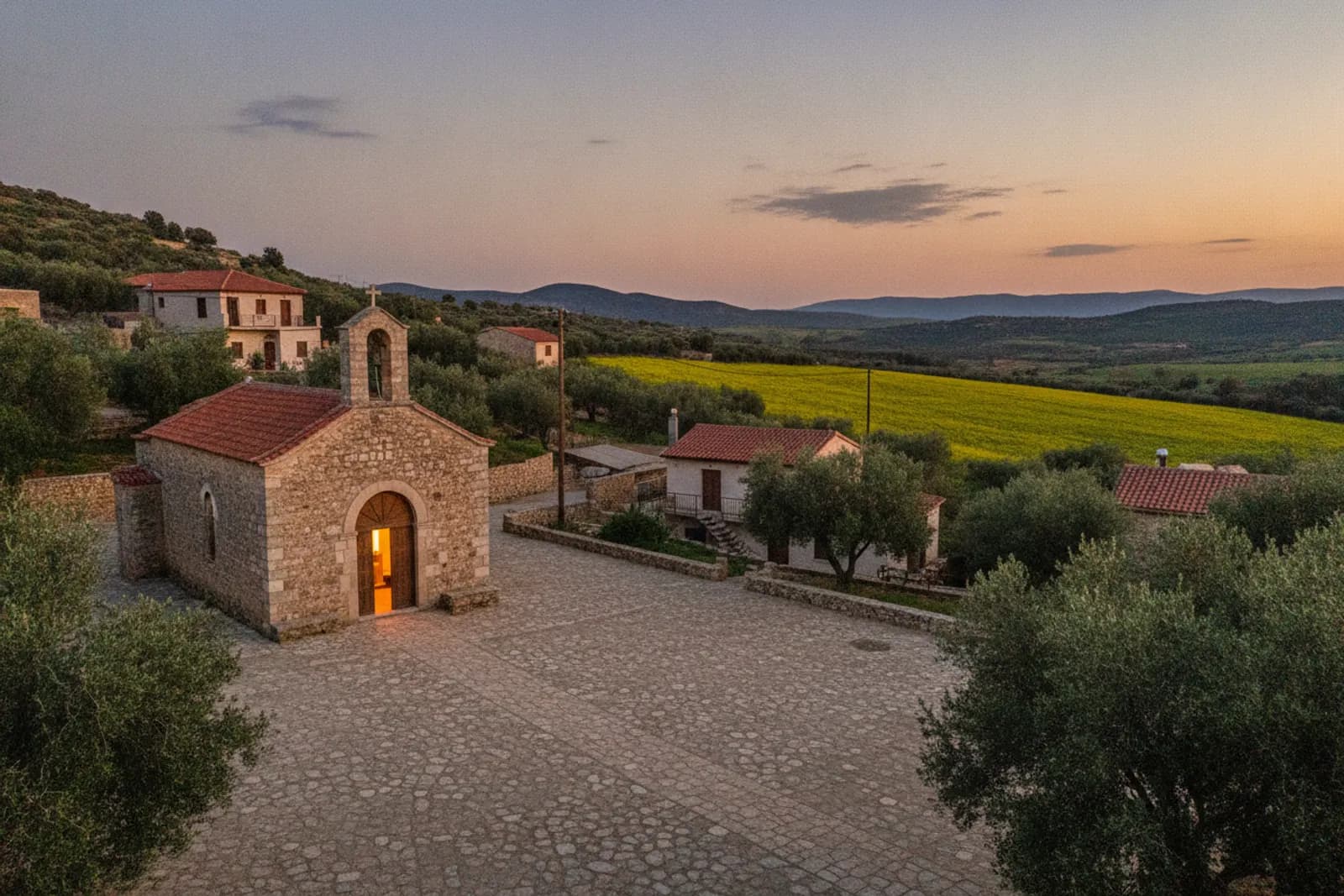
Good Friday is the most solemn day. In the morning, young women decorate the Epitaphios, a bier standing for Christ's tomb, with fresh flowers. In the evening it is carried out of the church in a slow procession through the streets, with the congregation following behind. Visitors can watch quietly from the roadside.
Good Friday is a baking day as well. In Paphos, families make the special breads of the day, such as stavrokoulouro, avgotes and lambropsomo, alongside flaounes.
In church, dress modestly, keep your voice down, and ask before taking photographs. If you do take any, be discreet.
The midnight service on Holy Saturday
Holy Saturday ends with the service most visitors remember. Shortly before midnight the church is in darkness and everyone holds an unlit candle. At midnight the priest announces "Christos Anesti", Christ is risen, the light is passed from candle to candle, and the church bells ring.
Outside, bonfires known as lambradjia are lit, and in many places an effigy of Judas is burnt on top. In Paphos, people carry the Holy Light home with them afterwards. Many families then go home for magiritsa, a soup that breaks the fast.
The crowd often spills out of the church into the square, so you can join in from outside without knowing the service.
Easter Sunday: souvla and red eggs
Easter Sunday is a day for family. The centre of the meal is souvla, pieces of lamb roasted on skewers, and families gather around it for a long lunch.
The red eggs come out at the table for tsougrisma. Each person taps the end of their egg against someone else's, and the cracking stands for Christ's tomb breaking open. It is an easy game for children to join in.
Easter Sunday is a quiet day for sightseeing. Many places close, and some official sites do too: the Cyprus Museum in Nicosia, for example, closes on Orthodox Easter Sunday.
If you would rather do your own Easter lunch, the villa has a traditional stone BBQ and a covered outdoor dining area. Our guide to Cypriot food and cooking at the villa has ideas for the rest of the week.
Flaounes, the Easter cheese pastry
Flaounes are the pastry everyone in Cyprus bakes for Easter. The filling is cheese, egg, mint and sometimes sultanas or raisins, and the dough is flavoured with mahlepi and mastic. They come out of the oven on Good Friday or Holy Saturday, depending on the family, and are eaten after the midnight service and on Easter Sunday.
Some families still bake in outdoor stone ovens, and others take their trays to the local bakery to use the big oven. Tsoureki, a sweet plaited bread, and koulouria biscuits are baked for Easter as well. The custom is alive in the Paphos district: in the villages of Emba and Kelokedara, families were still making flaounes on Good Friday in 2026.
If you are offered one, say yes: sharing flaounes is part of Easter hospitality in Cyprus.
Easter Monday, and what closes over Easter
Easter Monday is a holiday spent outdoors. Many villages hold free events in the square with traditional games, music, dancing and refreshments, and visitors are welcome to watch or join in. In Paphos the egg cracking and the games in the village squares carry on. For the rest of the year's holidays, from Carnival to Kataklysmos, see our guide to festivals in Cyprus.
Good Friday, Easter Sunday and Easter Monday are all public holidays. On a public holiday, public services, banks and shops close, though many shops and services in the resorts and coastal areas stay open. Banks also close on Easter Tuesday. Transport timetables, shop hours and services may be limited from Good Friday to Easter Monday.
In practice, do a big supermarket shop by Thursday, get any cash you need before Friday, and check bus times before you rely on them. Our Cyprus travel tips list every public holiday in the year.
Easter in Paphos with children
Easter is a good time for a family holiday in Cyprus: the days are warm, and Easter Monday is made for children. UK school Easter holidays are set by local councils, so check your own council's dates.
In 2026, Orthodox Easter fell a week after Western Easter, so a two-week school break could have taken in both. In 2027 it falls on 2 May, five weeks after Western Easter, so it may well come after your school's Easter holidays. Orthodox Easter Monday 2027 is also the UK's early May bank holiday, 3 May, which makes a long weekend easier.
Children can take part at home too. Cypriot families dye their eggs red on Holy Thursday, so a pan of hard-boiled eggs and some red food colouring at the villa means everyone has an egg ready for tsougrisma on Sunday, and for the games on Monday.
Outside the Easter days themselves, our guide to Peyia with kids has the beaches and days out nearby, and is Paphos good for families covers the bigger picture.
We hire out child car seats for the car you hire, at €35 a week per seat, and a pram or pushchair at €40 a week. See our holidays with children page for how the villa works for families.
Easter weather in April and May
Orthodox Easter falls in April or early May, and the weather is usually kind. These are the long-term averages at Pafos Airport:
- April: an average high of 21.8°C and low of 11.9°C, with 15.2 mm of rain and about 278 hours of sunshine.
- May: an average high of 24.9°C and low of 15.2°C, with 11.1 mm of rain and about 337 hours of sunshine.
Evenings can be cool, so pack a jumper for the midnight service. The pool can be heated as an optional extra at from €40 a night. Read more about April in Paphos and May in Paphos.
Where to stay
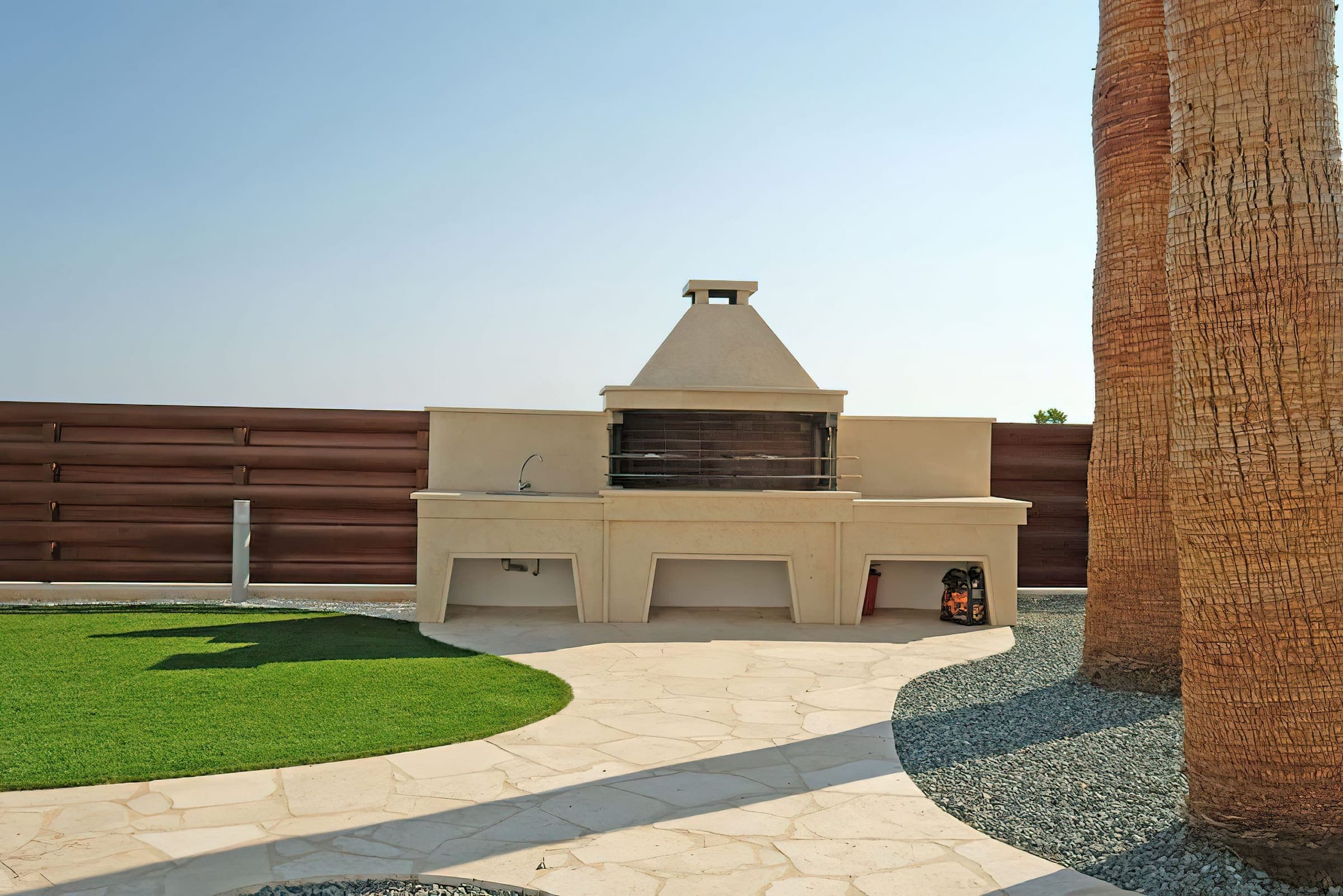
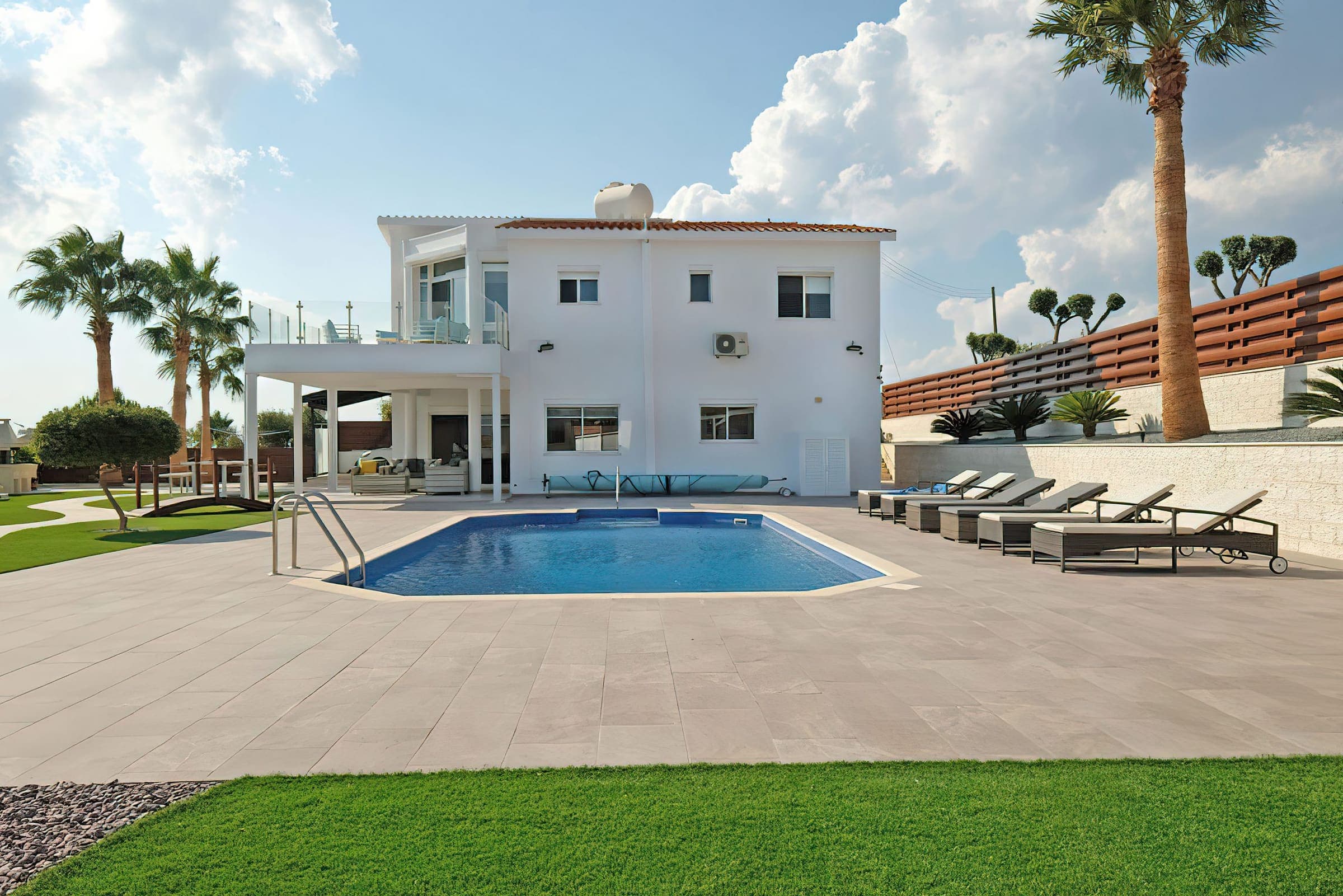
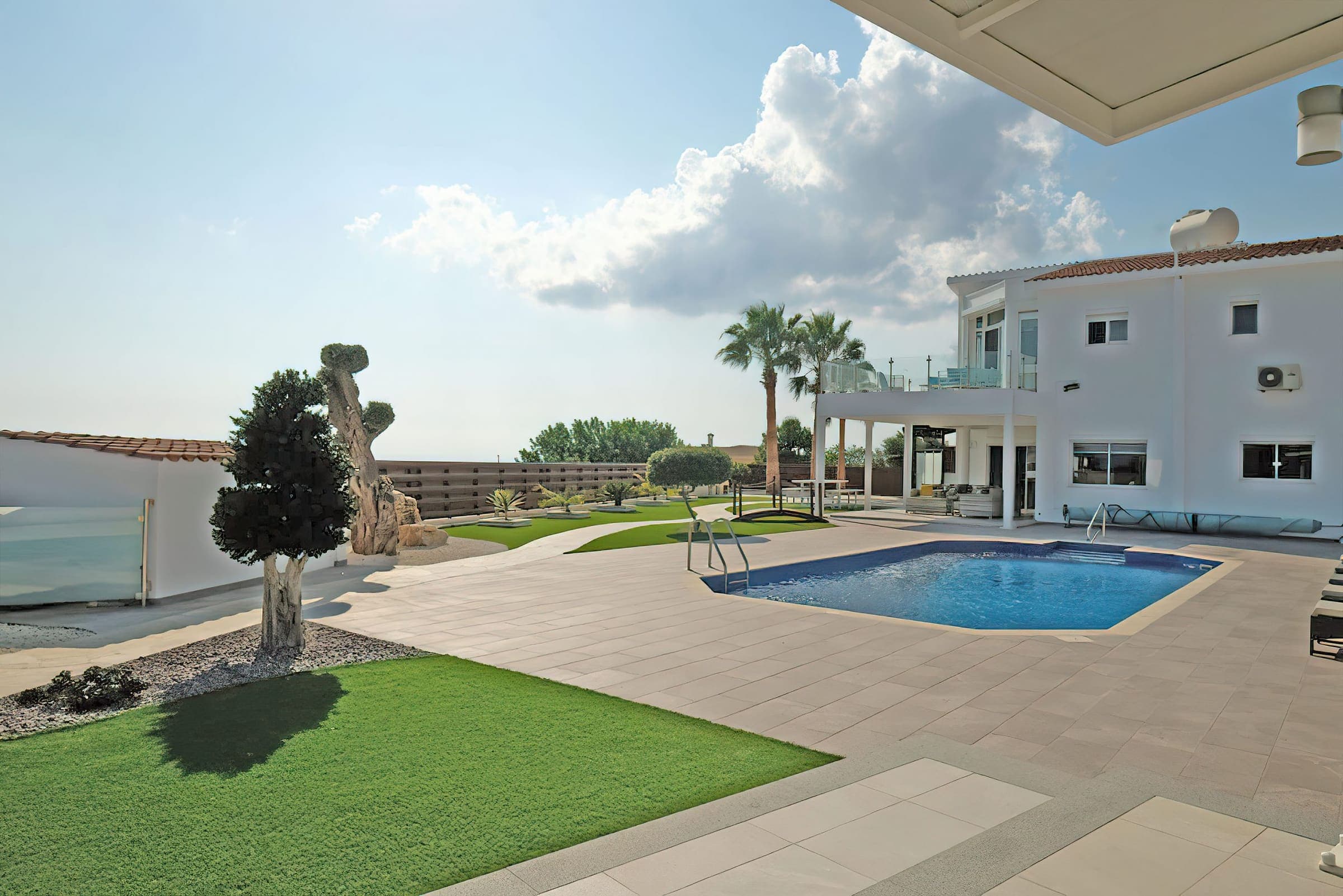
Villa Prasino is a private villa in Peyia for up to 6 guests, with 3 bedrooms and 3.5 bathrooms. There is a 6 × 12 m diving pool, a hot tub, an outdoor bar with fire pit seating, a covered games area and a traditional stone BBQ, in 1,000 m² of gardens behind electric gates. The Sea Caves are about 2 km away and Coral Bay beach about 5 km. See our holidays with children page, check availability and rates for Easter, and when you have dates, send us a booking request. If you want to know what will be open nearby over Easter, ask and we will tell you what we know.