

Published · 6 min read · Facts checked 9 October 2026 against the sources below
The currency of Cyprus is the euro. It replaced the Cyprus pound on 1 January 2008, and today cards are widely accepted and contactless is the norm. If you're flying in from the UK, money in Cyprus is about as simple as it gets on a European holiday.
The questions British visitors ask most are cash or card, what things cost, tipping and VAT. The prices below are for 2026. They change, so treat them as a guide and check before you go.
The euro in Cyprus
The Republic of Cyprus joined the euro on 1 January 2008, at a fixed rate of €1 to 0.585274 Cyprus pounds. Old pound notes are now only a souvenir: the period for exchanging them ended on 31 December 2017.
Euro notes come in €5, €10, €20, €50, €100, €200 and €500, each a different colour and size. There are eight coins, from 1 cent to €2. One side of each coin is common to every euro country and the other is national, so the Cypriot coins in your change work in Spain or France too.
Does anywhere in Cyprus use pounds?
No. Even the two British Sovereign Base Areas, at Akrotiri and Dhekelia, switched to the euro in 2008, which made them the only territory under British sovereignty to use it officially. Akrotiri is near Limassol and Dhekelia near Larnaca, so you won't pass through either on a Paphos holiday, but it is a good pub-quiz answer.
Cards, contactless and cash
Cards are the easiest way to pay. Major cards are widely accepted, especially in towns and tourist areas. Visa and Mastercard are the most widely taken, and contactless works at nearly all card machines. Petrol stations take cards too.
Still carry some cash. Only some taxi companies take cards, Pafos Buses drivers sell paper tickets on board for cash, and tips are easiest in notes and coins.
What your bank charges
The card fee is the cost that catches people out. Using a credit card overseas often incurs a fee, typically about 3% on most credit cards, while some cards sold to travellers charge nothing. Check your own bank's fees for spending and withdrawing cash abroad before you go, and take a card that suits.
ATMs and changing money
ATMs are widely available. All banks in Cyprus exchange foreign currency, and hotels can too, but most visitors find a card and a few euros from an ATM simpler.
Banks close on public holidays, and on Easter Tuesday as well. Our Cyprus travel tips list the dates.
Is Cyprus expensive?
Less than many people expect. Eurostat's 2025 price comparison, published in June 2026, puts overall consumer prices in Cyprus at about 89% of the EU average. The UK isn't in the comparison, but Cyprus comes out a little cheaper than Spain and Malta and a little dearer than Greece and Portugal.
The detail is more useful than the headline:
| Category (2025) | Cyprus, EU average = 100 |
|---|---|
| Everything | 89.2 |
| Restaurants and hotels | 85.2 |
| Alcohol and tobacco | 86.1 |
| Food and soft drinks (shops) | 100.1 |
For comparison, the euro area as a whole comes out at 103.4, and restaurants and hotels across the euro area at 101.4. So eating and drinking out is relatively good value, while a supermarket shop costs about the EU average. Our guide to Cypriot food covers what to order when you do eat out.
What things cost in 2026
| Item | Price |
|---|---|
| Pafos Buses single ticket, 04:00–21:00 | €2.00 |
| Pafos Buses single ticket, after 21:00 | €3.00 |
| Pafos Buses day ticket | €6.50 |
| Pafos Buses 7-day ticket | €35.00 |
| Urban taxi, 06:01–20:30 | €3.80, then €0.95 per km |
| Urban taxi, 20:31–06:00 | €4.80, then €1.10 per km |
| Archaeological Park of Kato Pafos | €4.50 |
| Tombs of the Kings | €2.50 |
| Department of Antiquities pass, one, three or seven days | €8.50, €17, €25 |
Taxis add €2 a ride at the time of writing on some public holidays, including Christmas, New Year's Day and Easter. For the airport, our guide to getting from Paphos airport to Coral Bay compares the options.
Deposits, hire and your passport
Hiring a car, a moped or a quad bike is where holiday money most often goes wrong, and the UK Foreign Office (FCDO) has two clear warnings.
First, some rental companies ask for your passport as a deposit. This is illegal in Cyprus, so never hand it over, whatever you're hiring.
Second, moped and quad bike hire usually comes with third-party insurance only. That means you pay for any damage to the vehicle, and the FCDO warns that you could be arrested if you don't. Check the vehicle is in good condition and has the right safety equipment before you ride off, and check what your travel insurance covers. Our guide to driving in Cyprus covers car hire in more detail.
Tipping in Cyprus
There are no fixed rules. Visit Cyprus puts it plainly: tipping "is at the discretion of the customer". Hotel and restaurant staff appreciate a tip, and taxi drivers, porters and hairdressers always appreciate a small one.
In practice that means:
- Restaurants and tavernas: leave something if the service was good. Read the bill first, so you know what you're paying for.
- Cafés and bars: rounding up or leaving your small change is a kind gesture.
- Taxis: rounding up the fare is welcome.
- Hotels: porters and housekeeping staff appreciate a small tip.
A tip is easiest in cash, even when you've paid the bill by card.
VAT and tax-free shopping
Prices in shops should already include VAT, so what you see on the label is what you pay. The rates are:
- 19%, the standard rate, on most goods and services, and on wine and beer in restaurants.
- 9% on restaurant food, hotel accommodation, taxis and tour buses.
- 5% on town and village buses, books, hairdressing, sweets, and tickets to cinemas, theatres and sporting events.
Claiming VAT back
Since the UK left the EU, British visitors count as non-EU visitors, so you can reclaim VAT on goods you take home. The conditions are these: spend over €50 per person, shop where you see a tax-free sign and ask for a tax-free form, and take the goods out in your luggage by the last day of the third month after the month you bought them. When you leave, show the goods, your passport and the form to customs to have the form stamped, then claim your refund.
Budgeting for a self-catering stay
A villa changes the sums. With your own kitchen you can mix meals out with breakfasts, picnics and barbecues at home, and plan your spending around the things you most want to do: a boat trip, a day at the ancient sites, a long taverna lunch. Set aside a little cash for tips and buses, and let the card do the rest.
Before you fly, run through a short checklist:
- Check your card fees. Find out what your bank charges for spending and withdrawing cash abroad, and consider a card with no overseas fees.
- Take two cards and keep them in different places, in case one is lost or blocked.
- Save the numbers. Put your bank's overseas helpline and JCC's number in your phone.
- Have a few euros on arrival for a bus ticket, a coffee or a tip before you find an ATM.
- Keep tax-free forms with your passport, so they're to hand at customs when you leave.
Where to stay
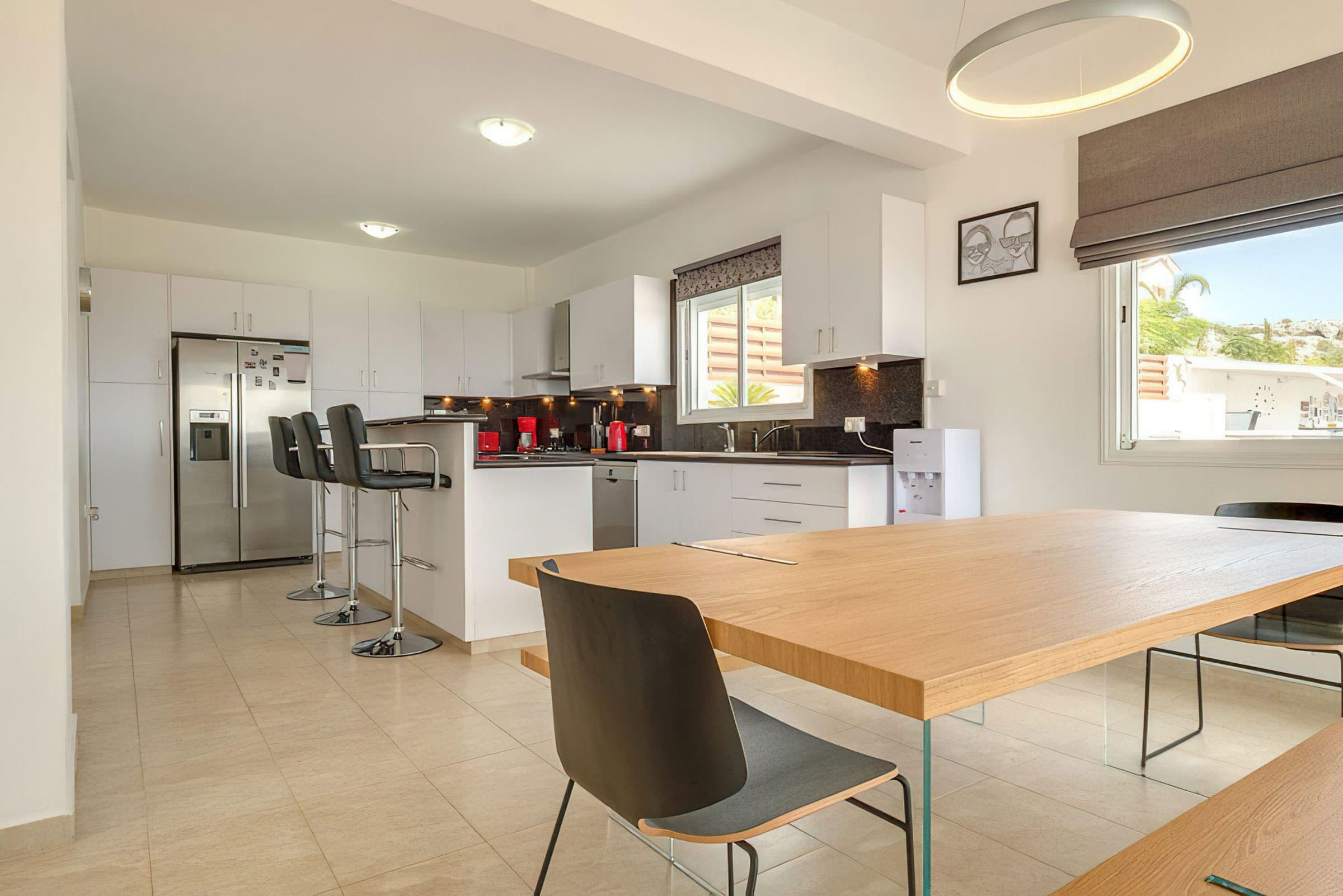
Villa Prasino is a private villa in Peyia, above Coral Bay in Paphos, for up to 6 guests in 3 bedrooms. It has a fully equipped kitchen with an American fridge-freezer, covered outdoor dining, a traditional stone BBQ and an outdoor bar with fire pit seating, so eating in is a pleasure rather than a compromise. There's also a 6 × 12 m private diving pool and a hot tub.
Take a look at the villa, check availability and rates, and when you have dates, send a booking request. We'll confirm availability and your price within 24 hours.