
Published · 7 min read · Facts checked 9 October 2026 against the sources below
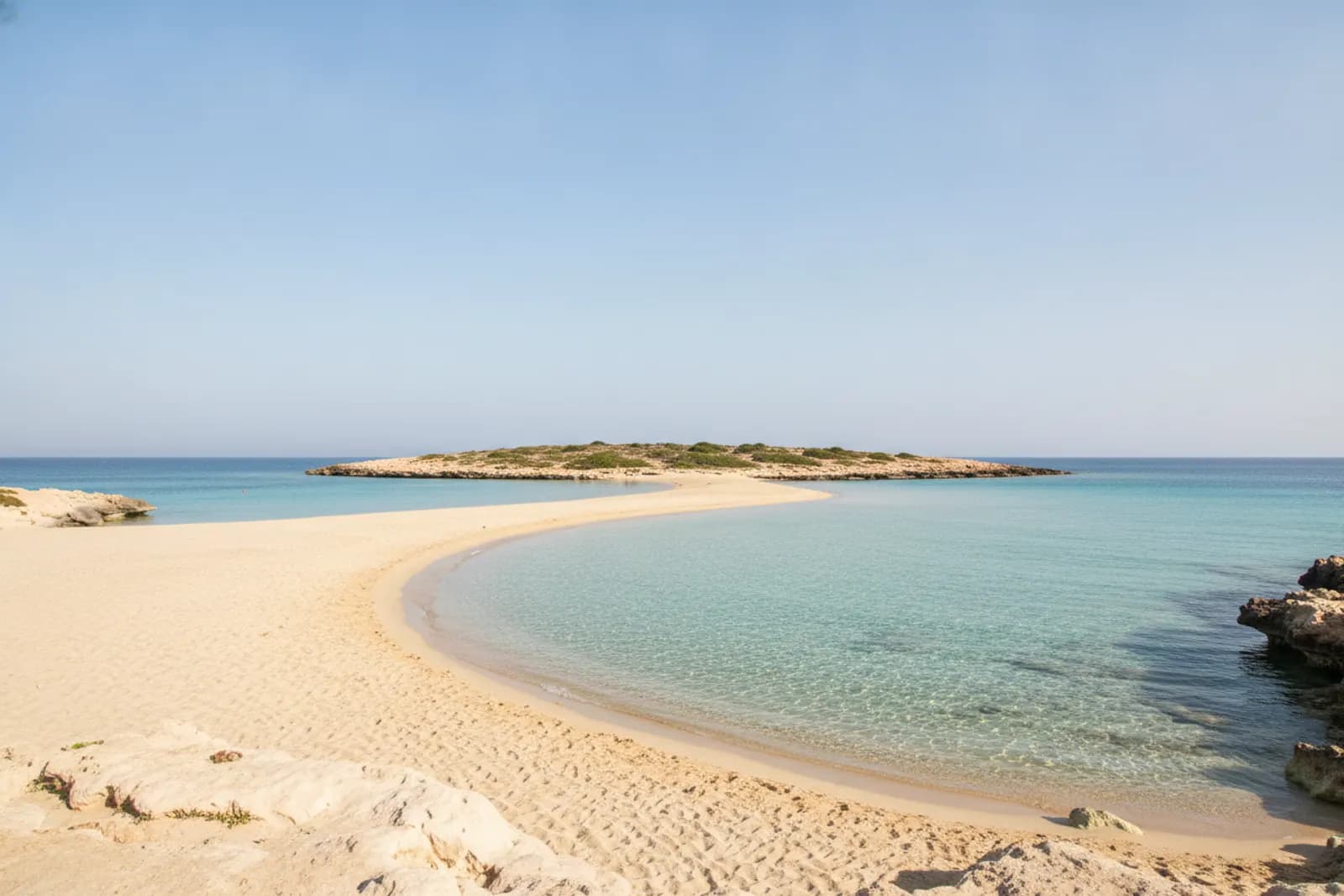
The best beaches in Cyprus are not all in one place. The famous golden sands of Ayia Napa and Protaras are at the far south-eastern tip of the island, the Limassol coast has white rocks and long grey strands, and the west, around Coral Bay in Paphos, has the sandy coves and wild turtle beaches of the Akamas.
Here are ten Cyprus beaches from across the island: what each is like, what it has, and whether it is on the official Blue Flag list for 2026. We also say how far each feels from the Paphos side, because the island is wider than people expect. Beaches change from year to year, so check before you go.
The best beaches in Cyprus at a glance
"Blue Flag 2026" means the beach is on CYMEPA's list for this year. "Not listed" does not mean the beach is dirty: the award is voluntary, and councils choose whether to apply.
| Beach | Area | Sand | Blue Flag 2026 | From the Paphos side |
|---|---|---|---|---|
| Nissi Beach | Ayia Napa | Fine golden sand | Yes | Long day; better with a night away |
| Makronissos | Ayia Napa | Fine golden sand, three coves | Yes | Long day; better with a night away |
| Konnos Bay | Cape Greco | Fine golden sand | Yes | Long day; better with a night away |
| Fig Tree Bay | Protaras | Fine golden sand | Yes | Long day; better with a night away |
| Governor's | East of Limassol | Sand among white rocks | Not listed | A full day |
| Lady's Mile | Akrotiri, Limassol | Dark grey sand | Not listed | A comfortable day |
| Pissouri | Between Paphos and Limassol | Golden sand and small pebbles | Yes | An easy trip along the A6 |
| Coral Bay | Peyia, Paphos | Deep golden sand | Yes | The nearest of the ten |
| Lara | Akamas, Paphos | Fine sand | Not listed | Dirt roads; a half day |
| Polis | Polis Chrysochous | Deep golden sand | Not listed | A day trip |
Ayia Napa: Nissi and Makronissos
Nissi Beach is the one on the postcards. It is 600 m of fine golden sand, 3.3 km west of Ayia Napa's centre, with shallow, calm water in a bay sheltered from the wind and the small islet it is named after. It has toilets, changing rooms, sunbeds and umbrellas, water sports, a diving school and beach bars, with lifeguards from April to October. It is also known for music and beach parties, so expect it to be lively rather than peaceful.
Makronissos, about 5 km from the centre, is three small bays of fine golden sand over 350 m, with relatively calm water. Part of it is a Natura 2000 site, and the ancient Makronissos tombs are close by. Facilities are much the same, plus a small shop.
Cape Greco and Protaras: Konnos and Fig Tree Bay
Konnos Bay is a 200 m cove of fine golden sand 4 km east of Ayia Napa, between Cape Greco and Protaras. The water is calm and sheltered from heavy winds, and a path through the pines leads up into the Cape Greco National Forest Park, for hiking and diving. There is a beach bar with music, sunbeds and water sports, and lifeguards from April to October.
Fig Tree Bay at Protaras is named after a single fig tree that has stood there since the 17th century. It has fine golden sand, clear water, the usual facilities, lifeguards in season and a special wheelchair at the lifeguard tower.
All four of these eastern beaches are on the 2026 Blue Flag list. They are also as far from Paphos as you can go: past Limassol and Larnaca, then the A3, which alone runs 55 km from Larnaca Airport to Ayia Napa. If they are high on your list, our guide to things to do in Cyprus explains why a night in the east makes more sense than a single long day.
The Limassol coast: Governor's and Lady's Mile
Governor's Beach, near Pentakomo about 10 km east of Limassol's main hotel area, is known for its chalk-white rocks against deep blue sea. It has toilets, changing rooms, sunbeds, beach cafés and lifeguards from April to October, and you reach it off the A1.
Lady's Mile runs 5 km down the east side of the Akrotiri peninsula, near Limassol. Its sand is dark grey, turning golden brown at the southern end, which is also the shallowest part. It has toilets, showers, sunbeds and lifeguards in season. In winter the salt lake behind it draws flamingos. The beach is named after the mare of a British-era governor.
Neither is on the 2026 Blue Flag list, although some older pages still call Governor's a Blue Flag beach. Cyprus Mail reported in May 2026 that the island lost eight flags this year, with the Amathus and Limassol councils not applying after pollution reports in summer 2025. That is a good reason to check the board at the beach before you swim.
Pissouri, halfway home
Pissouri is the easiest of the "away" beaches from Paphos. It is 30 km west of Limassol, midway towards Paphos, just off the 66 km A6 between the two. The beach is fine golden sand mixed with small coloured pebbles, the water is relatively calm, and the white cliffs of Cape Aspro are close by. It has toilets, showers, sunbeds, water sports, a volleyball court and lifeguards from April to October, and it flies a Blue Flag in 2026. Our Pissouri guide covers the village above it, and it pairs well with a morning at the Kourion ruins, a little further east.
The Paphos side: Coral Bay, Lara and Polis
Coral Bay, in Peyia, is 500 m of deep golden sand enclosed by limestone headlands, with calm, shallow water, a bus stop, disabled access and lifeguards from April to October. It is on the 2026 Blue Flag list, as are its neighbours Laourou and Kafizis and seven beaches in Paphos town. For the detail, read our guide to the best beaches near Coral Bay.
Lara, in the Akamas, is the opposite: about 500 m of fine sand and green-blue water in a turtle reserve. From 1 June to 30 September nobody may be on the beach between sunset and sunrise, and umbrellas, sunbeds, camping and driving are banned, so bring shade you can carry and take everything home. The way in is on dirt roads. Our Lara beach and turtles guide explains how to get there and what to expect.
Polis Chrysochous, on the other side of the Akamas from Coral Bay, has a municipal beach of deep golden sand and calm water. It is popular with families, with lifeguards in season and a Seatrac to help wheelchair users into the sea. It is not on the 2026 list. Latchi harbour nearby is where the boats leave for the Blue Lagoon.
How the Blue Flag works in Cyprus
The Blue Flag is an international award run by the Foundation for Environmental Education. In Cyprus it is run by CYMEPA, the Cyprus Marine Environment Protection Association, and the island has taken part since 1994. Councils apply beach by beach, and a beach must meet standards on water quality, safety, facilities and environmental information to fly the flag.
In July 2026 there were 46 Blue Flag beaches and two marinas. The Famagusta district, around Ayia Napa and Protaras, had 27 of them, Paphos 13, and Larnaca and Limassol three each. Of the 46, 25 had facilities for disabled visitors and eight had a Seatrac to help people with limited mobility into the sea.
For families, the flag is a useful shortcut rather than a guarantee. It tells you the water has been tested, lifeguards are on duty at set hours and the results are posted at the beach. It says nothing about how crowded a beach gets, how far you walk from the car or whether the sea is calm on the day you arrive.
When the sea is warm enough
The open sea stays above 22 °C from June to November and reaches about 27 °C in August. From January to March it averages 16 to 17 °C, which is bracing. Our Paphos weather guide has the month-by-month detail for the west.
Where to stay
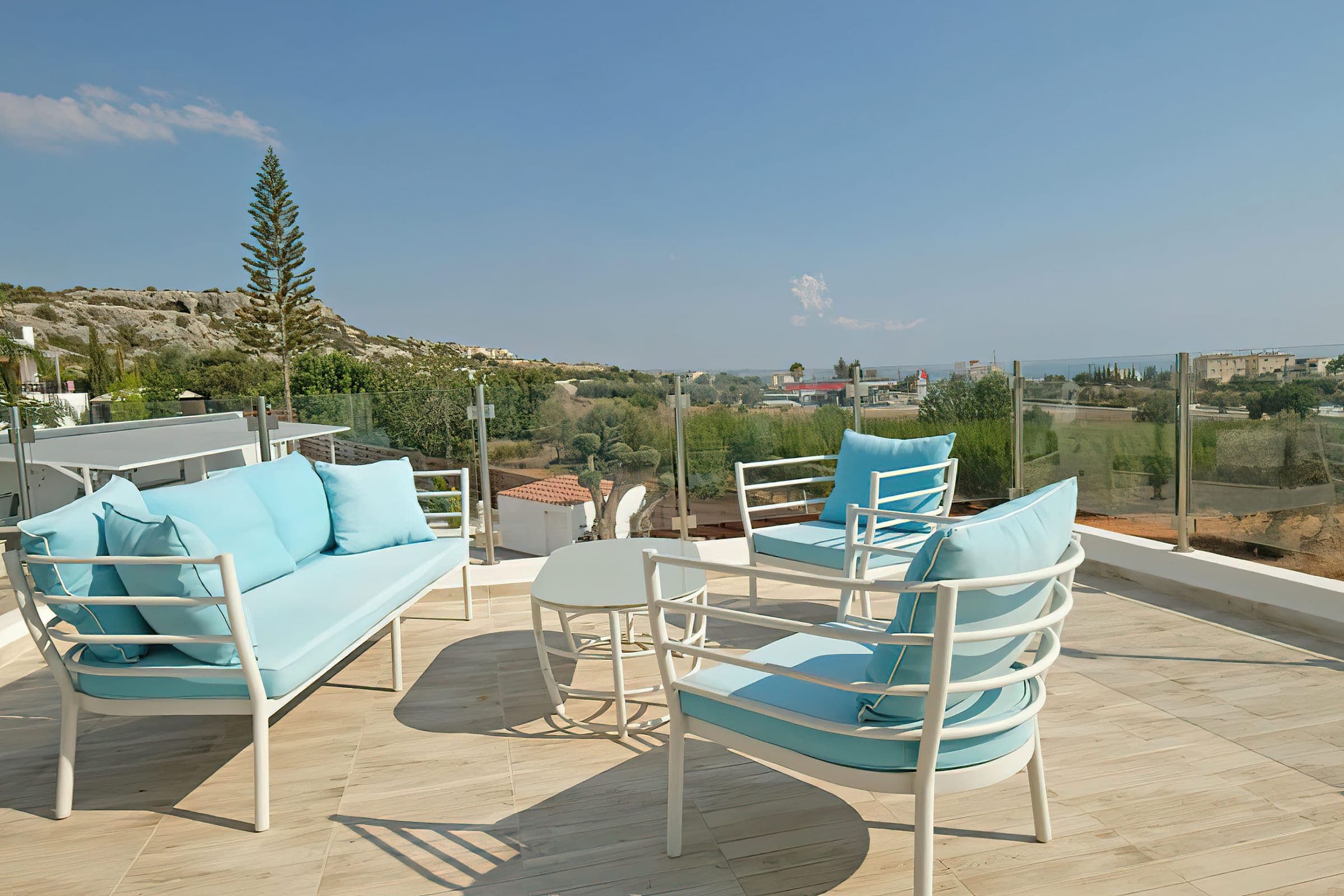
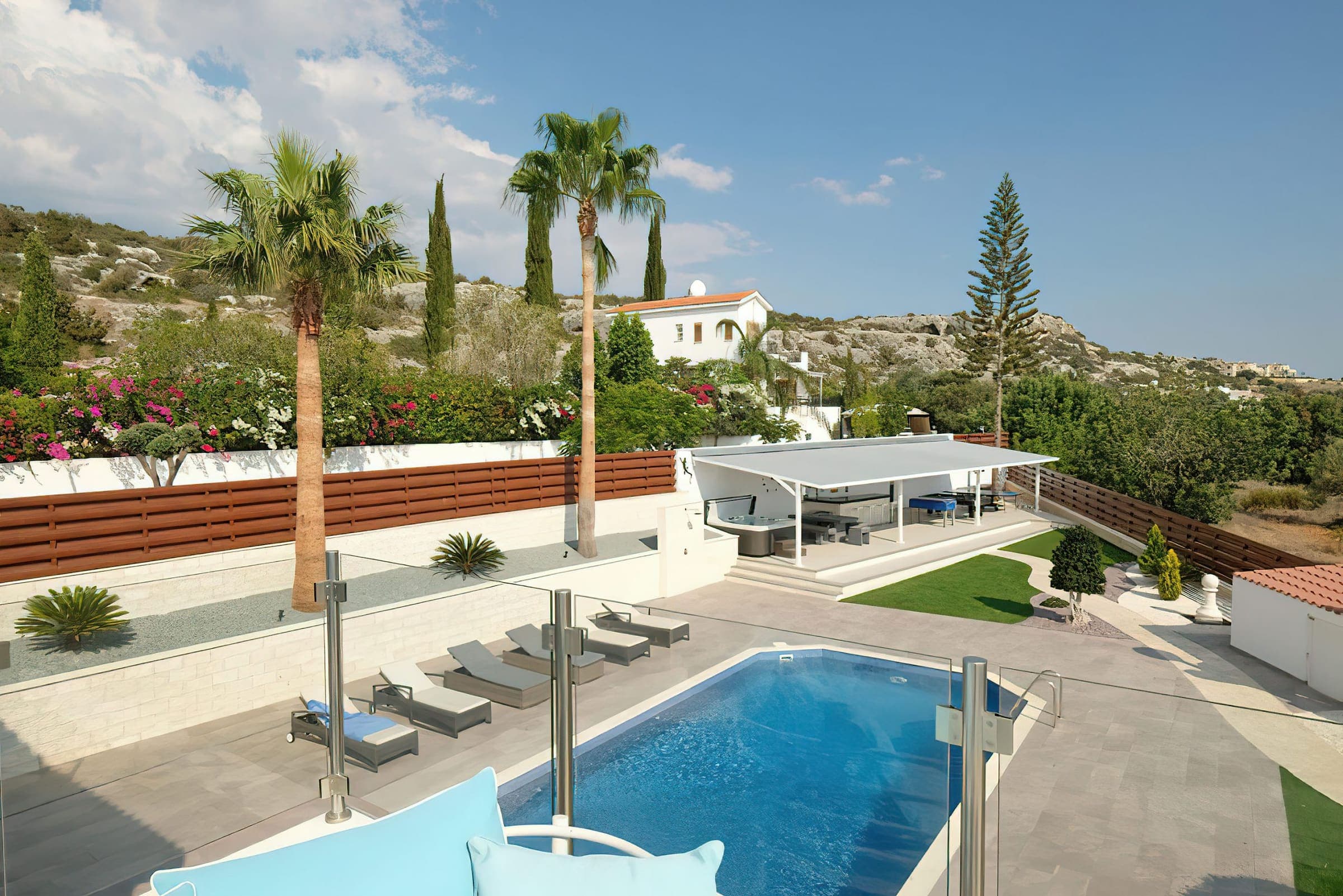
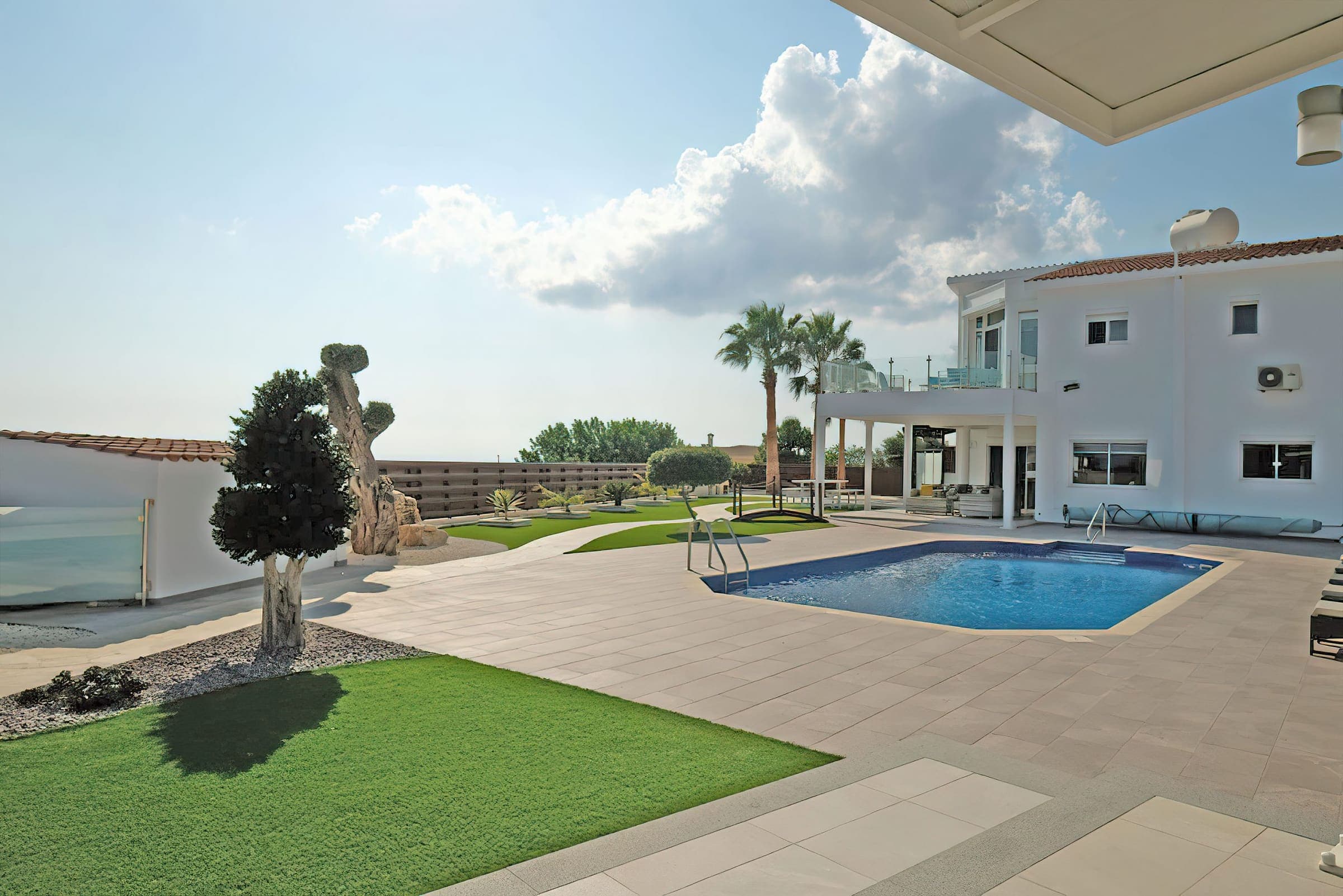
Villa Prasino is a private villa in Peyia for up to 6 guests, about 5 km from Coral Bay beach and 2 km from the Sea Caves. Between beach days, there is a 6 × 12 m diving pool, a hot tub and an outdoor bar with a fire pit, in 1,000 m² of gardens. See our villa near Coral Bay, check availability and rates, or send us a booking request when you have dates in mind.