
Published · 6 min read · Facts checked 9 October 2026 against the sources below
Diving in Paphos is mostly shallow and gentle: two shallow wrecks off the town, caves and gullies along the rocky coast, and clear water with visibility of 20 m or more. Around Coral Bay, Paphos, the same coast is good for a first snorkel, and the famous Zenobia wreck is a day trip away at Larnaca.
From the villa, the beach at Coral Bay is about 5 km. We don't recommend individual dive centres; the rules section explains how to choose one.
Diving in Paphos: what the sea is like
The sea off Paphos is warm for much of the year. The open sea is above 22 °C from June to November, about 27 °C in August, and 16 to 17 °C from January to March. Shallow water near the shore runs from 15 to 17 °C in February to 23 to 28 °C in August. Our August weather page shows what the hottest month is like on land.
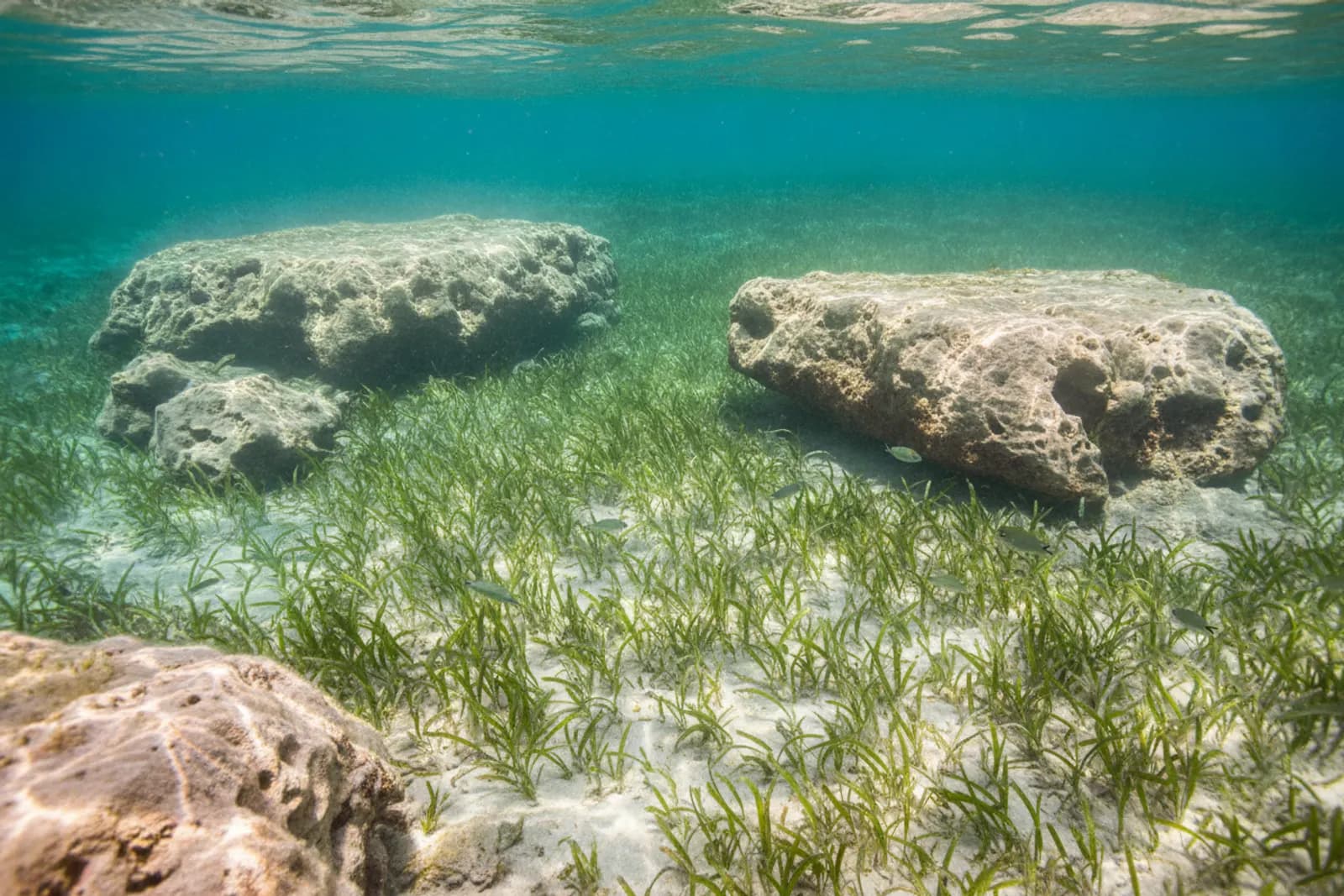
Underwater you will see rock, sand and meadows of Posidonia seagrass. Groupers, octopus, moray eels and bream are among the fish at the dive sites below, with turtles in summer.
Dive sites around Paphos
These are the Paphos sites named by the Cyprus Dive Center Association, with its depths and the qualification it lists. "Open Water" is the first full scuba certificate; "Advanced" is the next level.
| Site | Where | Depth | Access | Qualification | What you see |
|---|---|---|---|---|---|
| Vera K | Paphos harbour | 11 m | Boat | Open Water | Freighter wreck in four sections |
| Achilleas | Paphos | 11 m | Not stated | Not stated | Wreck on sand, bronze propeller |
| Amphorae Caves | Paphos | 5–12 m | Boat | Open Water | Caves, one with amphorae in its roof |
| Manijin Island | Paphos | 6–22 m | Not stated | Not stated | Drop-off, caves, archway, blowhole |
| Amphitheatre | North of Coral Bay | 9–14 m | Shore | Not stated | Rock amphitheatres, a wall, octopus and eels |
| White River | Just into the Akamas | Up to 16 m | Beach | Not stated | Gullies and swim-throughs, turtles in summer |
| Laboe | Off Geroskipou | 27 m | Boat | Advanced Open Water | Ship sunk as an artificial reef |
The Vera K is a Lebanese freighter that ran aground in 1972. It was used for target practice and blown up in 1974, and now lies in four sections in about 11 m of water. The Achilleas, a Greek vessel, exploded and sank in 1975. It lies on sand in three sections, and the bronze propeller on its upturned stern is the highlight. Its remaining portholes stay where they are.
Manijin Island is really a rock, small enough to dive all the way round, with a cave lined in pink and purple algae. The Amphitheatre, north of Coral Bay, can be dived from the shore. Its "amphitheatre" at 9 m is a natural rock formation, and divers there look for octopus, moray eels, grouper and trumpet fish, with the odd turtle or seal.
The Amphorae Caves are a set of gullies and caves, one with ancient amphorae set into its roof; archaeologists explain them by movement of the seabed over some 2,000 years. The site is good for beginners, with a mostly flat, sandy floor and plenty of natural light, and shrimps, lobsters and cuttlefish come out in the evening. White River, a cove just inside the Akamas, is reached from the beach and is a maze of gullies and overhangs, with one swim-through more than 25 m long.
Wrecks and reefs further afield
The Laboe, built in Germany in 1940, was sunk off Geroskipou as an artificial reef to bring marine life back to the area. At 27 m it needs an Advanced Open Water certificate.
The Zenobia is the big one. This 172 m Swedish ferry sank on its maiden voyage in 1980 and lies on its side about 1,500 m off the Larnaca coast, at 17 to 43 m, still carrying the lorries that were on board. It is often listed among the world's best wreck dives. It is a boat dive, for both recreational and technical divers, with grouper, barracuda, moray eels, stingrays, turtles and octopus around the wreck.
MUSAN, the Museum of Underwater Sculpture Ayia Napa, was installed in 2021 at 8 to 10 m. It has more than 93 works by Jason deCaires Taylor, many shaped like trees, set in a marine protected area within 200 m of the shore. Some of the trees float just below the surface.
The Zenobia and MUSAN each make a long day out from Paphos.
The rules for scuba diving in Cyprus
- Dive with a certified centre. Visit Cyprus publishes a list of diving businesses certified to ISO 24803, the international standard for dive services. Use only properly licensed and insured operators. In November 2025 the cabinet approved a bill to license diving centres, with ISO 24803-certified instructors, insurance and a national register, and sent it to the House.
- Stay within your qualification. The table above gives the certificate a site needs, where one is stated. If you aren't qualified, ask a certified centre what it offers beginners.
- Never dive alone. Stay with the dive guide and your buddy, and within the limits of your training and dive computer.
- Leave antiquities where they are. Amphorae on Cyprus dive sites are heavily protected by Cypriot law. Photograph them, but don't touch them and never take anything.
- Don't touch marine life. Never disturb or harm it, control your buoyancy and watch your fins.
- Get the right insurance. Diving should be named on your travel insurance policy, and dive insurance is advised too.
Visit Cyprus also gives some plain advice for the day itself: avoid alcohol before diving, cancel if you or your buddy feel unwell, equalise your ears early and often, never hold your breath, and tell the dive leader when your tank is half empty.
Snorkelling at Coral Bay and in the Akamas
You don't need a certificate to snorkel. Coral Bay is the obvious place to start: 500 m of sand between two limestone headlands, with calm, shallow water, water sports and lifeguards from April to October. Our guide to the best beaches near Coral Bay compares the beaches nearby.
Further north, the Blue Lagoon near Latchi has clear water over sand with patches of seagrass. It is ideal for beginners, with little fish darting between the rocks in the bay. Our Blue Lagoon guide covers the boat trips and the track there.
If you'd rather stay dry, our guide to Paphos boat trips covers the cruises along this coast, including glass-bottom boats.
Turtles and seals
Turtles are the sighting everyone hopes for. They may be seen at White River from May to September, and occasionally at the Amphitheatre. If one surfaces near you, stay still and let it pass, and never chase or touch it.
The sea caves are a different matter. Mediterranean monk seals rest and occasionally breed there. The agriculture ministry estimated only 20 to 22 seals around Cyprus in 2025 and bans fishing and boats in front of the caves they use. It asks people to watch from a distance, never approach a seal and not to enter the caves. Don't swim or snorkel into them.
The Edro III is not a dive or swim site
The rusting ship on the rocks at the Peyia sea caves is a sight to photograph, not to explore. The Edro III has been aground on the rocks below the cliffs since December 2011, with no beach or sand around it. Boarding it is not permitted, and warning signs went up because it is dangerous. That applies just as much if you arrive by water.
See it from the cliff top instead. Our Edro III shipwreck guide explains where to stand, and our walks near Paphos guide covers the cliff walk there.
Where to stay
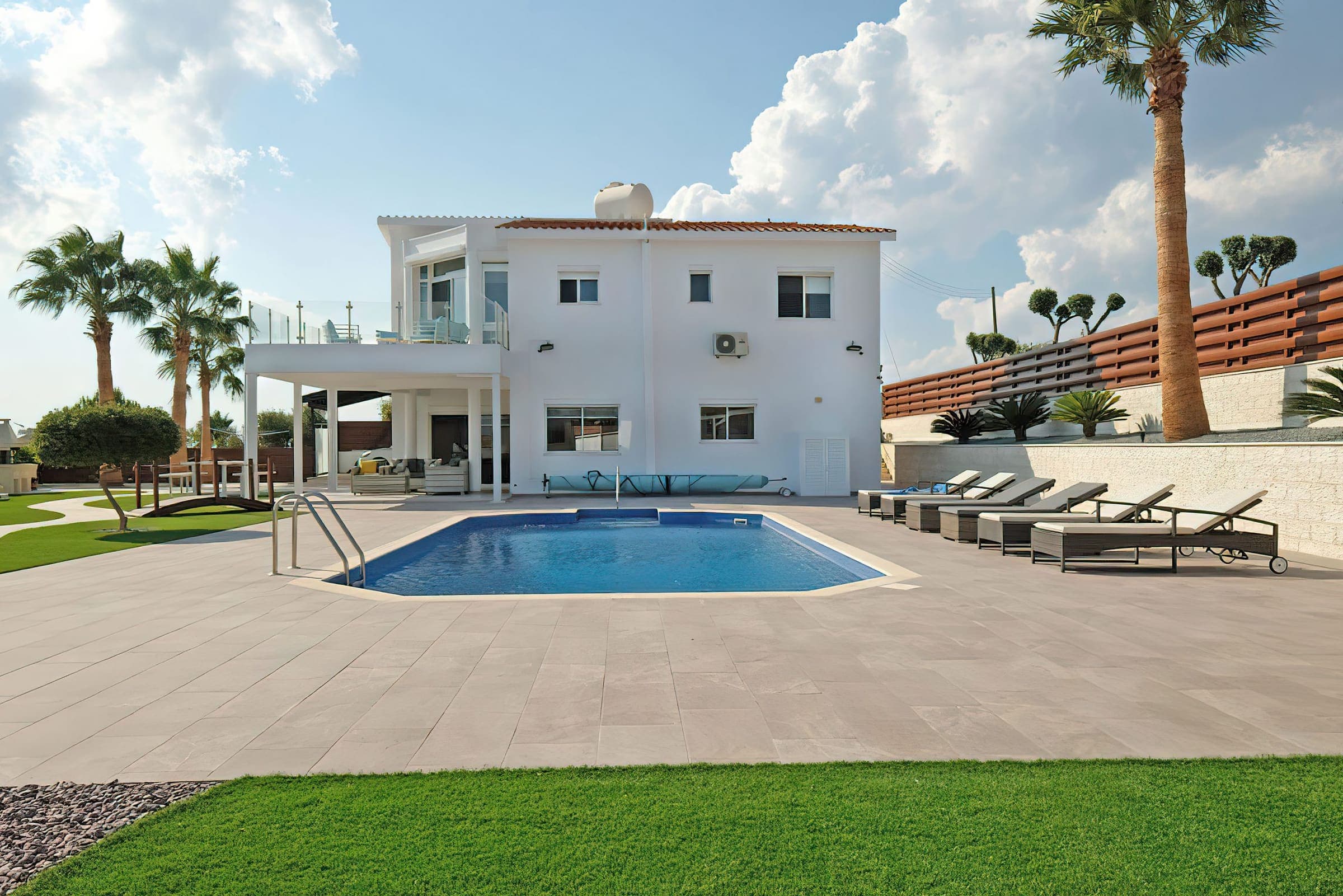
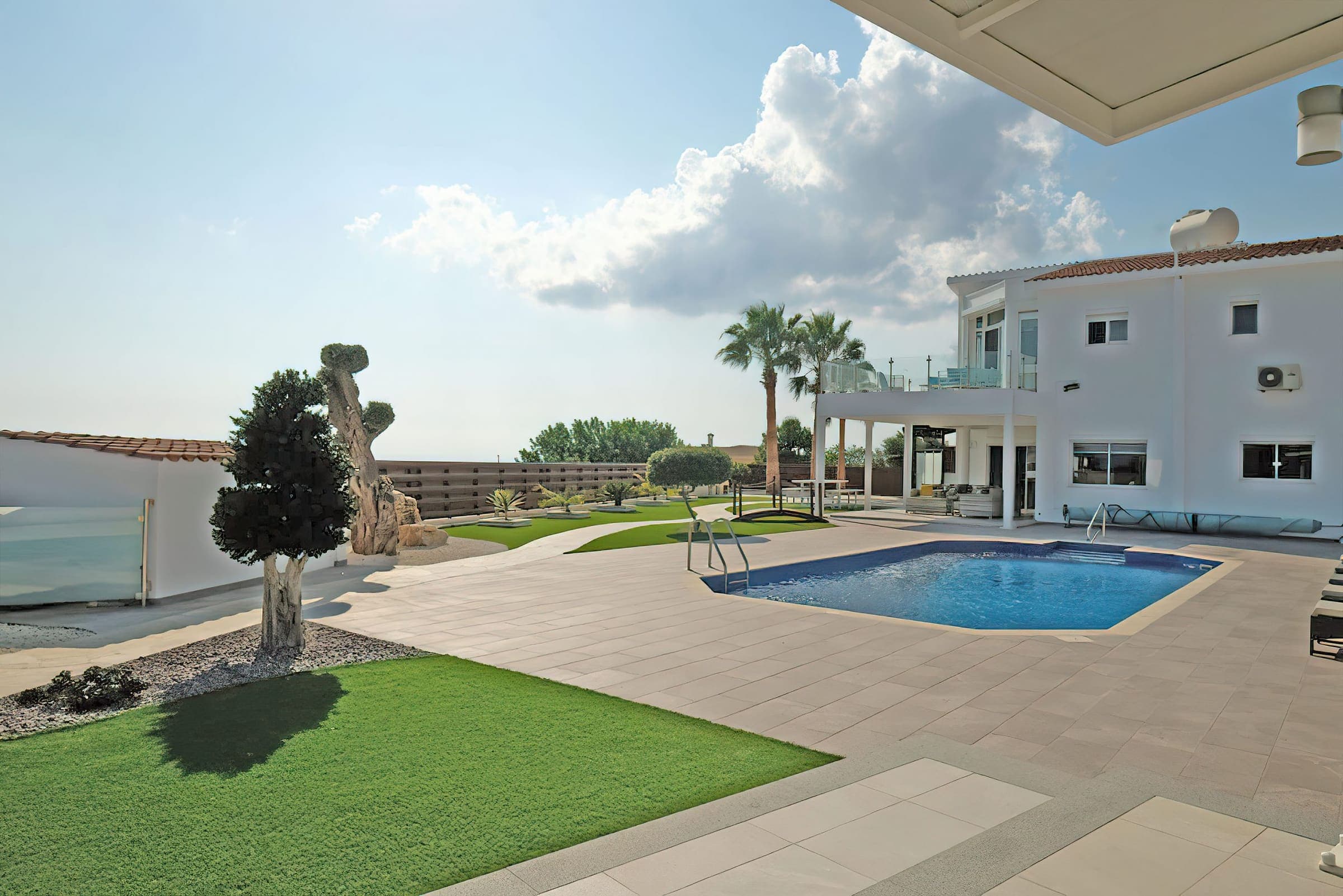
Villa Prasino is a private villa in Peyia for up to 6 guests, between Coral Bay and the Akamas. Between dives, its 6 × 12 m diving pool, hot tub and outdoor bar with a fire pit are yours alone, in 1,000 m² of gardens with a private driveway for three cars. See our villa near Coral Bay, check availability and rates, or, if you are planning a diving holiday, send us a booking request with your dates.